The Tree of Life approach to our national debates
The Torah does not begin with the letter Aleph, the first letter of the alphabet, but with Bet. The sages ask why a book of such cosmic significance does not start at the beginning. Their answer: because Bet symbolizes duality. From the very first verse, “Bereshit bara Elokim et hashamayim ve’et ha’aretz” we are introduced to a world created in tension: heaven and earth, light and darkness, day and night, land and sea etc.
The human story begins not in pristine oneness but in a dualistic universe, a space where opposites exist and must be held together. This is the natural state of the Jewish people too; grappling with profound differences while remaining bound to a shared destiny.
I was struck by how this duality is reflected in the Garden of Eden of last week’s parashah too. Our tradition often identifies the Tree of Life with Torah, and the Tree of Knowledge of Good and Evil with human intellect and moral judgment. But within the Torah itself, both paradigms seem to exist as well.
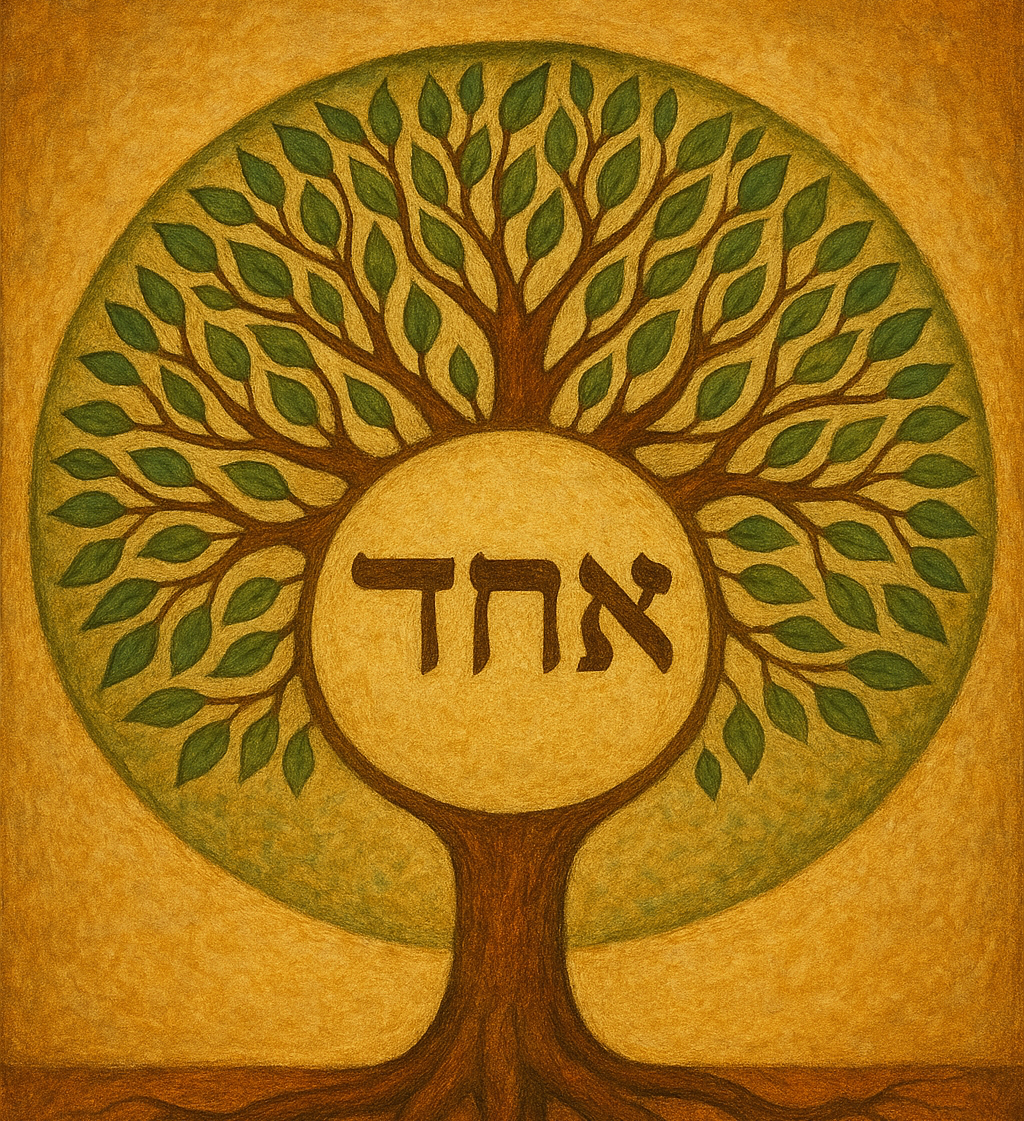
The Tree of Life represents the unifying aspects of Torah, those teachings that bring people together, that inspire collective purpose and shared holiness e.g. the Written law and Kabbalah.
The Tree of Knowledge, on the other hand, represents the discerning, boundary-drawing aspects. Those parts of our tradition that clarify distinctions, define rules, and inevitably divide between right and wrong, pure and impure, inside and outside e.g. the Oral law and Talmud.
Both trees are necessary. But crucially, Midrash (Bereishis Rabbah) teaches that Adam and Eve were not forbidden from the Tree of Knowledge forever. Had they waited just a few more hours, they would have been permitted to eat. There was a proper sequence: first taste the Tree of Life, first anchor in unity, connection, and shared purpose. Only then engage in the acts of discernment, judgment, and debate that the Tree of Knowledge represents.
This ancient wisdom holds a powerful message for us today.
Our political discourse in Israel and across the Jewish world can become increasingly fractious, especially around critical national decisions. The latest ceasefire deal, which involved balancing profound security considerations with the agonizing plight of hostages understandably stirred strong emotions and sharp divisions. Many have legitimate concerns, and passionate debate is unquestionably part of the fabric of our people.
Parashat Bereshit invites us to consider not only what we argue about, but when and how we do so. Before we take positions, before we draw lines and denounce the “other side,” we must first root ourselves in a ‘Tree of Life’ kind of unity. It’s worth recalling here that the Hebrew language differentiates between two variations for the word ‘one’. There is Yachid, an exclusive singular oneness. But there is also Echad, a one that is the product of plurality, when multiple components, seemingly at odds with each other come together. It is the unity of Echad, the unity we affirm in our daily Shema, that we need to embody.
Supporting the deal in its immediate purpose, the freeing of hostages and alleviating the collective pain, can be understood as a Bereshit first-act. It is the eating of the Tree of Life, the step of unity, the facilitator of connection. Once we have tasted the joy of reunion, once we have experienced the simcha of families restored and communities consoled, then and only then can we turn to the Tree of Knowledge when we can, and must, engage in rigorous debate about security, policy and the future.
It is no coincidence that this latest ceasefire deal coincided with Simchat Torah, one day short of two years since our hostages were taken. According to the Zohar, Simchat Torah is also called Hedvata D’ilana, a celebration of the Tree of Life.
This is not a call to silence dissent. It is legitimate to have reservations and serious concerns. Rather, it is a call to always sequence our discourse according to the wisdom of Parashat Bereishit. To first build shared ground and then hash out our differences. To recognise that political positions, however passionate, must be preceded by a focus on national togetherness, especially in moments of crisis.
Our Torah begins with Bet to teach us that we live in a world of two-ness. But it also teaches us how to navigate that duality. First unity, then debate. First life, then knowledge.
If we can embody this Bereshit paradigm, then our disagreements, inevitable and even necessary, will not fracture us, but refine us. We will remember that beyond every argument, we are one people, bound by a shared beginning and a shared mission.