


Author of 'Juggernaut: a Paradigm Shift on Antisemitism"
The True Name of Zionism
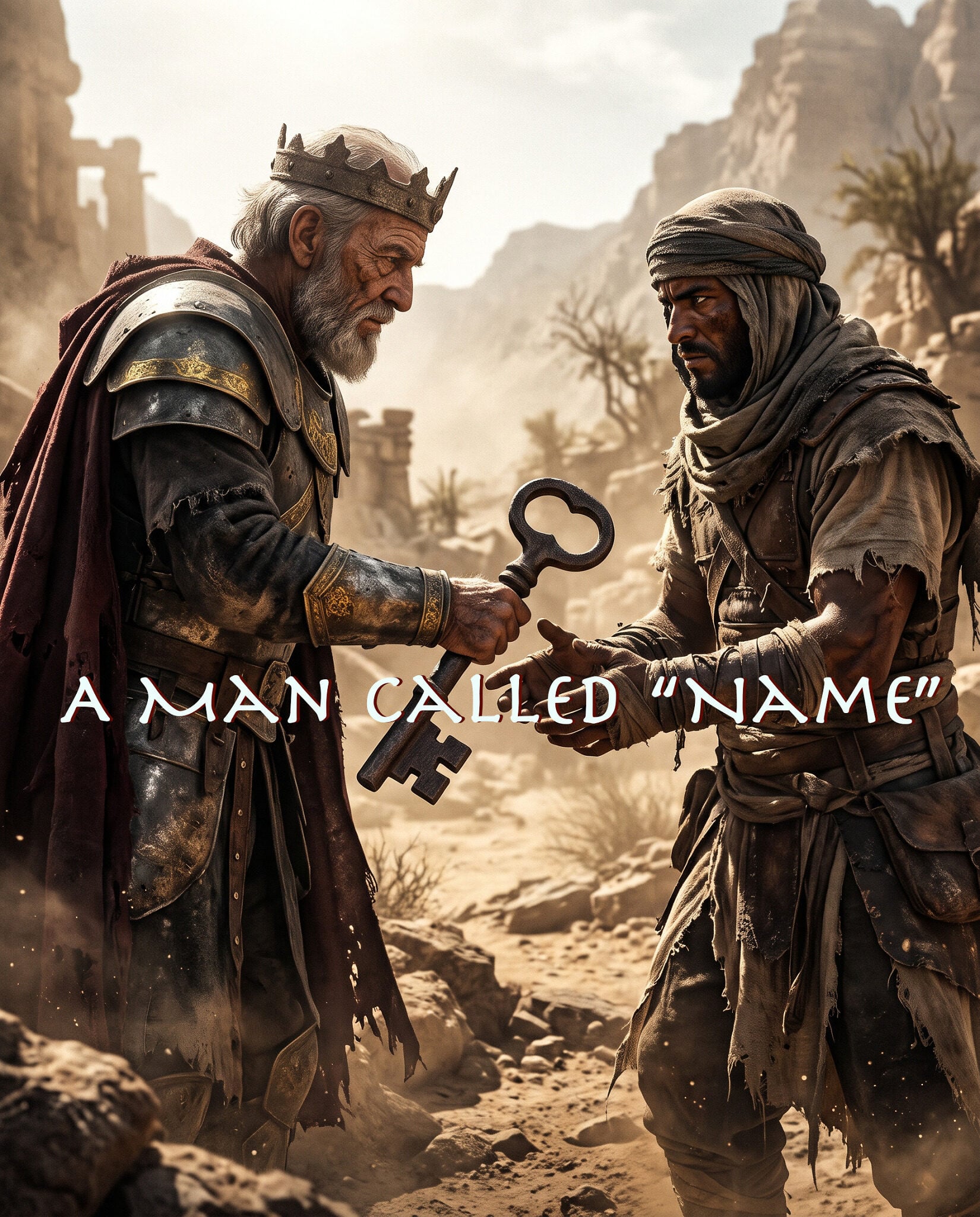
The Man Called "Name"
“For out of Zion shall go forth Torah, and the word of the Lord from Jerusalem.”
This is one of the most famous verses in Biblical history. Isaiah wrote it, and Micah repeated it word for word.
But ask yourself a simple, almost childlike question. Why Zion? Why does the law have a specific geographic address? And why is it that exact spot on the map? We often assume the answer is wrapped in impenetrable theology. But the truth is entirely practical.
It has been sitting in plain sight, recorded in the oldest texts, waiting to be read as a matter of objective fact. Modern historians tend to look for origins in recent centuries. They point to the aftermath of World War II, international treaties, or the moment David Ben-Gurion declared a state in 1948.
But the specific coordinate of Jerusalem was not established by a UN mandate or a British white paper. Throughout history, massive empires have operated like migrating software, expanding and overriding the cultures in their path. The Jewish people operate as an indigenous hardware constant, a population hard-coded to return to one specific predefined coordinate on the earth.
This connection is not a religious belief system that a person can simply adopt or discard. It is a biological draft, an unbreakable tether to a precise physical location. Look at how the city’s name is written in the original vowel-less paleo-Hebrew script.
If you strip away the modern vowels, the consonants leave us with exactly two words, Yeru and Shalem. The name Shalem was recognized long before the Israelites entered Canaan. In the 19th and 18th centuries BCE, Egyptian execration texts recorded the city as Rushalimum, and in the 14th century BCE, the Amarna letters, written in cuneiform by a gentile empire, recorded it as Urusalim.
The title existed in the gentile record before Moses was even born. The linguistic map goes deeper. The word Zion, Tziyon, shares the exact same four Hebrew letters as the word Tziyun, which means a physical marker or a signpost placed on a road.
The text explicitly links this geographic marker to a specific bloodline. While Abraham volunteered to walk there, his son Isaac was drafted into the covenant at eight days old, while Ishmael was legally excluded. The geography and the biology became locked together.
Zionism, then, is simply the mechanical act of reading those embedded linguistic signposts. It is a drafted population navigating by an ancient marker to return to their designated coordinate. The legal chain of custody for this coordinate starts after the flood.
Noah divided the world and gave the physical territory, along with the name of God, to a specific son, Shem. In Hebrew, the word Shem literally translates to name. While Shem held the true name, transient empires attempted to manufacture their own.
In the plains of Shinar, humanity built a massive structure to storm the heavens, explicitly stating their goal was to make a name for themselves. It was a structural attempt to build a counterfeit legacy. Following that failure, the text traces Shem’s line directly to Abraham.
And the numbers in Genesis are exact. Shem was born 98 years before the flood. Abram was born in the year 1948 from Creation. Shem died in 2158. He was alive for Abraham’s entire life and outlived him by 35 years.
When God tells Abram to go to a land He will show him, He is not sending a foreigner to take someone else’s property. He is sending a grandson home to his grandfather’s legally designated portion. Rashi says it plainly: the Canaanite was then seizing Shem’s portion, which is why God promises to return it to Shem’s seed.
Abram does not arrive as a passive philosopher. When foreign kings raid the land and capture his nephew, Abram takes 318 men, chases an empire’s army to Damascus, smashes them, and retrieves the stolen property. Here, the text first calls him Abram the Hebrew.
Abram’s legitimacy is derived from his active kinetic defense of his ancestral inheritance against foreign squatters. Returning from battle, Abram reaches the edge of his grandfather’s city. The old man, Shem, now ruling as Malki-Tzedek, king of Shalem, walks out to meet his grandson in the Valley of Shaveh. The Talmud and the ancient Aramaic translation of the Torah both identify Malki-Tzedek as Shem, and the Psalm places Shalem in Zion.
In Hebrew, Shaveh means level or even. It is the valley of the equal. This is where the accounts are balanced.
Shem, the current owner of the coordinate, bestows his blessing in the name of the possessor of heaven and earth. Abram pays him a tithe of the spoils, settling the account. Shem had called the city Shalem. Later, after the binding of Isaac, Abraham named the mountain Yir’eh, “the Lord will see.”
The Creator fused the two names into one. Yir’eh and Shalem became Yeru-Shalem. On that mountain, Moriah, three related Hebrew roots meet: Yarah for teaching, Yirah for awe, and Ra’ah for seeing.
The structure dictates that teaching goes out from the mountain to Israel, and awe goes out to the nations. The Israelites did not acquire this mountain by conquest. The title passed directly from grandfather to grandson in the valley of the equal, executing a formalized one-time transfer of a legal deed between rightful heirs. When David later took the city from the Jebusites, he was collecting the keys to a deed signed a thousand years earlier.
The ultimate possessor of heaven and earth selected this geographic navel and placed His name exactly there, locking the coordinate to the bloodline. From Abraham, the deed passed strictly to Isaac, then to Jacob, and down to King David. The text meticulously records the legal exclusion of the Ishmael and Esau lineages from this specific geographic inheritance.
Sarah declared that the son of the maidservant would not inherit with Isaac, and the text notes that Esau hated Jacob specifically because of the blessing. Four thousand years of geopolitical friction is the sound of relatives violently contesting a will that was settled before they were born. Modern diplomats and academics struggle to resolve this conflict because they file the biblical record into a drawer labeled religion.
But the ancient Israelites didn’t have a religion. They had a covenant, a law, and a physical land deed. Rashi answered the accusation nine hundred years ago, in his first comment on the Torah: when the nations say “you are robbers,” the answer is that the whole earth belongs to God, and He gives it to whom He sees fit. The endless wars and international condemnations are the mechanical output of successor systems attempting to overwrite an ironclad biological contract.
The heirs named in that deed carry three specific titles. First, we are Ivrim, Hebrews, the ones who crossed over to stand on one side of the river while the rest of the world stood on the other. Second, we are Yisrael, Israel, the name given to Jacob after a brutal night of combat.
It means the one who physically fights with God and with men and prevails. And third, we are Yehudim, Jews, rooted in the tribe of Judah, the royal line of David. It translates to the one who gives thanks and holds the sovereignty of the king.
All three identities point back to the original coordinate held by the old man whose very name was “Name.” He was born before the flood; he sat in the city of wholeness after it, and his heirs hold that exact same ground today. The law goes forth from Zion because Zion is the legal inherited home of the ultimate ancestor.
It is where Grandfather Shem has always lived.