


Where Jews and Judaism Meet the Political Road!
The Trump Effect: Understanding this Phenomenon
 The ideas and policies that have defined and shaped Donald J Trump’s presidency were generated decades earlier. The “Trump Effect” has only partially been about the man and his persona, more directly, it has represented the ability of the Republican Party and a cadre of conservative think tanks to reframe the identity and ideology of Republicanism, allowing Donald Trump to emerge as its spokesperson. No doubt, the Heritage Foundation’s Project 2025 along with a score of other conservative policy centers and their reports has given this President a game plan for governance, and in the process reshaped our national political culture!
In unpacking how we arrived at this moment, let us explore the “seeds” that have framed this past decade. Five influencers have served as the political “keys”:
- Shifting cultural values and political priorities
- Changing demographics of this nation
- Emerging and shifting political and economic interests
- Growing the power and presence of social media and the changing nature and context of the idea of “truth”
- Taking advantage of the shifting power dynamics of the American Presidency
The Transformative Political Scenario:
The trigger issues that drove voters to Donald Trump may best be summarized by sociologist Arlie Hochschild:
You are patiently standing in the middle of a long line stretching toward the horizon, where the American Dream awaits. But as you wait, you see people cutting in line ahead of you. Many of these line-cutters are black—beneficiaries of affirmative action or welfare. Some are career-driven women pushing into jobs they never had before. Then you see immigrants, Mexicans, Somalis, the Syrian refugees yet to come. As you wait in this unmoving line, you’re being asked to feel sorry for them all. You have a good heart. But who is deciding who you should feel compassion for? Then you see President Barack Hussein Obama waving the line-cutters forward. He’s on their side. In fact, isn’t he a line-cutter too? How did this fatherless black guy pay for Harvard? As you wait your turn, Obama is using the money in your pocket to help the line-cutters. He and his liberal backers have removed the shame from taking. The government has become an instrument for redistributing your money to the undeserving. It’s not your government anymore; it’s theirs.
This then becomes the “deep story” giving rise to a populist president and Project 2025. There are a number of specific cultural, economic and demographic factors contributing to the political emergence of Donald Trump, first as a viable candidate and ultimately as an electable political figure.
There was a growing body of data involving many non-college voters who had grown distinctively hostile to Muslims, opposed to immigration, critical of modern feminism, worried about rising diversity, and unenthusiastic about free trade agreements, found Trump’s messaging and agenda in alignment with their concerns.
In measuring the election of Donald Trump in both 2016 and again in 2024, his policies and proposals aligned with a growing body of voters whose concerns were well understood by conservative political strategists and ultimately by the Trump campaign.
Two critical elements are introduced below:
- The economic concerns of many of these voters also aligned with this emerging political agenda. Case in point, 54% of Trump supporters had reported that their finances had gotten worse and 62% believed that the economy was “getting worse.” Long-term economic pessimism was widespread among Trump supporters. Two-thirds of Trump primary supporters thought life today for people like them is worse than it was 50 years ago, compared to about half of other candidates’ supporters.
- Trump supporters had a jaundiced view of trade agreements. Two-thirds of Trump voters thought trade agreements generally decrease the number of jobs available to American workers.
There was strong evidence that Trump’s appeal would contribute to the president’s ability to win “swing counties.” As many of these voters resided in rural areas with high poverty levels, this became a distinctive target area for exploiting. The data also indicated that Trump supporters of all stripes were distinctively pessimistic concerning both short- and long-term economic measures.
How the rise of Donald Trump fit into the larger political marketspace?
Political scientists Manuel Funke, Moritz Schularick, and Christopher Trebesch have examined some 800 general elections in 20 countries, leading to victories by far right populist parties, driven heavily by xenophobia towards immigrants and minorities. As economist Claudia Goldin noted, in her study of immigration policy debates in the U.S. in the late 1800s and early 1900s, “Almost all serious calls for the literacy test [to stem the flow immigrants] were preceded by economic downturns…and few economic downturns of the era were not accompanied by a call for [immigration] restriction in the halls of Congress.”
Beyond identifying and ultimately shaping a policy platform reflective of these themes, strategists from conservative think tanks understood five other parallel developments:
Presidential Powers:
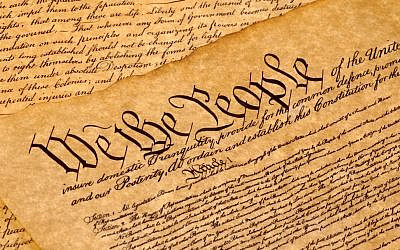
Expansion of presidential powers has been in play since the 1990’s and has disrupted the traditional Constitutional balance.
…Presidents, with an assist from Congresses, have partially flipped the script of Article I. Whereas the Constitution grants legislative power to Congress and vests the President with a limited veto, in the modern era the President enjoys extensive chunks of legislative power with Congress exercising a pathetic veto.
Campaign Financing:
Citizens United was founded in 1988 to promote a deeply conservative agenda in the United States. In 2010 it won a case in the Supreme Court that ended restrictions on corporate spending in federal election campaigns, fundamentally shifting the financial roles of business and corporations in American politics.
The Information Revolution:
Years before the political rise of Trump, the information ecosystem had already been undermined by monopoly ownership of big media and the rise of social media as a home for conspiracy theories, misinformation, and attacks on experts.
In the past, most news and information was filtered and guided by specialists, working in accredited institutions. Science itself provided an institutionalised system to screen and authenticate knowledge.
But mass and social media have undermined these established mechanisms of accreditation and have led to different outcomes. Even more challenging, the emergence of big money and powerful political influencers have begun to manipulate the information ecosystem to serve their own advantage, with some experts saying this has become an “industrial scale” problem.
As Walter Lippmann showed in his classic 1922 book, Public Opinion, information overload can often prompt people to adopt “cultural stereotypes” rather than evidence-based opinions. In the 21st century people can select and interpret information in biased ways, creating echo chambers like X (formerly Twitter) and Facebook where algorithms ensure users become exposed to information that confirms their preexisting beliefs.
The “framing effect” occurs where the same evidence presented in different ways can lead to different responses.
The information explosion led by 24-hour news, smart phones and social media has greatly exacerbated these problems. Given these new technological realities, the state of democracy itself becomes challenged.
The Decline of Confidence and Trust:
When people lose trust in experts, then they often turn to populists, who provide easy answers instead of addressing the underlying problems or dismiss democratic processes in favor of centralized leadership. The rise of populist governments and authoritarian states across the globe confirms the shifting character of politics.
The New Politics:
Conservatives would introduce some new tactics that the 45th and now 47th President has effectively employed, among them, condemn experts; promote simple solutions to complex problems; endorse prejudice; and claim to represent the will of the people.
Summary:
The Trump presidency represents a fundamentally disruptive moment in this nation’s political culture. Not only are there different policy options and outcomes, but the cultural artifacts of politics has changed. This president has dramatically challenged the existing norms of political behavior.
“Trumpism” is the tangible reaction and response to the underlying changes taking place within this society. Captured by think tanks and conservative political commentators, Donald Trump, employing the resources and structures of the Republican Party, has effectively embraced this play book.