
What ‘Naza’ really means: The truth about collateral damage
The creators of the recent documentary, “NAZA,” about “Naza” (a Hebrew military acronym for Nezek Agavi – collateral damage) did not have to work too hard to discover the truth.
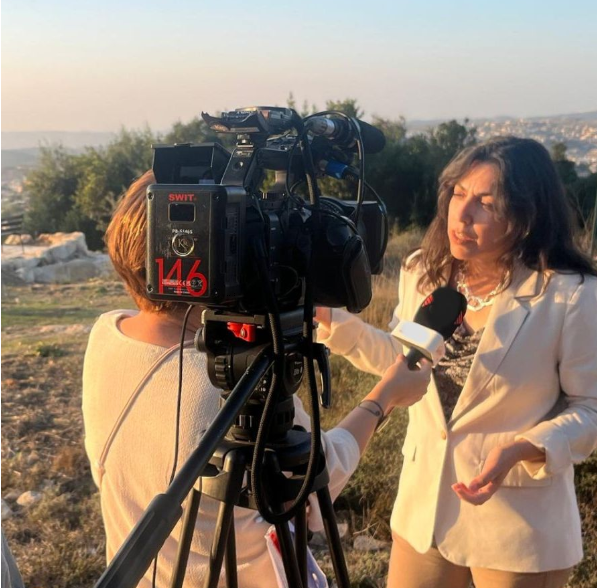
They could have simply interviewed me. I would have stood in front of the camera, without hiding my identity, on the roof of my house nine kilometers (5.6 miles) from Lebanon, where we endured endless barrages of rockets, and explained the reality on the ground.
A little less than 20 years ago, I was one of the founders of the unit within the IDF that deals with warning populations on the other side of enemy lines and preserving civilian lives.
We built the processes that define how to issue evacuation warnings, and how to track evacuations. I was personally involved in formulating target approval processes and operational discussions.
If they had spoken with me, I would have explained that the chart shown at the beginning of the film’s promotional material is not a “killing chart,” but rather a planning chart for a target identified as being used by Hamas.
Its purpose is to determine whether to strike at all, who in the command echelon is authorized to approve the strike, with what munitions, and under what conditions. In stark contrast to the way it is presented in the promotional material, when the words “Naza 500 – collateral damage estimated at 500” appear in the approval process, it means that action must be taken to reduce the collateral damage.
There are a variety of ways to do this, such as issuing an evacuation warning, using precision munitions, or canceling the strike entirely. Noting the collateral damage on the target sheet does not signify an intention to kill civilians or commit “genocide”; it is intended, first and foremost, to prevent civilian deaths.
Our enemies, both Hamas and Hezbollah, deliberately place their rockets and headquarters in the heart of civilian areas, in tunnels under Beirut or in high-rise residential buildings in southern Lebanon. Hamas in Gaza does the same, operating in civilian areas and using children as human shields. They do this on the working assumption that if Israel strikes without warning, hundreds of civilians will be killed. That is exactly their goal. But Israel chooses differently: there are hundreds of soldiers and officers in the IDF whose sole role is protecting civilians in enemy territory. That is what they think about from the moment they wake up in the morning.
I would have expected a serious examination of this subject to include the perspective of former IDF personnel, like me, as well as serving soldiers and officers who are familiar with these procedures and could explain the professional meaning of collateral-damage assessments. Based on the promotional materials I have seen, that perspective is absent.
The promo for the film claims that the IDF “never checks the number of civilians killed.”
The truth is that checking the exact number of casualties in enemy territory in real time is a complex and nearly impossible task. This is exactly why the collateral damage assessment process takes into account factors such as the size of the structure and the estimated number of civilians routinely in its vicinity.
The IDF has invested and continues to invest massive resources – intelligence personnel, legal experts, operational personnel from the air and ground forces, and technological experts – to develop command and control systems designed to accurately assess where civilians are present and where they are not. I was personally involved in developing these tools during my military service in the Northern Command and subsequent reserve service.
From my experience, I can testify that a whole world of intelligence stands behind this effort. In the Intelligence Directorate, there are several desks whose exclusive role is tracking the percentage of the population that has evacuated from rural and urban areas after the IDF has issued warnings. If a high percentage of the population has evacuated following the warnings, the collateral damage assessment drops, and only then is a strike on the terror infrastructure permitted.
Unfortunately, it is precisely the IDF’s efforts to preserve civilian lives in enemy territory, – namely, evacuation warnings and tracking evacuation status – that have been interpreted as “ethnic cleansing” in international media, while the media ignore the scope of the terror infrastructure exposed inside and beneath villages in both Lebanon and Gaza, in almost every house.
I have been asked several times by reporters why we evacuate such extensive areas. Here is my answer: when Hamas or Hezbollah dig a tunnel network under villages, it is impossible to destroy the tunnels without harming the dozens of houses above them. Evacuating only the house directly above a section of tunnel may harm civilians in surrounding homes.
Despite the extensive intelligence efforts made to ensure that civilians are not present at a target, this is a world where uncertainty is exceedingly high. Intelligence will always be partial and insufficient. There have been many recorded cases in which there was no information about the presence of civilians at or near terror infrastructure or terrorists, and civilians were killed. This grim outcome cannot erase the fact that efforts to prevent collateral damage are indeed made.
Decision-making on the battlefield is complex, the dilemmas are immense, and in the fog of battle, mistakes are sometimes made. But the difference between us and our enemies is enormous.
Hamas and Hezbollah have a radical Islamic ideology and publicly declare and demonstrate that their goal is to kill Israeli civilians. By contrast, we state clearly that we have no intention of killing civilians in enemy territory, and Israel even allows the entry of humanitarian aid into the combat zone, despite the added risks this poses to our operational achievement in the fight against terrorism.
As parents of soldiers, this is how we educate our children – civilians are not a target. And these children grow up to become the soldiers and officers who serve in the IDF.
It is unfortunate that, based on the promotional materials released so far, this essential professional perspective appears to be absent.
According to IDF officials quoted in the Israeli media, the filmmakers did not seek the military’s response before the film was released, and the IDF learned of its claims through the media. The IDF spokesperson later publicly asked to view the full documentary in order to respond to its allegations. If the filmmakers, both of them investigative journalists, have declined to disclose their film or findings to the IDF, that would be contrary to basic journalistic ethics.
Without knowing more about the film’s anonymous sources, it is impossible to know what roles the interviewees held within the system, and whether their accounts, assuming they are authentic, are even relevant to understanding the chain of approvals and actions taken prior to striking a target.
The promotional materials released so far present the story from a very narrow angle: they rely on anonymous sources whose level of involvement, rank, and understanding of the process are unclear, while completely omitting the experts who built these systems with one goal: preserving human life. There are such experts. I was one of them.