
The US Anchors a New Era in the Caucasus
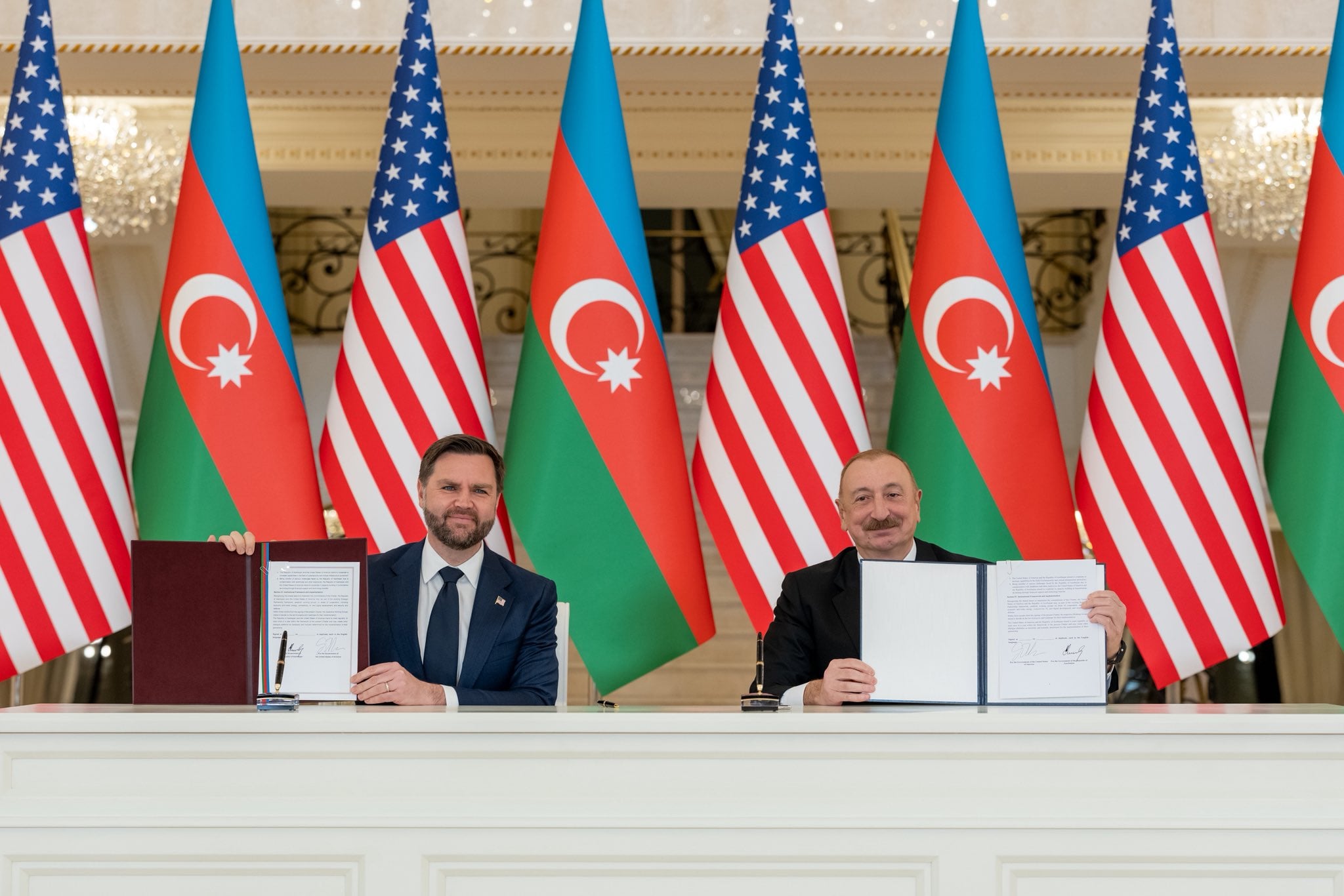
A quiet but consequential shift is underway in the South Caucasus. With sustained diplomatic engagement, strategic investment, and a clear vision for regional connectivity, the United States is positioning itself not merely as a mediator between Armenia and Azerbaijan, but as an anchor of long-term stability.
Vice President JD Vance’s recent visits to Yerevan and Baku were more than just a historic milestone. They demonstrated Washington’s resolve to strengthen the peace agreement brokered by President Donald Trump in 2025 between these two long-time adversaries, embedding it within a broader context of economic interdependence and energy security. The message was loud and clear: peace must be underpinned by infrastructure, trade, and opportunities.
We are honored to welcome U.S. Vice President JD Vance @VP, Second Lady Usha Vance @SLOTUS, and their family to Armenia for this historic visit. A landmark moment for our nations’ partnership!
Vice President Vance is meeting with Prime Minister @NikolPashinyan and senior… pic.twitter.com/dFFOZEWEF4
— U.S. Embassy Yerevan (@usembarmenia) February 9, 2026
In Armenia, the highlight of the visit was wrapping up negotiations on a civil nuclear cooperation agreement, often referred to as the “123 Agreement.” This framework paves the way for US companies to export nuclear technology, fuel, and services, which will aid in replacing Armenia’s aging Metsamor nuclear power plant. With potential commitments reaching up to $9 billion in exports and long-term contracts, this initiative provides Yerevan with a solid opportunity to modernize its energy sector while reducing its reliance on Russia.
For Armenia, diversifying energy sources goes beyond just economics; it’s about strategic independence. A modern nuclear program, built on partnerships with the West, enhances resilience and supports the country’s reform efforts. For the United States, this agreement not only upholds non-proliferation standards but also boosts advanced technology exports, showcasing that American involvement can lead to real, positive outcomes.
The United States and Armenia signed an agreement to expand cooperation in the civilian nuclear sector following talks in Yerevan between Vice President JD Vance and Armenian Prime Minister Nikol Pashinyan. pic.twitter.com/TD1a285iRD
— New York Post (@nypost) February 9, 2026
Security cooperation also advanced. A Foreign Military Sales agreement for US-made reconnaissance drones signals a measured but meaningful evolution in defense ties. These steps are calibrated, transparent, and consistent with a broader goal: ensuring that stability is underwritten by credible deterrence rather than fragile ceasefires.
JD Vance says Armenia is a “true bedrock of Christian civilization and culture.”
“This is one of the oldest Christian countries in the entire world…As a devout Christian myself, I know the meaning of this country to the entire world.”
— Daily Wire (@realDailyWire) February 9, 2026
Armenia holds a unique and sacred place in Christian history. In 301 AD, Armenia became the first nation in the world to adopt Christianity as its state religion, predating even the Roman Empire’s conversion. This ancient Christian heritage has endured through centuries of challenges, making Armenia a living testament to faith’s resilience. As a landlocked nation of about 3 million people in the South Caucasus, Armenia’s Christian identity remains central to its national character.
.@VP in Armenia: "This is a beautiful country… I'm thankful for the personal welcome, not just to me personally, but also to my family. This is, of course, one of the oldest Christian cultures in the entire world, so I feel a great amount of affinity to the people of Armenia." pic.twitter.com/mldNE7oqkI
— Rapid Response 47 (@RapidResponse47) February 9, 2026
The Baku leg of the visit underscored the importance of balance. Azerbaijan remains a pivotal energy supplier and a key link between Central Asia and Europe. The signing of a US-Azerbaijan Charter on Strategic Partnership, spanning economic cooperation, defense collaboration, artificial intelligence, and critical minerals, highlights a shared interest in stability and modernization.
????Vice President Vance in Baku, Azerbaijan, with the President of Azerbaijan Ilham Aliyev.
The two signed a Charter on Strategic Partnership, held bilateral meetings, and delivered remarks ???????????????? pic.twitter.com/AEfulNuR0q
— Vice President JD Vance (@VP) February 10, 2026
Central to this vision is the Trump Route for International Peace and Prosperity (TRIPP), an ambitious road-and-rail corridor designed to connect Azerbaijan with its Nakhchivan exclave and integrate the region into a broader east-west trade artery. By strengthening transport links that bypass traditional chokepoints, TRIPP could transform the South Caucasus from a zone of contestation into a corridor of commerce.
Economic integration has long been the missing ingredient in peace efforts between Armenia and Azerbaijan. The 2025 accord committed both sides to renounce territorial claims and refrain from force. Embedding that commitment within shared infrastructure and mutually beneficial trade flows makes conflict less rational and cooperation more rewarding.
.@VP @JDVance and Azerbaijan President Aliyev sign a charter on strategic partnership between the U.S. and Azerbaijan pic.twitter.com/YevGjfLIIT
— Taylor Van Kirk (@VPPressSec) February 10, 2026
For Europe, enhanced connectivity bolsters energy security at a time of strategic uncertainty. For regional states, diversified transit routes expand options. For Israel — which maintains strong ties with Azerbaijan and growing regional interests — a stable and outward-looking Caucasus offers opportunities for economic cooperation and strategic alignment.
Challenges remain. Ratification of the peace agreement requires political courage in both capitals. Domestic sensitivities, unresolved humanitarian concerns, and the legacy of decades of conflict cannot be dismissed. External actors, particularly Russia and Iran, may view expanded US engagement with caution or resistance.
The overall outlook is quite promising. Instead of just reacting to crises as they arise, Washington is focusing on making lasting changes — like forming energy partnerships, enhancing defense cooperation, and investing in infrastructure projects that foster interdependence. This strategy shows a deeper understanding that lasting peace comes not just from diplomacy, but also from development.
VP Vance in Azerbaijan:
“The president of this country, the PM of Armenia, and, of course, @POTUS, working together, created peace where previously there was war.
And, I think in the future, will create prosperity where once there was only fighting and conflict.” pic.twitter.com/eSKtDZ28eC
— Vice President JD Vance (@VP) February 10, 2026
Historically, the South Caucasus has been influenced by various empires and changing power dynamics. Today, it’s on the brink of a new model — one that emphasizes connectivity, sovereignty, and practical cooperation. By aligning strategic goals with economic opportunities, the United States is playing a key role in this transformation.
If the peace agreement is ratified and consistently implemented, the region could move beyond the shadows of Karabakh and towards a future marked by shared prosperity. The groundwork is being laid. With ongoing engagement and regional commitment, the South Caucasus could become a shining example of what sustained American diplomacy can achieve.