


The US-China Summit Will Not Deliver Iran
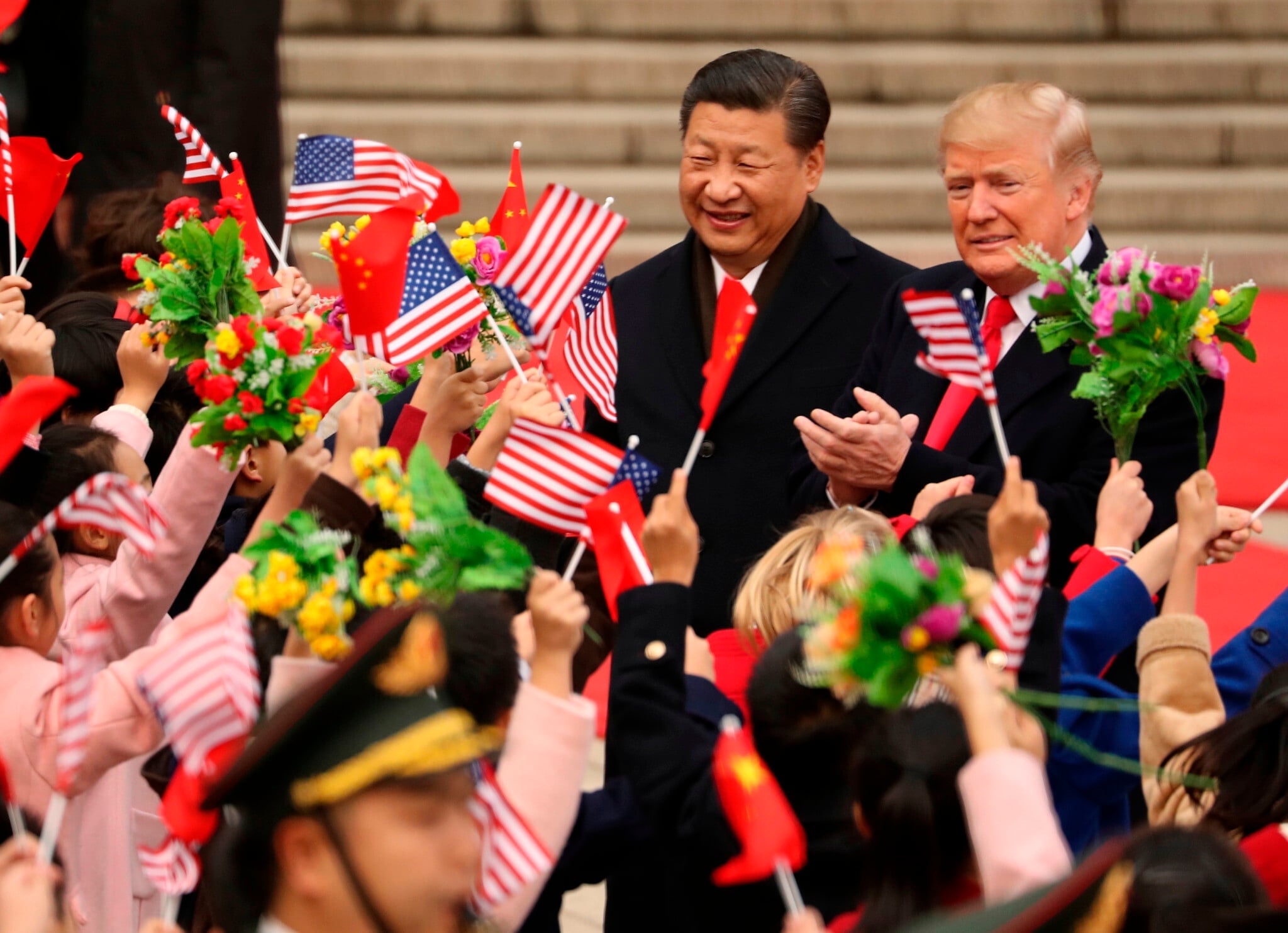
As the upcoming summit between Washington and Beijing approaches, a message is starting to circulate in some Western analytical circles: could China, in exchange for American concessions, push Iran to negotiate seriously? Or even to capitulate?. The argument is interesting in its simplicity but false.
It reveals a structural misunderstanding of Chinese behaviour.
Beijing is not a mediator. It is an “interest manager”.
China absorbs 90% of Iranian oil exports at a discounted price. This leverage is real (that’s why Beijing will not sacrifice it to help Washington). Forcing Tehran to give in to the US is working against its own strategic rival. It is reintegrating Iran into the American orbit. This action aims to eliminate a point of friction that Beijing has deliberately maintained for decades.
The mistake is to confuse ability with intent. China can exert economic pressure on Tehran. The question is whether this serves Chinese interests. On this point, the answer is clear.
A useful Iran, from the Chinese perspective, is an Iran under control: weakened enough to remain dependent on China’s economic lifelines, but not crushed enough to trigger an unpredictable regional recomposition. An Iran that surrenders to US pressure is an Iran that leaves the Chinese sphere of influence, is reintegrated into Western financial systems, and is eventually capable of strategic realignment. This does not serve Beijing.
What China will do—and won’t do
This outcome does not mean that Beijing will remain passive; Chinese diplomacy is rarely passive. What she could do is operate on the margins—with real skill.
It could marginally reduce its purchases of Iranian oil to signal its dissatisfaction or offer Washington a gesture of goodwill without any real strategic cost, recommending restraint where escalation is likely to get out of hand and directing negotiating positions toward formulas that preserve the Iranian agency while reducing the risk of military confrontation.
And if a partial agreement emerges between Washington and Tehran – under US pressure, by Iranian exhaustion, or by pragmatic calculation – Beijing could present itself as a co-architect. Without having conceded anything essential. Without having taken any real risk.
This is the sophistication of Chinese calculations: maximum diplomatic visibility, minimum strategic cost.
The western projection error
There is a deeper problem that deserves to be mentioned. Western observers project onto Beijing the role of international arbiter – because that is the role they need China to play in resolving crises over which they no longer have any control. Beijing has carefully cultivated this image; it never materially fulfilled it when its own interests were at stake.
The Iranian case is the clearest proof of this. Through the JCPOA negotiations, maximum-pressure campaigns, and post-2022 escalation cycles – China has maintained its economic relationship with Tehran, offered rhetorical support to diplomacy, and refused to exert the coercive pressure that would actually change Iran’s calculations. This is not inconsistency. It is a coherent strategy, executed with patience and precision.
China is managing Iran for itself. If this management incidentally produces a de-escalation that Washington can present as a diplomatic victory, Beijing will gladly accept the credit. Not out of kindness. By calculation.
Those who expect something else do not yet understand how Beijing thinks.