The Vanished Engineer: The Michael Rubin File — Part 2: A Family of Suspects
I am continuing the search for my long-lost great-uncle, Michael Rubin. Part 1 was published here on September 23, 2026. The investigation remains open. We have yet to find a body, so to speak—if I may borrow the language of my favorite TV crime series. Extending the analogy, I am developing one or more theories of the “crime” to determine where to dig for more information.
For many years, I studied aquifers—water-bearing geological formations deep underground. Managing them is difficult because intertwined geological processes create complex structures in which fast-flow channels and barriers can lie side by side in irregular patterns. Flow direction, flow rates, and water quality are therefore difficult to predict. Questions needed to be addressed such as: Where is the water? How much water is there? How did it get there? What is the water quality? What is the flow direction? Where to drill safely and how much can be pumped sustainably? What are the threats to water quality? If contaminants are accidentally released into the environment, how quickly will they reach the aquifer? How fast will the contaminants spread and when might they endanger the environment?
And because aquifers can extend over vast areas while subsurface data—obtained mostly through drilling—are prohibitively expensive, uncertainty is unavoidable.
So how to manage such complex systems?
We begin by constructing physically plausible geological models and using them to simulate flow within the aquifer. The resulting scenarios help us quantify risk and design data-acquisition campaigns that distinguish between competing explanations. The goal is not to eliminate uncertainty, which is usually impossible, but to reduce it and account for what remains in our decisions. We do this by discarding unrealistic scenarios and ranking the plausible ones. People make decisions under uncertainty in much the same way: they weigh alternative scenarios and choose the strategy that minimizes risk.
Searching for Uncle Michael feels surprisingly similar. Here, too, I have only fragments of evidence with which to map hidden structures: incomplete records, partial memories, family relationships, and emotional currents that disappeared underground decades ago.
So, I will borrow the strategy I used in aquifer modeling. I will begin by identifying plausible explanations for Michael’s disappearance and then look for evidence that might help distinguish between them.
Aquifer characterization often begins by studying better-sampled aquifers shaped by similar geological processes and using them as analogues. That is what I plan to do in this installment. I will consider several plausible theories for Michael’s disappearance by scanning the literature of the time and asking what we can possibly learn from the circumstances surrounding them. I am referring to these theories as my “crime theories”.
In parallel, I will seek what hydrologists call site-specific information—or, in this case, Uncle-Michael-specific information. This would be evidence most capable of distinguishing among competing theories
For that, I need an experienced driller.
But prior to that, I need to develop my crime theories.
Let’s start with motive. Why did Michael leave Israel, and why did he disappear from our family’s life?
The two questions may have different answers. Leaving a country is one thing. Losing contact with your family is another. I am trying to understand whether the first led gradually to the second—or whether something else happened along the way.
Michael was a mechanical engineer with international experience. During the Second World War, he had served as a captain in the British Royal Engineers. He had qualifications that could have opened doors in more than one country.
Perhaps an attractive position abroad drew him away. Postwar reconstruction created a demand for engineers who could work on industrial plants, machinery, and infrastructure. Michael’s experience might have suited him for such work, and his military service and rank may have strengthened his prospects.
But Israel needed engineers, too.
An engineer in a country under construction
The young State of Israel was absorbing immigrants, building housing and infrastructure, expanding its electricity supply, and confronting an enormous challenge: how to bring water to the Negev.
Consider the Yarkon–Negev water project. Its purpose was to carry water from the Yarkon springs east of Tel Aviv to the arid south through a long pipeline and a series of pumping stations. Construction began in the early 1950s, and the first major pipeline was inaugurated in July 1955.
This was no ordinary plumbing job. It required powerful pumps, large diesel engines, extensive piping, and engineers capable of making the entire system work reliably. In July 1952, the project’s developers signed a $2.1 million contract with the American Worthington Corporation for pumping equipment and diesel generators. That is close to $26 million in today’s dollars.
Here was the kind of undertaking to which an experienced mechanical engineer could have contributed.
Michael was not an engineer without prospects in Israel. Yet the timing matters. In the early 1950s, the Yarkon–Negev project was still taking shape. Israel had ambitious plans, but some of its largest engineering undertakings lay ahead.
There was also another side to life in the young country. Israel was under a severe austerity regime, the tzena, introduced in 1949. Food and other necessities were rationed, foreign currency was scarce, and shortages became part of everyday life. For members of the old Yishuv, including the pre-1945 immigrants and native born, the contrast with the recent past could have been particularly jarring. During the Second World War, Palestine had experienced something of an economic boom. The enormous British military presence in the Middle East and the Mediterranean Basin created demand for construction, maintenance, manufactured goods, food, and services. Then came independence, mass immigration—and austerity.
Ouch.
And the country itself was changing at warp speed. Hundreds of thousands of newcomers poured in during Israel’s first years, transforming the society the prewar immigrants had built. Michael belonged firmly to the older group. He had arrived in Palestine in 1934. He was an educated professional, established in the country before statehood, and had served as an officer in the British Army. Israel of the early 1950s was a very different place from the Palestine to which he had immigrated less than twenty years earlier.
The encounter between the old-timers and the newcomers was not always gentle. There was a real social chasm, particularly between the established Yishuv and survivors arriving from Europe. In The Seventh Million, Tom Segev quotes writer Yehudit Hendel remembering what seemed to her like “almost two races” living in the same country: those who considered themselves almost godlike and the supposedly inferior people who had arrived after the war. Leah Goldberg was equally blunt. At a 1949 meeting with Ben-Gurion, she described the Holocaust survivors as “ugly, impoverished, morally suspect, and hard to love.” She went on to argue that Israeli writers must nevertheless recognize their humanity. It was an appeal for understanding, but not, at least in Segev’s account and later by literary scholar Hamutal Bar-Yosef, a retraction of her harsh judgment. Leah Goldberg was advocating compassion without necessarily abandoning the prejudices that made compassion, in her own description, so difficult. The old-timers did not necessarily have to hate the newcomer to regard him as inferior.
For me, however, this is not merely social history. Some version of that chasm existed inside my own family.
After my father was released from British detention where he was held as an illegal immigrant, he met his uncle Karl Rubin at the gate of the detention camp south of Haifa. My father remembered Karl asking him, in effect: How did you manage to survive the Nazis? Only bad people survived, Karl said, adding that he would not have been able to survive. Sweet Uncle Karl!!
Karl was not Michael. I have no evidence that Michael shared that attitude. In fact, Michael’s earlier efforts to help my father escape from Poland give me good reason not to put Karl’s words into Michael’s mouth. But Karl’s remark tells me that the divide described by Tom Segev was not something that existed only in books about early Israel. It had crossed the threshold into the Rubin family.
In fact, it went further than crossing the threshold. I wrote about it in I Want This in Writing.
Another, more tangible measure was the distance separating the great-uncles I call the “Mayflowers” and their peers from the newcomers in their own family, including my father and his sisters.
My father was living in an improvised tin shack on the roof of a building in Tel Aviv. “Shack” may make it sound more substantial than it was. There was no running water, no kitchen, no restroom—none of the basic amenities of a home. Tin roof and tin walls made it an inferno in the summers and freezing cold in winters. This was where a young man who had survived occupied Poland and finally made his way to Israel was starting his new life.
Meanwhile, he had two highly successful great-uncles in the engineering and architectural professions. Karl Rubin was a well-known architect who designed and managed construction projects. Michael was a mechanical engineer and former captain in the British Royal Engineers.
I do not know what discussions took place among them. I do not know what help was offered or refused, or what other circumstances I am missing. And I do not believe that successful relatives acquire an obligation to support less fortunate members of the family merely because they are relatives.
Still, the contrast is difficult for me to ignore.
My father was living in a tin shack without running water or a toilet and working on a construction site, bending iron. His two successful great-uncles were in professions that could conceivably have opened other doors for him. As far as I know, neither did.
In Michael’s case, that puzzles me particularly. He had already gone to considerable trouble to help this same nephew escape Poland. Whatever relationship existed between them then had been important enough for Michael to act.
So, I cannot help wondering. Why not now? What happened afterward?
Perhaps nothing happened. Perhaps I am looking backward across three-quarters of a century and seeing significance where ordinary circumstances would have provided a perfectly mundane explanation. But this investigation is about competing explanations, and this is evidence I cannot simply discard.
The social chasm between old-timers and survivors existed in Israel. Karl’s words show that something resembling it existed within my own family. Whether it tells us anything about Michael remains an open question. But this was the zeitgeist, the spirit of the time.
There was another curious movement taking place at the same time. While enormous numbers of immigrants were pouring into Israel, a much smaller stream was moving in the opposite direction. By the middle of the 1950s, the departure of educated professionals and veterans of the pre-state Yishuv had become sufficiently troubling that Ben-Gurion’s government was looking for ways to bring some of them home. Particularly striking for my purposes, contemporary figures showed that among veteran emigrants there was a substantial representation of people who had originally arrived in Palestine during the 1930s.
Michael had arrived in 1934.
That may not explain Michael’s departure. But it gives him an interesting peer group. He may not have been an eccentric engineer, inexplicably abandoning a country that desperately needed engineers. He may have belonged to a small but significant outward movement of established, European-born professionals whose education, experience, and connections made their skills portable—and who looked beyond Israel for their futures.
Perhaps Michael saw an opportunity elsewhere that offered greater responsibility, better pay, or one that closely matched his experience. After serving as a captain in the British Royal Engineers and working in an international environment, he may have found the prospect of working abroad quite natural. Perhaps somewhere in the British Commonwealth. Perhaps elsewhere.
Or perhaps he simply wanted to see more of the world. He had already lived in more than one country. Why should Israel necessarily have been his last stop?
That gives us one possible explanation. Michael pursued his career abroad. A temporary assignment became a longer stay. One project led to another. Visits to Israel became less frequent, letters went unanswered, and family connections gradually weakened.
No quarrel is required for this scenario. Distance can do its work quietly.
None of this tells me why Michael left. It tells me something equally important at this stage of the investigation: what the world around him looked like when he did.
A life of his own
There is “crime theory,” one that has little to do with engineering.
What about Michael’s personal life?
I know remarkably little about his relationships. Could he have met a woman and followed her to another country? Could he have married and raised children elsewhere?
Or could there have been a man in his life? If so, might Michael have sought a place where he and his partner could live with greater freedom—or at least greater privacy?
I have no evidence of any of these possibilities. I do not know whether Michael had a partner, what kind of relationship he might have wanted, or whether his personal life had anything to do with his departure. Still, it would be odd to investigate a man’s disappearance while considering his career and family obligations but overlooking the possibility that he had a life of his own.
Perhaps Michael moved toward someone rather than away from anyone.
Perhaps he built a new household, with people who knew little about the family he had left behind. Or perhaps he simply became absorbed in a new life, while his old connections faded.
Perhaps he joined a Buddhist monastery—or an organization like Habitat for Humanity? Wouldn’t that be nice? It would make us all very proud, but I rank it as a very low probability option.
And there is yet another possibility—one with an uncomfortable familiarity.
The Rubin family tradition
I have reasons to wonder whether Michael’s disappearance involved a family rupture.
The Rubins had some experience with those. In the nineteenth century, a herem imposed on Salomon Rubin and the estrangement between his branch of the family and that of his brother Matityahu left a division that endured for generations.
A century later, my grandfather Moshe—Michael’s brother—and my father, Arnon, had their own falling-out. In 1954, Moshe arranged what I call Dreyfus II: a ceremony at which Arnon signed a statement severing their father-son relationship. They remained estranged for the rest of Moshe’s life.
I did not know any of this when I met my grandfather. In fact, until that day, I had not even known I had a grandfather living.
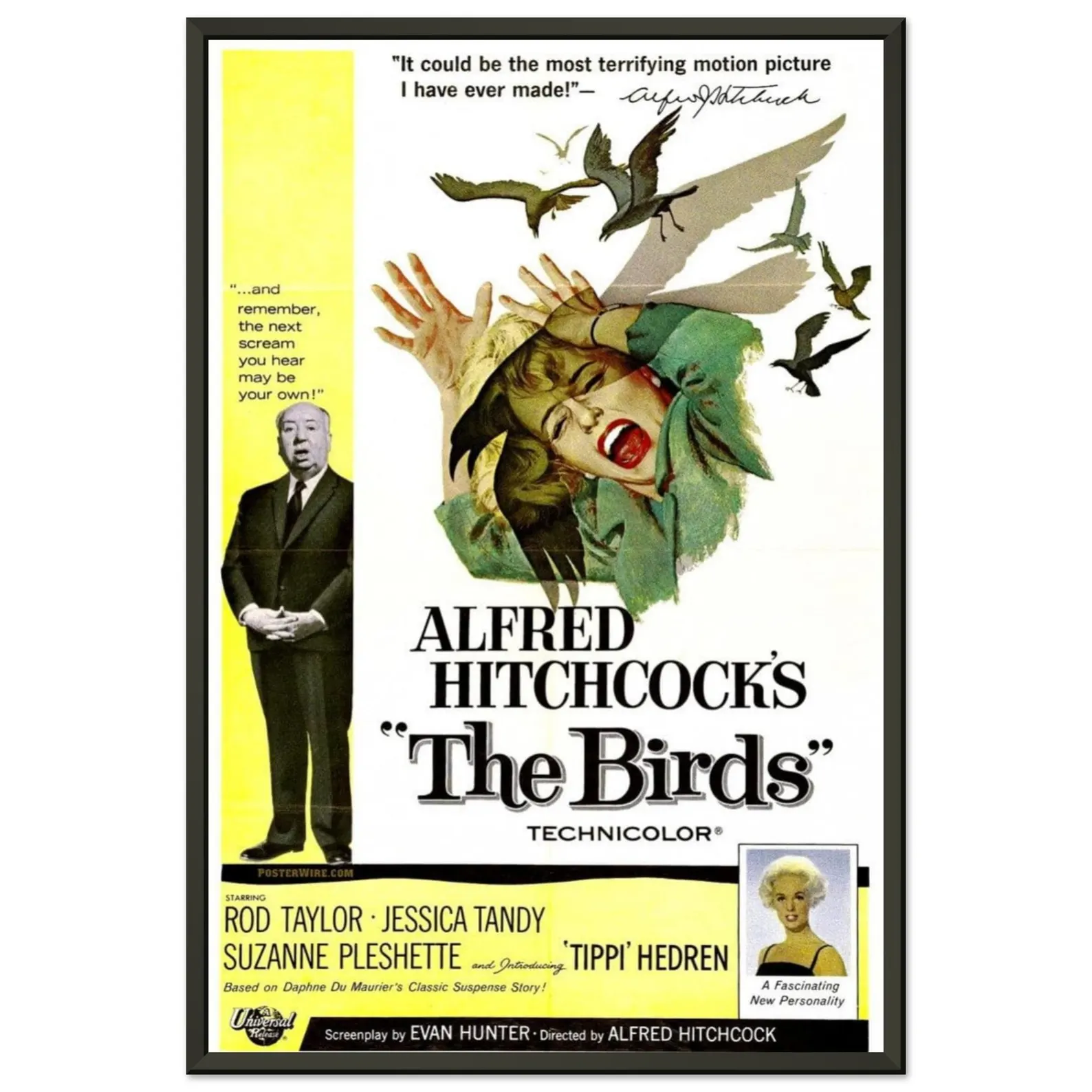
It was the summer of 1963, and I was nine years old, visiting my father at his Tel Aviv office, just off Ben-Yehuda Street. I remember the date clearly: Alfred Hitchcock’s The Birds was playing at the movie theaters, and a large sign for it hung on the movie theater across the street.
On our way to lunch, we walked along Ben-Yehuda Street while I carried a small box containing a chick my father had bought from a street vendor. At the corner of Ben-Yehuda and Frishman Streets, he pointed to a bookstore across the street and said it belonged to his father. Its sign declared “Safrut Ve’Omanut Rubin” [Literature and Art Rubin in Hebrew]. A coffee shop called Mersand stood right next to it. It looked like a happy place.
A grandfather! My grandfather! Just across the street!
I wanted to meet him. My father was reluctant, but after considerable pleading on my part, we went in. An elderly man stood behind the counter. He looked curiously at my father. My father offered him his hand. The man raised his own hand to stop us, then pointed silently toward the door. No, he was not the guard at the door. And no, it was not about the baby chick I held in my hands. And no, he did not catch us stealing anything. This guy was my grandfather, Moshe Rubin. We turned on our heels and left.
That was my first and only encounter with my grandfather. I saw him again at his funeral, but that does not count. I have described the encounter at greater length in my memoir, I Want This in Writing. Here, it serves a narrower purpose: I witnessed firsthand how thoroughly a family relationship could be severed. My father and grandfather lived in the same city. My father worked within walking distance of the bookstore. Yet they remained strangers to each other
I see a recurring pattern here—what Law & Order would call an MO: This family does not resolve disagreements around the dinner table. It is also, if you wish, a character testimony about Michael’s brother, who happened to be my grandfather, Moshe. In my immediate family, we called him The Old Man, not by his given name.
Which brings me back to Michael.
Two brothers a world apart
Moshe and Michael were brothers, but the war had taken them along very different paths.
Michael moved to Palestine in 1934, escaping the Nazi occupation of Europe, and later served in the British Army. Moshe remained in Europe, endured the war and devastating losses, and eventually reached Israel after staying in Vienna for several years.
Michael had helped Moshe and the children leave Poland. Whatever happened later, that act belongs in the story. It is evidence of a connection between the brothers at a moment when help mattered enormously.
But what happened after the war? How did two brothers, separated by such different wartime experiences, understand one another? What did each expect from the other? Did the bond demonstrated by Michael’s help survive the difficult business of beginning life again?
I cannot answer those questions yet. Different experiences do not, by themselves, establish resentment or a quarrel. And the fact that Moshe broke with my father does not prove that he broke with Michael.
But I know that close relatives in this family could become estranged; I witnessed the consequences myself. It seemed almost like a tradition passed down through generations. So it is reasonable to ask whether Michael’s departure and later silence reflected another such rupture.
Leaving, and staying away
The explanations need not compete.
Michael may have left Israel because an engineering opportunity drew him abroad. Or he may have formed a relationship or built a household there. And a family disagreement, if one occurred, may have made it easier to remain away—or harder to return.
Alternatively, there may have been no disagreement at all. His career and personal life may have carried him elsewhere, while family contact slowly dwindled.
At present, I cannot distinguish between those scenarios. I do not know enough about Michael’s work, his relationships, or his dealings with Moshe after the war. But I can assign likelihoods.
What I do know is that Michael once helped his brother and his brother’s children escape Poland. Years later, he was no longer part of our lives.
Did Michael’s career take him away from the family? Did a new life draw him elsewhere? Or did something happen within the family that made his absence permanent?
For now, the question remains open. And that is where the investigation continues.
Next Steps
It is time to drill.
I need to learn more about Michael Rubin’s life in Palestine (and possibly Israel, depending on when he left the country) and in the United States. That is a rather broad research agenda, and I intend to cast a wide net.
I am particularly interested in discovering whether, where, and when the paths of great-uncle Michael and my grandfather Moshe crossed after the war.
Vienna is one place worth investigating. The Old Man—that is what we called my grandfather Moshe, and it was not a term of endearment—spent several years there after the war. Vienna was also home to a British military headquarters during the Allied occupation of Austria. Michael had served as a captain in the British Royal Engineers. Could he have been stationed there? Could the two brothers have crossed paths in postwar Vienna? And if they did, was it a reunion—or the beginning of another family feud?
And then there is the question of money. Knowing the usual suspects, I suspect that an inheritance, a will, or some other financial dispute might have played a role. I have no evidence of that yet, but my family’s history gives me ample reason to keep the possibility in mind.
If the Rubins had a family motto, it would probably be WWW: We Write Wills.
And the family crest? A legal document crossed by a blood-dripping dagger.
#underothernames