The View From The Promised Land
Please read the following quotes:
“With regard to your inclination toward a feeling of sadness, a good remedy for it is to have it firmly engraved on your mind that G‑d, the Creator of the world, watches over everyone individually and, being the Essence of goodness, there is therefore no room for sadness or worry …”
“As for your moods and feeling of loneliness, etc., surely there is no room for it in the light of the teachings of the Baal Shem Tov and the true concept of Divine Providence … The realization of this must instill a deep feeling of confidence and optimism, and you will do well to reflect on this subject.”
“With regard to your writing about your feeling of depression … that G‑d’s benevolent Providence extends to each and everyone individually, as is frequently emphasized in Psalms that G‑d is your “Guardian” and your “Keeper” and is always “at your right hand,” etc., so that every Jew can feel quite secure in the constant presence and watchfulness of G‑d.”
______________________
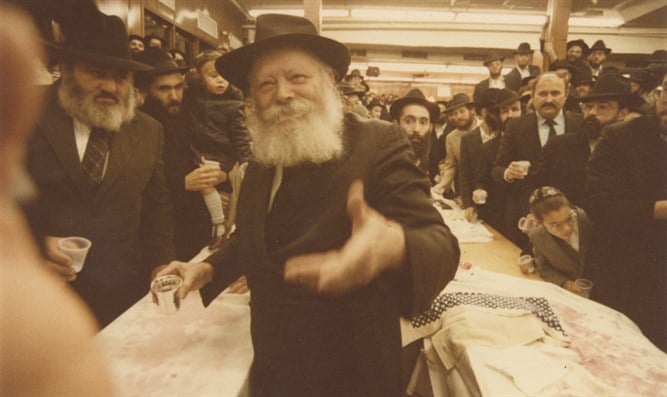
These are all quotes from letters of the Lubavitcher Rebbe to various individuals. There are thousands of such letters, written to ordinary people facing ordinary struggles: anxiety, loneliness, depression, livelihood concerns, family challenges, and uncertainty about the future.
I often read these letters, especially when I’m experiencing certain struggles.
Again and again, the letters contain the same themes. G-d is both the Creator and Designer of the universe. G-d is good, and prepares only goodness for you. There is no reason for despair. Always be happy and hopeful. Keep going, with confidence and trust.
Every time I read these letters, I am struck by two thoughts.
The first is simple: What kind of person writes like this?!
It’s not only what the Rebbe writes, but also how he expresses it. With absolute confidence and clarity. And lots of love. No hesitation, no shame, no uncertainty, no defensiveness. The Rebbe didn’t write as though he was proposing a theory or offering comfort. He expressed these truths with the same certainty that one might speak about gravity.
G-d is real. Divine providence is real. The soul is real. Divine goodness is real. Our life’s importance and purpose are real. Messianic redemption is real.
The Rebbe was not naive to human suffering. Every single day, for more than forty years, he carried the burdens of countless people and was privy to their deepest struggles. Yet he wrote as someone who perceived a reality that is so often hidden from our eyes and hearts.
The Rebbe was a true tzaddik. Like Moses, who is described in the Torah is an “Ish H’Elokim,” a G-dly person. And as the Midrash explains, “His lower half was man; his upper half was G-dly.”
And then my second thought: But I am not there. I don’t see my life and the world in that way. At least not all the time.
When I am experiencing a painful challenge, my mind might be able to hear and understand these truths (and sometimes even my mind is too muddled to appreciate them), but my heart doesn’t feel them. My nervous system doesn’t seem very convinced of them. The Rebbe writes “there is no place for despair,” but sometimes my body is panicking with anxiety. The Rebbe writes “G-d watches over everyone individually,” but sometimes my body is numb with fear.
And then I’m left with two big questions: Firstly, is something so wrong with me that I often cannot internalize these truths? Secondly, how can I ever integrate these Divine truths into my system and help me live with trust, calm, happiness, and confidence?
Let’s consider two stories from the Torah:
Last week we read the story about the spies. Moshe sent twelve spies to scout the land of Israel. Ten returned with negative reports, “The people who inhabit the land are mighty … we are unable to go up against them, for they are stronger than we.” And two of them – Yehoshua and Calev – offered a promising report. “The land is an exceedingly good land. We can surely go up and take possession of it, for we can indeed overcome it.”
When we read this story, we generally frame it as the ‘holy spies vs the wicked ones’. We express shock about how the ten spies could have fallen so low and betrayed their mission so sinisterly. And we proudly identify with Yehoshua and Calev, almost suggesting that if we would have been there, we would most certainly have stood on their side.
But perhaps the ten spies weren’t wicked at all. Perhaps they were just normal and ordinary people, and their reaction was a perfectly appropriate human behavior. In fact, Yehoshua and Calev were the ‘not-normal’ ones, the extraordinary spiritual heroes. Any ordinary person, and I’m taking the liberty to include you and me here, would of course fear the mighty giants. Only rare souls like Yehoshua and Calev were able to perceive a deeper reality that lay beyond what the human eye could see.
Now another story: After the Jews escaped Egypt, they became trapped in the desert. In front of them, the Reed Sea. Behind them, the Egyptians. They were stuck, with no apparent way out. Everyone panicked. But according to the Talmud, one person, Nachshon son of Aminodov, understood G-d’s instruction and proceeded to walk into the sea. Everyone watched nervously as he sank deeper into the water, when suddenly the great miracle happened – the sea split.
When we tell this story each year, we obviously extol Nachshon’s faith, and turn to him as an example for us to emulate. But in reality, there was only one Nachshon. Everyone else, at least 599,999 others, stood by filled with worry and fear.
If you and I would have been there, do you think that we would have gone along with Nachshon? Highly improbable. Does that make us wicked or spiritual failures? No, it just means that we are ordinary humans. Ordinary people often struggle with feeling the Divine truths of reality which are so hidden from us.
Ok, so we’re human and we struggle. But is there a way out? How does a person move from knowing these truths to living these truths?
Of course this is possible. We’re not only human – we also possess a soul, a piece of G-d within us. Divine truths are deep down our truths.
But how?
One answer is that even when you’re struggling to be a Nachshon, you can connect with a Nachshon. The Rebbe, like a Nachshon, was a living embodiment of these Divine truths.
Connecting with the Rebbe and studying his teachings awakens our soul. It reminds us of what our soul already knows. It helps us to view the world not only through the eyes of the body, but through the eyes of the soul.
Yehoshua and Calev saw the same giants that the other spies saw. Nachshon walked into the same sea that everyone else saw. The difference was not the facts before their eyes. The difference was the reality in their hearts.
This is what I feel when I study the Rebbe’s teachings, particularly the personal letters. The Rebbe didn’t live in a different universe than others. He fully understood their suffering. But he saw it differently. He saw more, he saw deeper, he saw further. He saw through a Divine lens.
When you and I see giants, the Rebbe sees a Promised Land. When you and I see an obstructing sea, the Rebbe sees a path.
I am fortunate and grateful beyond words to be connected with the Rebbe. In a world that is filled with so much turmoil, confusion, and uncertainty, the Rebbe’s presence and teachings are more than inspiring – they bring a piece of Heaven into my life, and they remind me of who I truly am.
The Rebbe would often challenge us: ‘“Be a Nachshon.” Truthfully, I don’t know if I will ever fully become a Nachshon. I don’t know if I will always be able to see the world the way the Rebbe saw it. But every time I study his teachings, I am reminded that such a vision exists, and that deep down it is my soul’s vision as well. That beneath my fears and doubts, I can strive to lead my life with faith, clarity, confidence, and joy.
And even though I may not always be a Nachshon, with the Rebbe’s guidance I know that I can sometimes be a Nachshon – especially when it matters most.
Perhaps that is one of the greatest gifts of the Rebbe – to offer us a glimpse of the view from the Promised Land, and to help us believe that it can become our view as well.