
Truth Seeker
The Votes Are Counted—Now What? How Israel Builds a Government
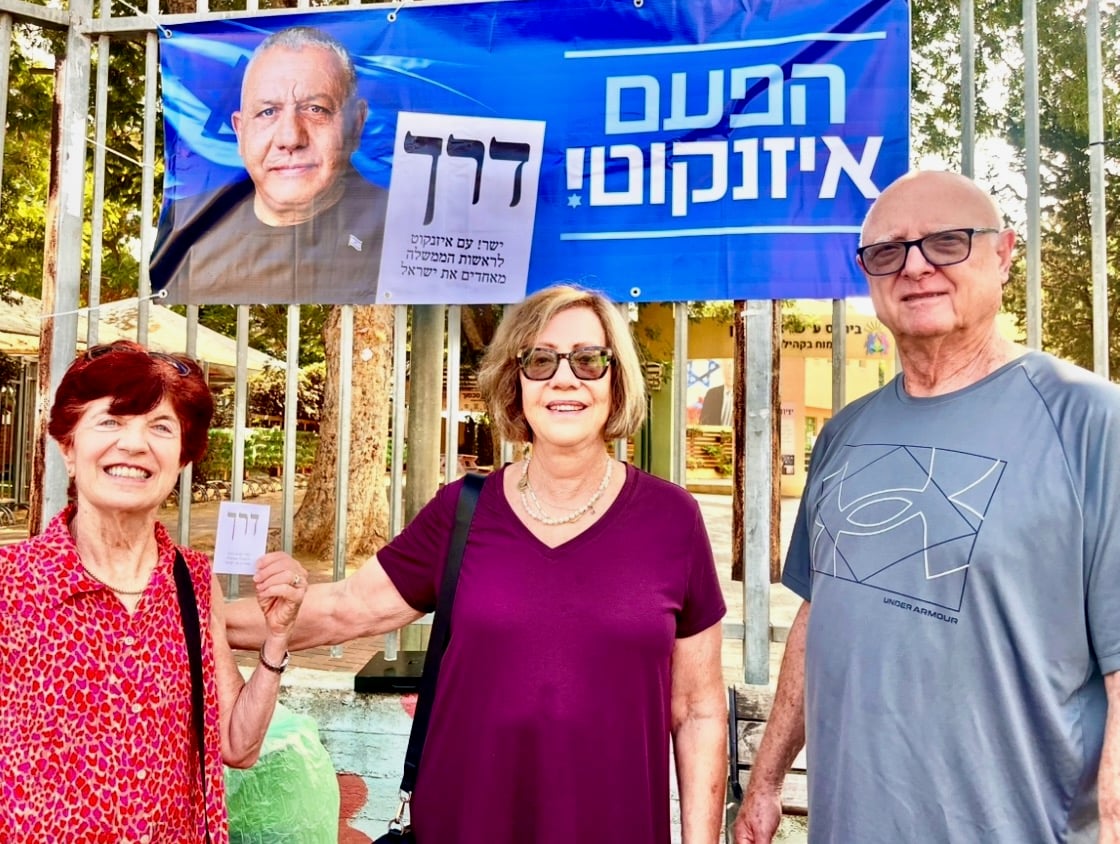
Karen holding a sample ballot after voting with our cousins in the October 27 elections
Israel voted. President Isaac Herzog has given Gadi Eisenkot the mandate to form Israel’s 26th Knesset government. Our friends and family in the US are asking us: What just happened ? What comes next ? This post-Israeli election primer contains the essentials for those who care about our beloved Israel and wish to follow the action.
Israel’s historic October 27, 2026 national election was framed by the trauma of October 7, by the ongoing three-year war against Iran’s Islamic regime, and by a referendum on Prime Minister Bibi Netanyahu and his government. By most measures, Israelis showed the world what a diverse, engaged and vibrant democracy looks like.
- Record Total Turnout. Israeli voter participation reached a historic 78%, versus the 70% average. An estimated 67,000 Israeli citizens returned from abroad to vote, including Karen and me.
- Record Arab-Israeli Participation. Defying years of political alienation and low turnout (53% in 2022), participation across Arab communities surged to 77%.
- Eleven Parties entered Israel’s new 26th Knesset. Among 38 registered political parties, 11 exceeded the 3.25% vote threshold to be allocated seats in Israel’s 26th Knesset.
- A Referendum against Netanyahu. The 25th Knesset’s governing coalition, led by Benjamin Netanyahu, lost its majority, contracting 22% from 68 seats to 53 seats.
The New 26th Knesset. Four Distinct Segments. On November 4th, the final vote tallies were certified. The 120-seat Knesset may be divided into four distinct segments:
- Eisenkot-Led Opposition Bloc (48 seats ): Former IDF Chief of Staff Gadi Eisenkot and his Centrist “Yashar” party (21 seats), received the most Knesset seats among the opposition bloc. The bloc includes “B’yachad” (12) – a Center-right alliance of former Prime Ministers Naftali Bennett and #2 Yair Lapid from Israel’s 24th Knesset; Yair Golan’s Left-Center “Democrats” (8); and Avigdor Liberman’s Russian immigrant, secular-nationalist “Yisrael Beiteinu” (7).
- Netanyahu-Led Non-Haredi Bloc (40 seats): Netanyahu’s “Likud” party contracted from 32 to 27 seats in the face of record opposition turnout. The bloc includes controversial Itamar Ben-Gvir and his extreme far-right “Otzma Yehudit” (7), and Bezalel Smotrich’s “Religious Zionists-Zehut” (6).
- Haredi Bloc (13 seats): The Haredi (ultra-orthodox) bloc was a part of Netanyahu’s ruling coalition in the previous Knesset, consisting of Ashkenazi “United Torah Judaism” (7) and Sephardi-Mizrahi “Shas party” (6).
- Arab-Led Bloc (19 seats): The reunified “Joint List” of 3 Arab parties (Hadash, Ta’al, Balad) (11), and Mansour Abbas’ “Ra’am” (8) were part of the opposition.
The Road to Forming Israel’s ruling coalition. With no preliminary bloc holding 61 seats, Israel entered a strict post-election constitutional calendar led by Israeli President Isaac Herzog. Based upon his November 5-7 consultations with all political parties, President Herzog has assigned Eisenkot the initial 28-day mandate to form Israel’s next government. On November 10th, the 120 MKs of the 26th Knesset will be sworn-in.
What Comes Next ? What to Look for ?
How Eisenkot may legislate during Coalition Negotiations. While Netanyahu remains Prime Minister until a new government is formed, the new 26th Knesset takes over immediately after November 10th, with authority to enact legislation and manage affairs. Reports are that Eisenkot intends to leverage his parliamentary majority, such as by canceling the enactment of divisive legislation limiting the independence and authority of the Judicial branch, and by advancing popular new legislation, such as forming an independent State Commission of Inquiry into the events of October 7, which Netanyahu’s government previously blocked. Critical Committees, such as Foreign Affairs and Defense, may be filled to ensure parliamentary oversight of Israeli diplomacy and national security.
Eisenkot has several challenging paths to form a ruling coalition.
- Majority Government: Eisenkot aims to rally a broad coalition of opposition parties and recruit individual MK defectors from Netanyahu’s coalition, to achieve a majority. Eisenkot invited in the Haredi and Arab parties, as long as they adhere to his Zionist principles: recognition of Israel as a Jewish and democratic state, commitment to the values of Israel’s Declaration of Independence, mandatory national service for all eligible citizens, and recognition of Hamas as a terrorist organization.
- Minority Government: If necessary, Eisenkot may form a minority government (less than 61 seats), where outside parties, such as Arab and Haredi parties, agree to support the government on key budget policy and confidence votes, without formally joining the cabinet.
- National Unity Government: While Eisenkot prioritizes full control of the legislative agenda, a national unity government may be formed when major opposing parties – in this case Yashar and Likud – agree to share power, often to ensure stability during a crisis, such as the ongoing war with Iran. A rotation agreement allows the Prime Ministership to be split between Eisenkot and Netanyahu to balance authority across the uniting factions, For Netanyahu, this may be the only means to remain in power during the 26th Knesset. For Eisenkot’s coalition, and their Israeli voters, this may be a non-starter.
If Eisenkot fails to form a government, then President Herzog can assign the mandate to Netanyahu.
Many challenges and surprises may be in store for the 26th Knesset.
Can Eisenkot, with the help of President Herzog, convince his coalition partners to make the necessary compromises to form a new government ? What will be the role of the Arab and Haredi parties ? How will the historic reset in the American political landscape reshape the new Knesset policies and impact the US – Israel relationship ? How will Israel and the United States manage its multi-front war against the Islamic Regime of Iran and its terrorist proxies ? How may friends of Israel, such as President Trump, or foes seek to influence the outcome?
With his family roots from Morocco, Eisenkot would be the first Mizrahi (from the Middle East and North Africa) Prime Minister. Can Eisenkot, with his modest working class background and his IDF leadership, successfully add defectors from Likud’s MKs and alter its decades-long, loyal Mizrahi base? Will the strength and diversity of the 33 women MKs in the 26th Knesset government significantly shift Israeli politics and policy priorities?
Where to Follow the Action. Additional resources are found by clicking the “blue-colored links” in this blog. Follow The Times of Israel news and podcasts for the latest. Buckle up for this historic and unpredictable ride.
Related Topics