


The Whiteboard
Some 25 years after I made Aliyah to Israel, I still find myself having those “Only in Israel” moments.
I had one of them the other week. My mother in Australia called and asked what I was getting up to today. In reply, I told her that I was going to stand in a queue to get a number for another queue to choose letters for the voting ballot in the upcoming elections.
This, of course, makes no sense to my mother in Australia, and also probably not to most Israelis.
When a party is running for election in Israel, it has to choose the letters that will appear on its ballot slip, and this works on a first-come, first-served basis. You want a good available letter; you’ve got to get one of the first picks.
And thus, I found myself taking the afternoon shift in a queue in a large tent outside the Knesset, surrounded by representatives of other parties who are running in the election. My mission: keeping an eye on the whiteboard with the list of who had arrived in which order.
Already the night before, members of different parties, including my own, had been lining up on the street to make sure they were first in.
Every few hours, our volunteers changed shifts to make sure there is always someone there in the queue. My party volunteers were second in line.
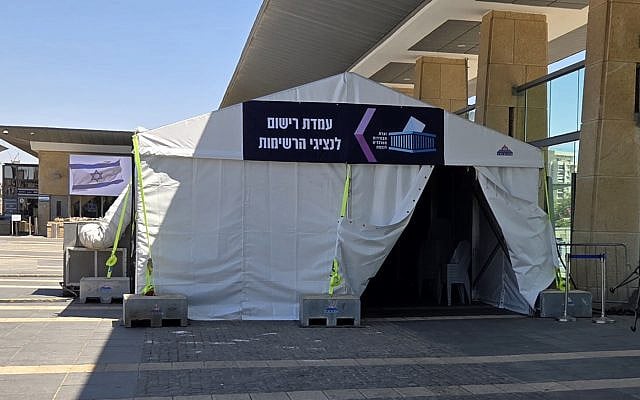
It might sound like quite a trivial affair, but it actually has a lot of importance and to tell the truth, I learned much in the five hours I was hanging out in that tent.
There was a sense of camaraderie amongst those present. We were all there because we wanted to do something rather than just sitting at home on our couches yelling at the television.
My mother always taught me that there is no use in complaining and that you should be the change you want to see in the world.
To tell you the truth, my motive for being there was actually quite selfish: I have a daughter who serves in the army reserves, a son currently in the army, and my youngest daughter, who is in twelfth grade, will recruit next year.
I am doing it for them.
I want to ensure that the future of my beloved country, the one I chose, the one I left Australia for, is better and led by people who are Zionists, liberals, who believe in equality and in the Jewish values I hold so dear.
This is why I support the B’Yachad party led by Naftali Bennett and Yair Lapid.
Other people in the queue asked us how much we were being paid for our time. They were surprised to learn that we were all volunteers and weren’t being paid at all. The other B’Yachad volunteers and I are united in the belief that our party is the best equipped to make the changes that we want to see, whether they be in education, cost of living, public transport, security, public diplomacy and more.
For example, last month Nadav Eyal, one of Israel’s leading political journalists, wrote (August 7, 2026, Yediot Ahronot):
“I approached three political parties and asked them to present plans for solving the transportation crisis in the next government. I received no response from Transport Minister Miri Regev’s office.
Gadi Eisenkot’s people sent me a list of principles and said they were working on a comprehensive plan.
The party that came back with a detailed document was the joint party of Naftali Bennett and Yair Lapid. The person responsible for this portfolio is Keren Terner, the former Director General of the Ministry of Transport. Without a plan, there is no chance of change.”
I think that is a great example of what’s at stake when we go to the ballot boxes in a couple of weeks.
Israel desperately needs change, and the people who are equipped to do it are the people who have a plan, the ones who have experience and the ones who are prepared with a vision of what they want the country to be.
Transportation isn’t the only area where B’Yachad has a plan. It has detailed plans for fixing Israel across every major area — education, the economy, security, employment, and more.
In the queue in the tent too, B’Yachad was well organized. Every time a new party representative turned up, we were the ones who wrote their name on the whiteboard that was keeping track of arrival order.
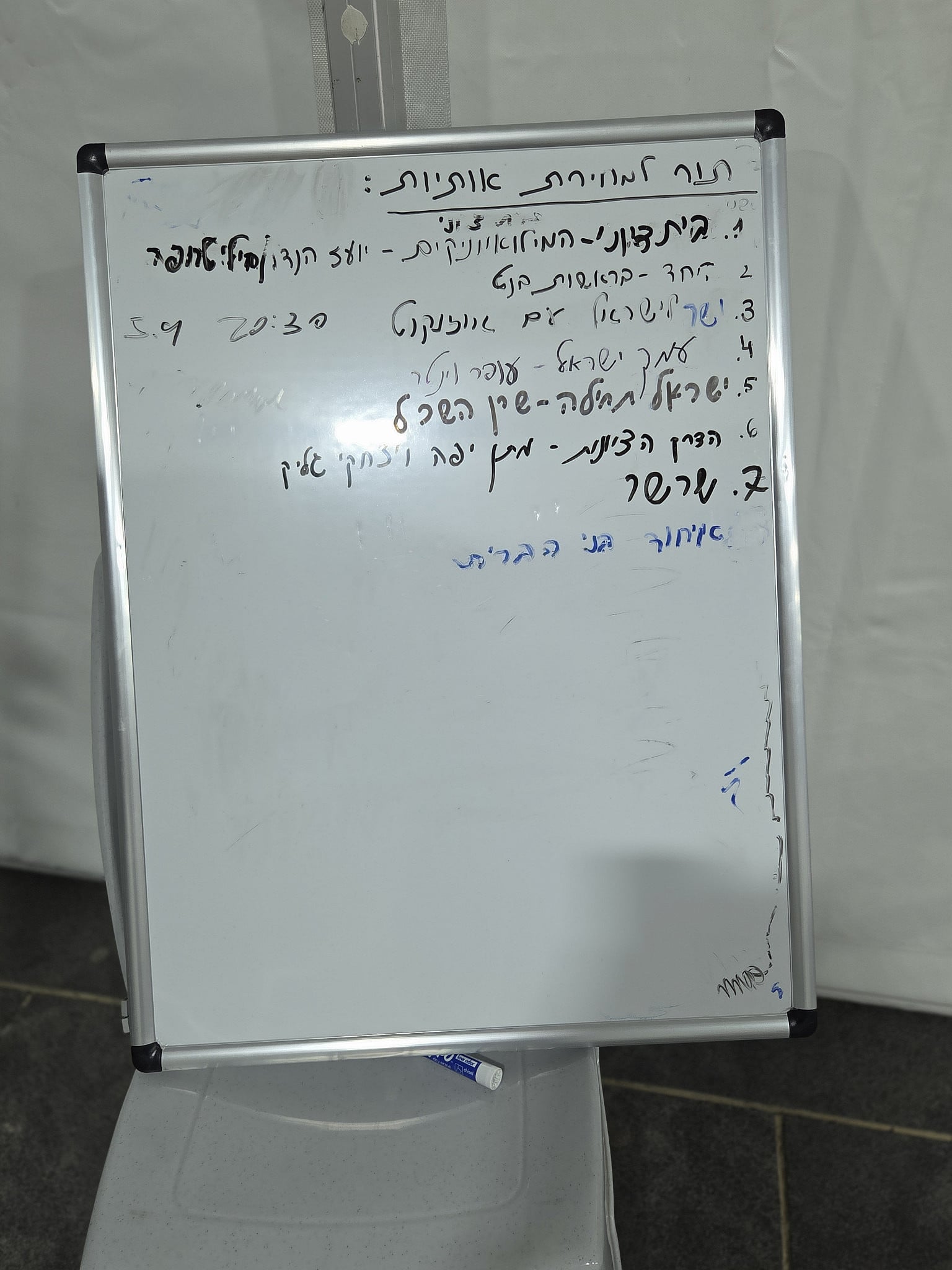
The whiteboard became quite famous as journalists came to take photographs of it and upload them to their social platforms, and at the deadline, the list written upon it was used to determine who would enter first to meet the election committee.
But how did the whiteboard get there in the first place?
When the B’Yachad volunteers turned up in the middle of the night, they came prepared; they had a plan, and they came with a whiteboard and markers. They knew what needed to be done to succeed in the mission. They knew that in order to have an organized queue, without arguments, you need to write the list in a publicly displayed manner.
It may seem trivial. I think it actually says a lot.
B’Yachad is a party that has a plan and people who have experience and vision, so that immediately after the elections, we can get to work to make this country safer, better, and more worthy for our children and the next generation.
And that’s the reason that I got off my couch and went to stand in a queue.