Leadership With Heart
The Work of Living After October 7
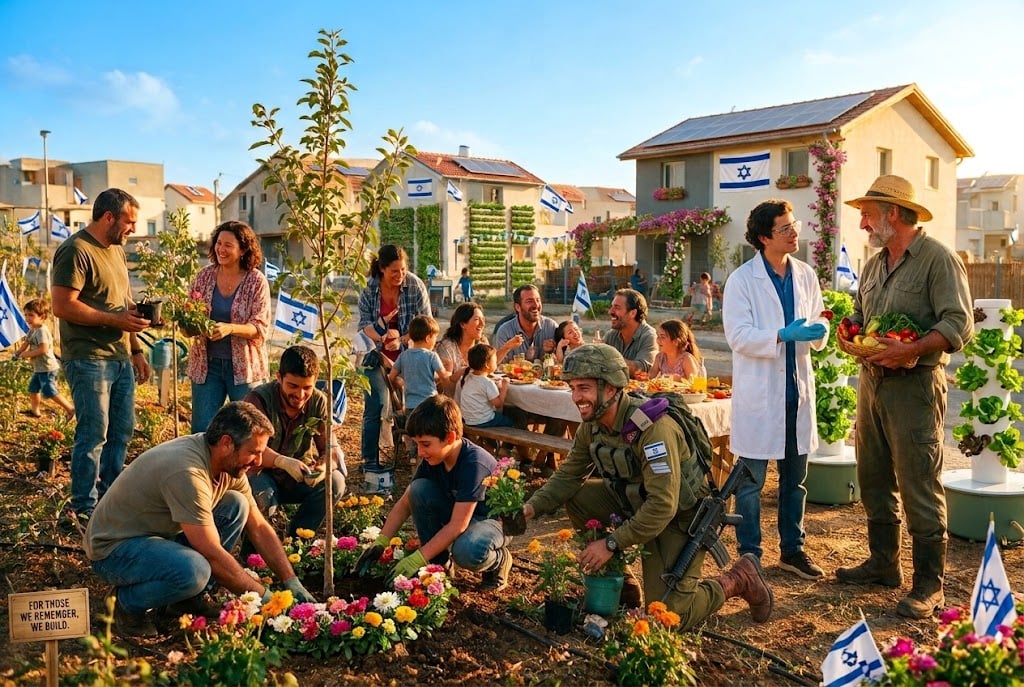
AI generated image
ALS scares me. So does terrorism. Both force us to confront how suddenly life can change.
I did not come to Tuesdays with Morrie as someone revisiting an old favorite. I came to it after October 7, carrying questions I did not know how to name.
Like millions of readers, I knew the outline: Mitch Albom visits Morrie Schwartz, his former professor, as ALS slowly takes Morrie’s body. But I did not expect the book to feel so immediate. Morrie is dying, yet he refuses to withdraw from life. He looks directly at death and asks the questions most of us spend our lives avoiding:
What matters?
Who matters?
How should we use the time we have?
After October 7, those questions no longer feel philosophical.
The emergency has changed, but the work is unfinished: caring for the wounded and bereaved, rebuilding communities, protecting Israel, and deciding what kind of society we want to be after all we have endured.
These questions arrive with the phone call every parent of a soldier dreads. They remain with families whose loved ones were murdered, wounded, kidnapped, or sent into battle. They live in communities near Gaza and Lebanon, in hospital rooms, at shivas, and around Shabbat tables.
Jews across the Diaspora carry related questions. They appear in the hesitation before wearing a kippah on the subway, the decision to tuck a Magen David inside a shirt before a flight, or the careful pause before speaking about Israel in a classroom or workplace.
Morrie could not have told Israel how to fight a war, secure a border, or conduct diplomacy. But his final classroom offers a different, deeply human question:
How does a people stay alert to danger without allowing danger to consume its soul?
Live Awake
Morrie believed that facing death honestly can teach us how to live more fully.
He taught that denying life’s fragility makes life smaller. When we refuse to face what can go wrong, we postpone gratitude, repair, and the hard work of becoming better.
Before October 7, Israel had, in some sense, fallen asleep.
We knew Hamas was armed, digging tunnels, firing rockets, and openly calling for Israel’s destruction. But too many people, including those charged with protecting the country, came to believe the threat was contained, deterred, and manageable.
Strength became assumption. Sophisticated technology created an illusion of invulnerability. Deterrence was treated as a permanent condition rather than what it is: something that must be tested, renewed, and never taken for granted.
For many Jews across the Diaspora, a parallel awakening followed. Decades of integration, civil-rights protections, and interfaith relationships had led many to believe Jewish safety rested on a durable foundation. Then came antisemitic harassment, intimidation, and public celebrations or justifications of the October 7 massacre in many places.
Legitimate criticism of Israeli policy is part of democratic life. But criticism becomes something else when Israel alone is held to standards no other country is expected to meet—or when anger at Israel becomes hostility toward Jews everywhere.
To live awake is not to live in panic.
It is to reject denial. It is to understand that “Never Again” is not a slogan for memorial days. It is a responsibility to act while there is still time.
Love Is Strength
Morrie believed that love is not sentiment. It is what we do for one another.
For Morrie, love was a practical responsibility: being there for people when they are frightened, grieving, sick, or in need, and refusing to look away because their pain makes us uncomfortable.
That kind of love sustained Israelis after October 7.
People drove south to help before they knew where they would sleep. Families opened their homes to evacuees. Volunteers brought supplies, visited the wounded, and sat with bereaved families who needed presence more than words.
The hostage families showed this most clearly. For more than two years, many of them refused to let their loved ones become numbers or bargaining chips. They spoke their names, shared their stories, and made sure the country remembered that every hostage was a person with a family, a history, and an empty place at home.
Love is not only how we respond in the first days of a crisis.
It is the long work that follows: remembering those who were murdered; caring for the wounded; standing beside bereaved families long after shiva ends; supporting soldiers and their families; helping displaced communities rebuild; and refusing to leave people alone with grief, trauma, or fear.
This is what it means to love one another through the years ahead—not only when the world is watching, but while we heal, rebuild, disagree, and move forward.
Accountability and Unity
Morrie taught that forgiveness does not erase truth; it frees us from being ruled by bitterness.
Israel owes its people a serious, credible, and transparent accounting of October 7.
The families of the fallen, survivors, wounded people, reservists, evacuees, and hostage families deserve answers. What warnings were missed? What assumptions failed? Who was responsible for the gap between what was known and what was done?
Seeking those answers is not disloyalty. It is an expression of love for a country and its people.
But the search for accountability must not become a license for internal hatred.
Israelis disagree deeply over the judiciary, military exemptions, the war, religion and state, Gaza, settlements, and political leadership. These arguments matter. But the reservist is not the enemy of the protester. The religious Israeli is not the enemy of the secular Israeli. The Jew in New York or London is not a stranger to the family in Sderot.
We must demand truth from our leaders while protecting the bonds between us.
Our enemies are counting on us being unable to do both.
Detach From the Noise, Not From the Feeling
Morrie’s lesson was not to suppress emotion, but to experience it without letting it control us.
After years of war, that is hard.
There is always another video, headline, chant, comment, or reminder of people celebrating Jewish suffering. It is easy to become consumed by anger. It is also easy to go numb.
Neither response can sustain a person or a people.
We must confront hatred, challenge falsehoods, and protect one another when threats are real. At the same time, we cannot allow every malicious voice to dictate our attention, disturb our homes, or shape how we live.
That means putting down the phone when we need to and returning to the work of living: caring for our families, showing up for our communities, building meaningful lives, and living openly and joyfully as Jews.
To live Jewishly after October 7 is not to deny danger. It is to refuse to let danger be the only story we tell about who we are.
Keep Choosing Life
Morrie was dying, yet he kept teaching, listening, and caring for the people around him. He understood that suffering does not eliminate meaning. It makes the search for meaning more urgent.
Israel suffered a devastating attack and a profound security failure on October 7, but it must remain strong. It must defend its borders, learn from its failures, and protect its citizens from people and groups that openly seek its destruction.
But strength alone is not a vision for life.
A country also needs homes that feel whole, schools that feel safe, meaningful work, thriving communities, and reasons for young people to imagine their futures in Israel. It must restore damaged communities, welcome families back to the north and south, fill classrooms and synagogues, and support the people who will rebuild what was broken.
It must also keep creating: developing medicine that saves lives, technology that solves real problems, and agricultural innovation that helps people grow food in difficult places. Israel’s innovation ecosystem remains a core driver of the country’s economy, including in health technology, food, agriculture, and advanced technology.
Terror seeks to reduce life to fear and division. One of the strongest answers is to live openly, proudly, and with purpose.
We did not choose this era. But we can choose how we meet it.
We can defend our lives without cheapening life. We can demand truth without turning on one another. And as we rebuild what was broken, we can prove that a wounded people does not merely learn to survive.
It learns—fully awake—how to live.
Related Topics
Related Posts