The World Has a Word of the Year. What Would Judaism Choose?
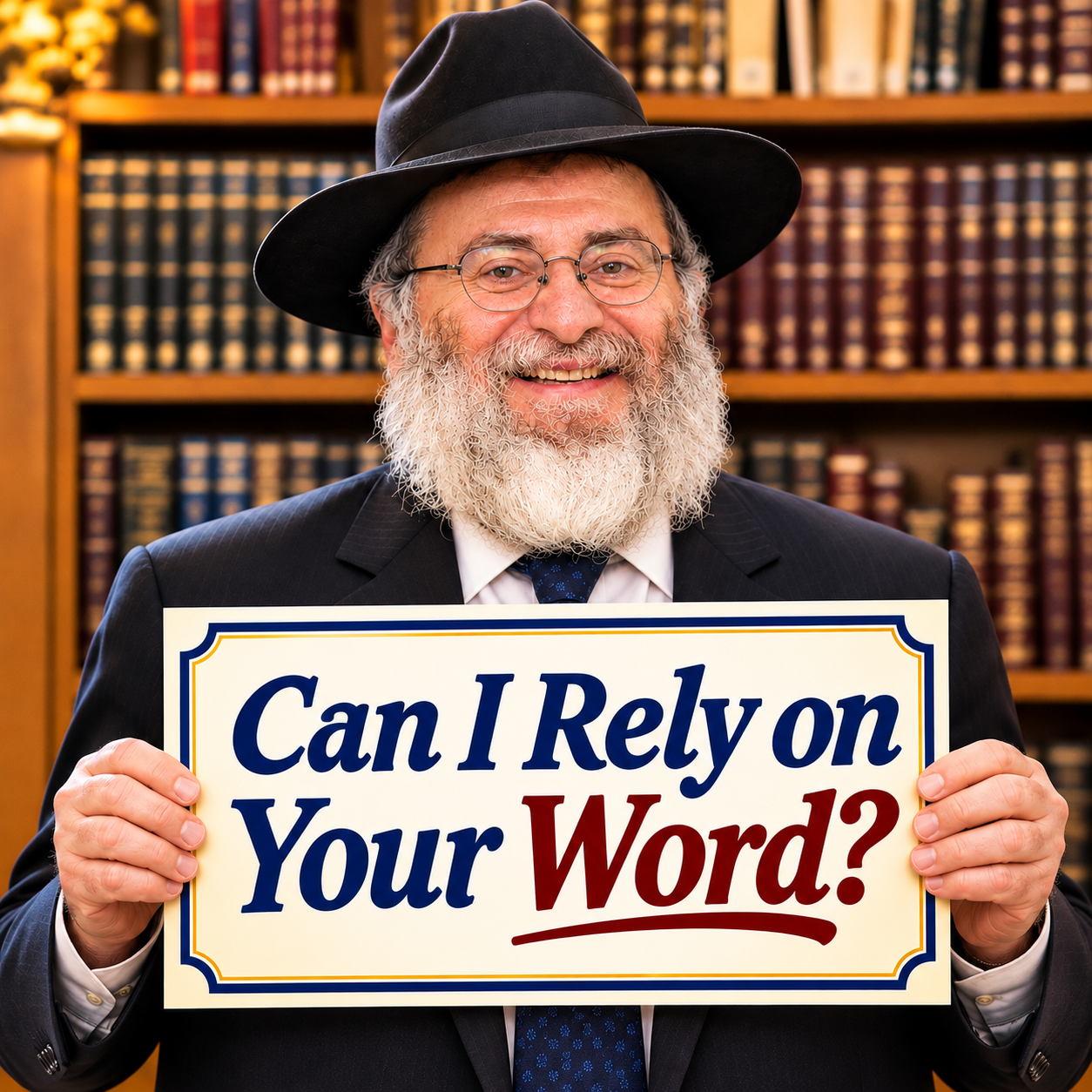
My Choice for the Jewish Word of the Year: Achrayut
Every year, the world’s leading dictionaries undertake a fascinating exercise. They examine the conversations, concerns and preoccupations of contemporary society and select a single word that captures the spirit of the year.
It is almost like taking the spiritual temperature of civilization.
Credit goes to Associated Press journalist Brian Melley for his thought-provoking coverage of Cambridge Dictionary’s selection of “human” as its Word of the Year, and to lexicographer Colin McIntosh for his observations about artificial intelligence and our understanding of humanity.
Consider the irony. After thousands of years of civilization, extraordinary scientific achievements and the development of machines capable of answering almost any question, humanity finds itself rediscovering the meaning of being human.
We have spent so much time teaching machines how to become more human. Perhaps we should spend the coming year teaching humans how to become more humane!
This annual exercise got me thinking: If the world’s dictionaries can select a Word of the Year, what would be the Jewish Word of the Year? What word would the Torah nominate?
What Our Words Reveal About Us
Consider some of the contemporary expressions attracting attention.
“Mogging” describes the desire to outshine others in appearance or social standing. “Maxxing” reflects our obsession with maximizing our appearance, productivity and personal performance. “Doomerism” expresses pessimism about the future. “Post-literate” reflects concerns about our diminishing appetite for reading and intellectual engagement. “Slopaganda” describes low-quality, artificially generated propaganda.
What an extraordinary portrait of contemporary civilization!
We are worried about losing our humanity, obsessed with outperforming one another, anxious about the future and increasingly concerned about distinguishing truth from falsehood.
Interestingly, Judaism has been addressing these very challenges for thousands of years.
Where society speaks of being human, Judaism speaks of the neshama, the Divine soul.
Where society encourages us to outshine others, Judaism teaches anavah, humility.
Where society encourages us to maximize our appearance and accomplishments, Judaism emphasizes tikkun hamiddot, the refinement of our character.
Where pessimism threatens to overwhelm us, Judaism offers bitachon, trust in G-d.
Where intellectual engagement is diminishing, Judaism insists upon Talmud Torah, lifelong learning.
And where misinformation proliferates, Judaism demands emet, truth.
But I believe there is one Hebrew word that encompasses all these values.
My Nomination: Achrayut — אחריות
Responsibility.
Why responsibility?
Because Judaism is not satisfied with describing the condition of the world. Judaism challenges us to improve the condition of the world.
The conventional Word of the Year tells us what has occupied our attention. The Jewish Word of the Year should tell us what deserves our attention.
It should not merely describe our circumstances. It should challenge our conduct.
There is a beautiful association within the Hebrew word achrayut. We can recognize within it the word acher, meaning another person.
Responsibility begins when another person’s welfare becomes part of my consciousness.
When your pain becomes my concern. When your loneliness becomes my invitation. When your difficulty becomes my opportunity to help. When your success becomes something I can celebrate without feeling diminished.
Responsibility is the ability to look beyond the narrow boundaries of our own existence and recognize that our lives are intertwined with the lives of others.
The First Question Addressed to Humanity
In the Garden of Eden, after Adam ate from the Tree of Knowledge, G-d called out to him with one extraordinary word:
Ayeka? — Where are you?
Surely an all-knowing G-d knew where Adam was hiding. The question was not geographical. It was existential.
Where are you in your life? Where are you in your relationship with G-d? Where are you in your relationship with your fellow human beings? What have you done with the talents, opportunities and blessings entrusted to you?
Today, our smartphones can tell us precisely where we are geographically. Yet no technological advancement can answer this fundamental spiritual question on our behalf.
A short time later, the Torah records another extraordinary conversation. When G-d asks Cain where his brother Abel is, Cain responds:
Hashomer achi anochi? — Am I my brother’s keeper?
Much of the Torah can be understood as an emphatic answer to that question:
Yes! You are your brother’s keeper.
Our sages teach, Kol Yisrael areivim zeh bazeh — all Jews are responsible for one another.
Responsibility is the bridge between religious belief and religious behavior.
Responsibility in the Age of Artificial Intelligence
A computer can compose a beautiful apology, but a human being must have the humility to offer it sincerely.
A machine can explain the importance of charity, but a human being must decide to give.
Technology can remind us of someone’s birthday, but we must choose to make that person feel remembered.
Artificial intelligence can produce an eloquent essay about compassion, but it cannot relieve us of our responsibility to practice compassion.
Our greatest challenge is not simply to develop more intelligent machines, but to develop more responsible human beings.
Intelligence without character, knowledge without wisdom and power without responsibility can become dangerous combinations.
The true measure of our humanity is not merely what we are capable of doing, but what we freely choose to do.
Responsibility Rather Than Victimhood
One of the most powerful lessons I have learned from the Lubavitcher Rebbe is that we must never allow ourselves to be defined exclusively by what others do to us.
We have an obligation to confront antisemitism, protect our communities and demand justice. But our Jewish identity must never become merely a reaction to antisemitism.
We must be Jews because of what we love, not simply because of what others hate.
The Rebbe taught us to respond to darkness by increasing light, to ignorance by increasing education, to hatred by increasing goodness and kindness, and to despair by increasing faith and constructive action.
We cannot always control what happens around us.
But we have a profound responsibility for what happens through us.
That distinction can transform an entire life.
Taking Personal Responsibility
Imagine a society in which people devoted as much energy to correcting their own shortcomings as they devoted to identifying the shortcomings of others.
Imagine if we became as enthusiastic about maximizing our patience as we are about maximizing our productivity.
Imagine if, before forwarding a damaging message, we accepted responsibility for verifying its truth.
Imagine if we measured our popularity not by how many people follow us, but by how many people we have helped.
Imagine if we approached every disagreement not merely with the desire to prove ourselves right, but with the responsibility to preserve another person’s dignity.
The world would become a very different place.
And that transformation does not require an international conference, a government resolution or a technological breakthrough.
It can begin with each of us.
A Word That Must Become a Deed
My choice of achrayut is not intended simply as a contribution to our vocabulary. It is an invitation to examine our lives.
Who is stronger because of my encouragement? Who is less lonely because of my friendship? Who has greater hope because of my generosity? Who is benefiting from the fact that I am here?
These are the questions that give responsibility its meaning.
Let us measure our success not only by how much we have acquired, but by how much we have contributed; not by how much information we possess, but by how much wisdom we practice; not by how brightly we shine individually, but by how many other candles we have kindled.
And so, I offer three nominations:
The Jewish Question of the Year: Ayeka (איכה) — Where are you?
The Jewish Word of the Year: Achrayut (אחריות) — Responsibility.
The Jewish Action of the Year: Maaseh (מעשה) — A good deed.
As the Lubavitcher Rebbe so often emphasized, Hamaaseh hu ha’ikar — the deed is what matters most.
The world’s dictionaries tell us which words have defined our civilization. The Torah teaches us which deeds can transform it.
We have spent the year exploring what it means to be human.
Let us devote the coming year to demonstrating what it means to be humane.
Achrayut — responsibility. Not merely a word of the year, but a mission for a lifetime.
–
I have kept the essay focused exclusively on your nomination of Achrayut and its contemporary relevance, leaving out the radio introduction, Telethon promotion and separate Yud-Tes Kislev discourse.