


Mathematics Teaching Professor, Author
The world’s first Jewish Museum: the Jewish Museum Vienna
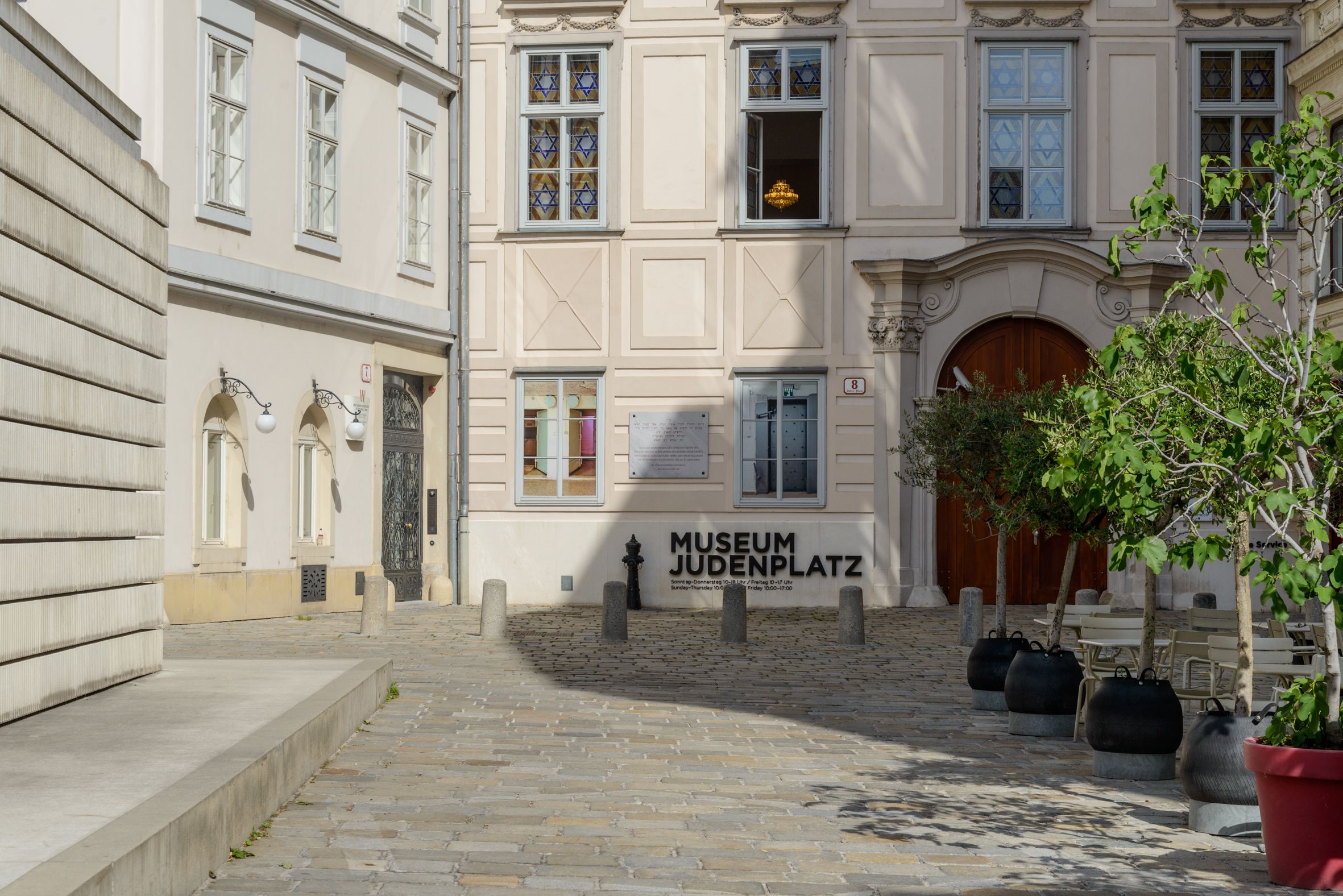
Museum Judenplatz (Source: Jewish Museum Vienna)
The Jewish Museum of Vienna is one of the world’s most significant institutions dedicated to preserving and presenting Jewish history and culture. Established in 1893 and opened to the public in 1895, it was the world’s first Jewish Museum.
Today, the museum consists of two sites, Museum Dorotheergasse and Museum Judenplatz, located just a short walk from one another. Together, they offer a comprehensive journey through the history of Jewish life in Vienna, from the Middle Ages to the present day. Beyond its role as a guardian of the past, the museum serves as a vibrant cultural institution that encourages reflection on Jewish identity, memory, and contemporary society through exhibitions, educational programs, research, and public events.
I would like to thank the esteemed Natascha Golan for her support and guidance.
Museum Dorotheergasse, Our Jewish City Vienna Then to Now
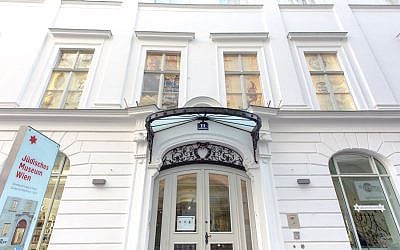
The Jewish Museum Vienna, Museum Dorotheergasse, located in Vienna’s historic city center, is dedicated to the history of Jewish life in the Austrian capital. Its permanent exhibition, Our City! Jewish Vienna, Then to Now, opened in November 2013 after three years of preparation. The exhibition traces the multifaceted history of Vienna’s Jewish community from the Middle Ages to the present day, highlighting its lasting contributions to the city’s cultural, economic, and social development.
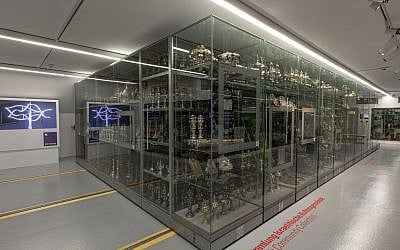
Particular emphasis is placed on the period from 1945 onward, documenting the gradual rebuilding and revitalization of Vienna’s Jewish community following the devastation of the Holocaust. Through historical artifacts, personal testimonies, photographs, Judaica, and multimedia displays, the exhibition highlights both the challenges and the resilience that have shaped Jewish life in Vienna across the centuries.
It presents the post-war revival of the community as a story of immigration, beginning with arrivals from Eastern and Central Europe and later continuing with immigrants from the former Soviet Union, particularly Central Asia, whose contributions played a significant role in the renewal and growth of Jewish life in the Austrian capital.
The Shabbat Room is a key feature of the Jewish Museum Vienna’s permanent exhibition, integrating contemporary art with historical memory. Created by Israeli artist Maya Zack, the installation reinterprets Isidor Kaufmann’s Gute Stube, originally designed for the first Jewish Museum in 1899. Using preserved objects and photographs from the room destroyed by the Nazis in 1938, Zack digitally reconstructs this lost space, offering a reflection on Jewish heritage, memory, and identity.
Another exhibition space is The Atelier: From Alef to Tav, From Beginning to End and it is designed especially for families, school groups, and visitors seeking an introduction to Jewish traditions. Through everyday objects and artifacts from the museum’s collections, it explores important aspects of Jewish life, including bar and bat mitzvah ceremonies, marriage traditions, and the practices of a kosher household. The exhibition offers an accessible understanding of the symbols, customs, and rituals that shape Jewish cultural and religious experiences.
Museum Judenplatz, Our medieval city! The first Jewish Community in Vienna
Museum Judenplatz is located in the heart of Vienna’s medieval Jewish quarter and preserves the remains of a medieval synagogue discovered beneath the square. Its permanent exhibition explores Jewish life in medieval Vienna, presenting the history, traditions, and experiences of a community that flourished from the thirteenth century onward. During this period, Vienna became an important center of Jewish learning, with a vibrant community and several influential rabbis living and teaching there.
Judenplatz is an important place of historical remembrance, preserving the memory of Vienna’s medieval Jewish community and its destruction around 1420 to 1421, when Duke Albert V ordered the persecution and expulsion of Jews from the city. Rediscovered in the 1990s through archaeological excavations and the creation of the Holocaust Memorial, the site reveals a significant chapter of Vienna’s Jewish history.
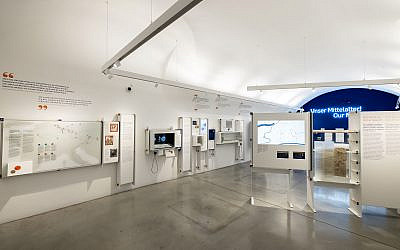
The permanent exhibition at Museum Judenplatz combines recent archaeological and architectural research with modern technology to present the history of Vienna’s medieval Jewish community. It vividly explores the remains of the synagogue destroyed in 1421 and reconstructs the layout of the former Jewish quarter through interactive displays, art installations, and educational activities for children. The exhibition space opened on 25 October 2000 and continues to provide new perspectives on this important chapter of Vienna’s Jewish history.
Online Exhibition
The exhibition The Migration of Things, Judaica and Their Unexpected Stories explores the connection between Jewish history and migration through objects from the Jewish Museum Vienna’s collection. Due to persecution, legal restrictions, economic challenges, and social changes, Jewish communities have experienced continuous movement across regions and countries.
The exhibition shows how Judaica objects traveled with Jewish families, were created by immigrants, and preserved memories of their owners and communities. Many objects in the collection are linked to the destruction of Viennese Jewish life under National Socialism and were recovered from synagogues after the November Pogrom of 1938. Together, these artifacts reveal stories of migration, identity, loss, and resilience across the global Jewish experience.
Another chapter of the online exhibition, From Mattersdorf to Kirjat Mattersdorf, explores the history of the Jewish community of Mattersdorf, today Mattersburg, Burgenland and its connection to the Jewish neighborhood of Kirjat Mattersdorf in Jerusalem. Founded in the 1950s by Rabbi Samuel Ehrenfeld, the last rabbi of Mattersdorf, the Jerusalem community preserves the memory of his former hometown after the destruction of the Shoah.
This part of the exhibition traces Jewish life in Mattersdorf from the sixteenth century, highlighting its growth under the protection of the Esterházy family, its role as a center of Jewish learning, and its renowned yeshiva. Ritual objects from the Jewish Museum Vienna’s collection, including Torah ornaments, preserve the traditions and memories of a community that experienced both cultural flourishing and hardship before its destruction during the Holocaust.
The OT Memorial Project
The Jewish Museum Vienna’s OT memorial project places permanent light symbols at the sites of 25 synagogues destroyed during the November Pogrom of 1938. Designed by artist Lukas Kaufmann, the illuminated Star of David sculptures serve as reminders of Vienna’s lost Jewish heritage and preserve the memory of these historic places within the city landscape.
Historical Background
In 1194, Vienna was a rapidly developing medieval town experiencing a period of prosperity. Duke Leopold V used the ransom received after capturing England’s King Richard the Lionheart to strengthen the city, constructing new defensive walls and establishing the first Austrian mint. This sudden influx of wealth transformed Vienna into an important economic and political center.
It was also in 1194 that Jews first arrived in Vienna. The first documented Jewish resident of Vienna was a man named Shlom (Solomon), who served as an advisor to Duke Leopold V and was later appointed master of the mint. However, his life was cut short when he and his family were murdered by crusaders in 1196. Despite this tragic beginning, Shlom’s presence marks the start of the long and complex history of Jewish life in Vienna.
In the centuries that followed Shlom’s arrival, Vienna’s Jewish community gradually developed despite periods of restriction and persecution. In 1238, Emperor Frederick II granted Jews protection as special subjects, recognizing their presence and economic contributions. By 1294, a synagogue had been established near Judenplatz (Jewish Square), and many Jews worked in banking and trade, as regulations prevented them from entering many other professions.
This period of growth ended around 1420 when Duke Albert V accused Jews of crimes, leading to the destruction of the medieval community. Many Jews were killed, while others were forced into exile. Jewish life in Vienna began to recover centuries later, but restrictions continued.
In 1624, Emperor Ferdinand II ordered Jews to live in a designated area across the Danube River, which later developed into the Leopoldstadt district. Then in 1670, Emperor Leopold I expelled Jews from Vienna once again.
Major changes began under Emperor Joseph II, whose 1782 Edict of Tolerance allowed Jews greater access to education, trades, and universities. Finally, in 1867, the Austrian constitution granted Jews full legal equality, opening a new chapter in the history of Vienna’s Jewish community.
Which brings us to 1895.
In 1895, Vienna was a booming capital of the Austro-Hungarian Empire. It was a city of big contrasts. On one side, it was a grand royal city famous for palaces and waltzes. On the other, it was a crowded, busy place where political changes and new modern ideas were just beginning. People loved the cafe culture. For the price of one cup of coffee, locals could sit for hours. They read newspapers, talked about politics, and met friends.
In 1895, Vienna was a city of deep contradictions for Jewish people. They experienced an era of amazing cultural and business success but also rising political hatred.
On the one hand, a dangerous new kind of political hatred was growing. In 1895, Karl Lueger and the Christian Social Party achieved major electoral success in Vienna, promoting a political platform that included antisemitic rhetoric. Lueger ultimately assumed office as mayor in 1897. They used anti-Jewish views to win over working-class people who were worried about money. On the other hand, Jews enjoyed full legal rights. They played a huge role in the city’s golden age. Many Jews were doctors, lawyers, writers, and artists.
It was in 1895 that the Jewish Museum of Vienna opened, becoming the world’s first Jewish Museum. Its creation reflected the growing confidence and cultural presence of Vienna’s Jewish community during the late nineteenth century. At the time, Jews had become an important part of the city’s intellectual, artistic, economic, and social life, contributing greatly to Vienna’s development as a major European cultural center.
From the late 1890s through the early 1930s, Jewish life in Vienna continued to flourish.
Then came 1938. In 1938, Nazi Germany annexed Austria in an event known as the Anschluss, bringing an end to Vienna’s Jewish Museum and marking the beginning of a period of persecution and destruction. Shortly after the annexation, the Gestapo forced the museum’s staff to create an inventory of its approximately 6,000 objects. The Nazis then confiscated the collection and distributed many of the items among Viennese museums and libraries. Some objects were later used in an antisemitic propaganda exhibition at the Natural History Museum, while around half of the museum’s valuable collection was lost during World War II.
The closure of Vienna Jewish Museum was part of the wider destruction of Jewish life in Vienna. During the November Pogrom of 1938, most of the city’s synagogues were destroyed, with only the Stadttempel surviving. Thousands of Jews were forced to flee, while many others were persecuted, deported, and murdered. Between 1941 and 1945, more than 65,000 Austrian Jews were deported to Nazi concentration and extermination camps and killed.
After the war, the memory of Vienna’s Jewish community was gradually restored. The Jewish Museum Vienna was re-established in 1988 and has since become one of Europe’s leading institutions dedicated to preserving Jewish history, culture, and contemporary life.
In 1993, the Palais Eskeles on Dorotheergasse became the new home of the Jewish Museum Vienna. In 1998, its archive opened to the public, providing access to an expanding collection documenting the history of Jewish Vienna.
The Jewish Museum Vienna stands as an important place of memory, education, and cultural dialogue, preserving more than eight centuries of Jewish history in the Austrian capital. Through its exhibitions at Museum Dorotheergasse and Museum Judenplatz, as well as its collections, online projects, and contemporary art installations, the museum presents stories of Jewish life, migration, creativity, persecution, and resilience.
By connecting historical experiences with contemporary questions of identity and remembrance, the Jewish Museum Vienna continues to ensure that the diverse stories of Jewish communities are preserved and shared with future generations.
Contact Information:
Jewish Museum Vienna, Dorotheergasse 11, 1010 Vienna, Austria
Phone: +43 1 535 04 31
Email: info@jmw.at
Website: https://www.jmw.at/en