
The wrong way to condemn violence against Jews
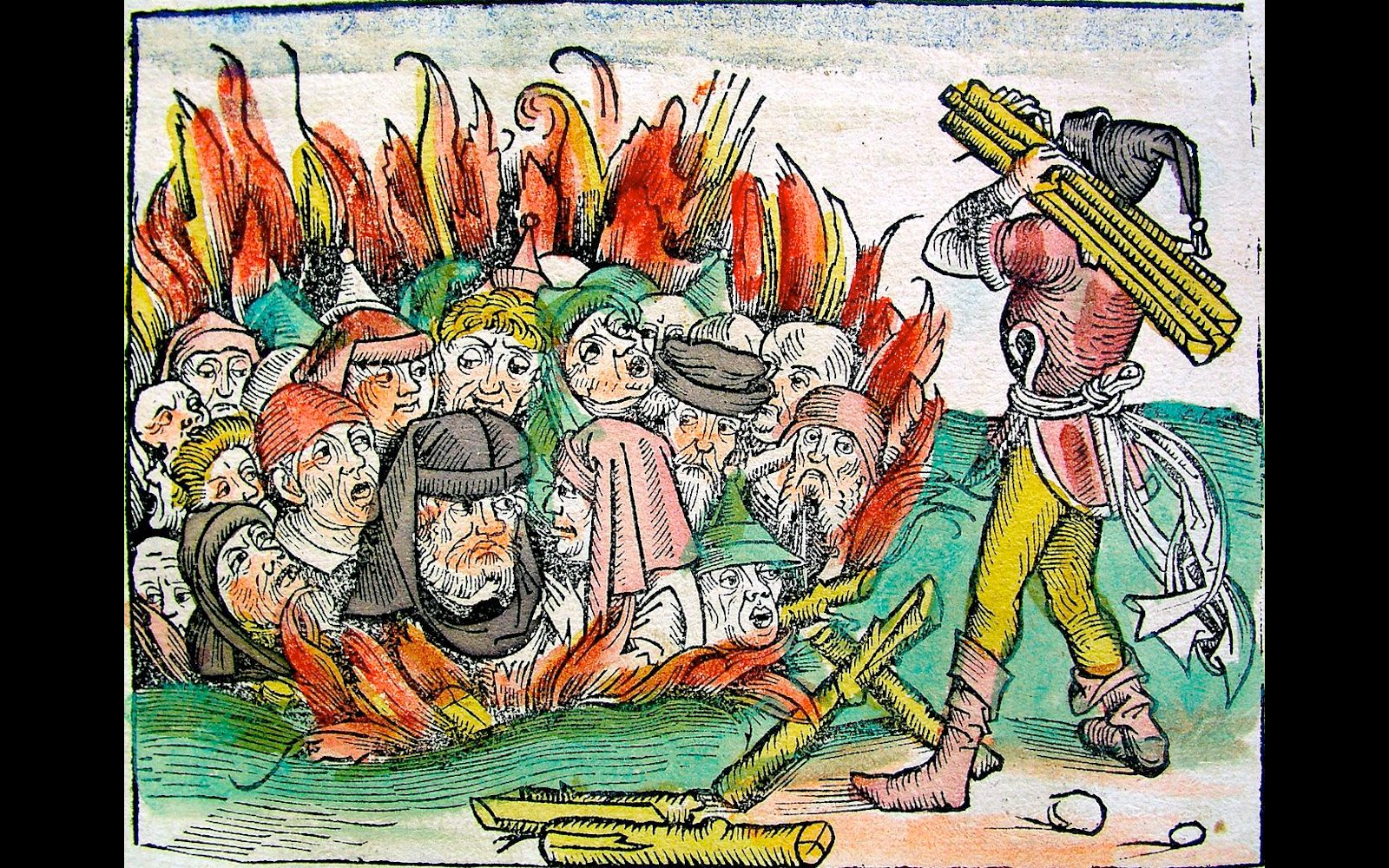
In recent weeks, synagogues in Toronto, Detroit, Liège, and Rotterdam, as well as a Jewish school in Amsterdam, were targeted by firebombs, shootings, and a vehicle ramming. Public condemnations were swift in every case. In Belgium, where I grew up, the military now has to stand guard outside Jewish sites. That Jews in the heart of 21st-century Europe need military protection to go about their lives is a sign of societal failure.
Yet in Belgium, as elsewhere, we often hear a troubling ambiguity in the public discourse that follows these attacks. On the one hand, we are told that it is wrong to target Jewish communities. On the other hand, we are told that it is understandable why people might do so in response to Israel’s actions.
These two ideas cannot coexist. If attacks on Jews are repeatedly explained as an understandable reaction to events in the Middle East, the message is that it’s natural – or even legitimate – for anger about Israel to translate into hostility toward Jews. Instead of insisting that this translation must stop, we end up conveying that, while we wish the attacks had not happened, we can understand why they did.
People may criticize Israel, be furious at its actions, and wish for it to change. None of this is antisemitic. But the argument that changing the behavior of the State of Israel will end hostility toward Jews in the United States or Europe assumes that violence against Jews is merely a reaction to Israeli policy. It ignores that ambiguous messaging is not a bug but a feature of antisemitic thinking. And it has a long history.
A revealing example goes back to Pope Gregory the Great in the sixth century. In Jewish historical memory, Gregory is remembered for two letters that scholars often see as establishing the core principles of the Church’s policy toward Jews. In those letters, Gregory argued that Jews had the right to remain Jewish. Christians could restrict Jewish life in many ways, but certain lines should not be crossed if that principle was to be maintained: Jews could not be forcibly converted, and their synagogues should not be seized without cause.
Gregory wrote these letters after two such incidents took place. Jews had been forcibly converted, and a synagogue had been taken over. The pope rebuked those responsible, but he was careful not to say anything that might appear sympathetic toward Judaism, which he viewed as a false religion. The result was a striking ambiguity. Gregory insisted that forced conversions were wrong. But he also said he could understand the motivation behind them, since the Jewish faith was “superstition” and “vomit.” Similarly, he wrote that the synagogue should not have been taken, but now that it was, it could not be returned.
This pattern of condemnation accompanied by partial justification echoes through the centuries. When the synagogue on the Rue Copernic in Paris was bombed in 1980, France’s prime minister, Raymond Barre, denounced what he called “this odious attack that aimed to hit Israelites going to synagogue and struck three innocent French people who were crossing the street.” Of course, he said it was wrong to attack a synagogue. Yet his formulation suggested that, unlike the passersby, the Jews themselves were not entirely innocent.
Antisemites rarely view themselves as acting out of hatred. On the contrary, they often believe they are acting for the good of society. Gregory thought he was defending Christian truth. The man who attacked the Tree of Life synagogue in Pittsburgh in 2018 believed Jews were responsible for encouraging non-white immigration that he said was destroying American society. The attacker who shot three people at a synagogue in Poway, California, the following year wrote a manifesto describing Jews as the agents of the Antichrist.
As a historian, I was trained to recognize patterns, and one that recurs regularly is that periods of rapid economic, social, political, and technological change often lead to a rise in intolerance. Our time is such a moment. The bonds that hold our societies together have come under strain, and pluralistic democracies – where coexistence depends on shared norms rather than shared identity – are particularly vulnerable.
For this reason, how violence is explained matters. Attributing it to distant geopolitical conflicts shifts responsibility away from our own societies. The focus becomes foreign wars and governments rather than the norms we need to maintain at home. This is not an argument against caring about events abroad. It is about the erosion of the principles that sustain coexistence in diverse societies. Once political anger becomes part of the rationale for violence against Jewish communities and institutions, a critical line has been crossed. The impact of this moral erosion will, in time, extend beyond Jews.