

Grammy and Emmy nominated singer-songwriter, author, essayist
There Is Only Newness: Reflections On My Return From Israel

(Photo credit: Maria Himmelman) The author in the Negev, Mitzpe Ramon, Israel (Photo: Maria Himmelman)
The first thing one learns when encountering real terrain, real sky, real air, and real people is that one’s perceptions—while in some ways correct—are in far more ways wrong. One assumes things by reading, which is essential. One gleans ideas by speaking with others, or by viewing social media posts. But seeing the world in this way is like poking a hole in a piece of cardboard and trying to understand that world through the opening. One’s sense of it becomes profoundly myopic. And so we content ourselves with slogans, biases, and rank prejudices.
It is with this awareness that I have returned from my journey to Israel not with answers, but only with new assumptions. They are assumptions layered atop my old ones—each one a particle of truth, each one a whisper of something whole. I’ve begun to learn that certainty—of the strident sort—bespeaks incuriosity. Things can become obscured once they’ve been named, their details ignored or forgotten. It is this and not that! we say. This way and not the other! But we really don’t know, do we?
We absorb ideas and opinions faster than we can process them—both very bad ones and very good ones.
I’ve heard the corrosive:
Zionism is genocidal.
All Muslims are evil.
God is dead.
9/11 was a Mossad plot.
The Bible is a weapon of the patriarchy.
Hitler wasn’t “all” wrong.
Candace and Tucker are truth-tellers.
The Jews are a race of devils.
The Arabs are vermin.
10/7 was an inside job.
The world is in shambles.
I’ve heard the life-giving:
It is a blessing to be alive.
Honor your mother and father.
Teach your children to create peace.
Extend kindness wherever possible.
Place your intellect over your emotions.
Know that no one sees things exactly as you do.
Learn to give more and take less.
Kiss your children more often.
Allow music to stir your soul.
Encourage others to be their best.
Beauty far exceeds beauty’s opposite.
For everything there are rules. Among the worthiest are our timeless moral guidelines, including:
Don’t murder. Don’t rape. Don’t kidnap. Do not do unto others what you would not want done to yourself.
These are rules best followed. And yet, even for those who do—rules themselves, though true, are not truth itself. They are pathways: endless, twisting, difficult pathways toward truth.
I confess: I am struggling to define the Hebrew word Echad. Oneness. Completeness. Coherence. To describe, as some do, Echad as perfection seems wrong to me. I ask: is imperfection not also a part of perfection?
And what of my constant talk about Jews, Jewish peoplehood, and the Jewish State—which, like many people’s, has increased tenfold since 10/7? Is this concern not also a substantive part of the great, ineffable Echad? Some say I talk too much about my people. Perhaps I do. But am I wrong to be utterly fascinated by our ubiquity—our presence across the millennia and in daily newsfeeds, which speak of us in laudable and excoriating terms alike, and, tragically, of the persistence of globalized pogroms perpetrated upon us?
Moreover, are two of the world’s most influential religions not based almost entirely on our Torah? And has this numerically insignificant people not been subjected to the greatest calumny and murder—even as they have provided the world with so much good?
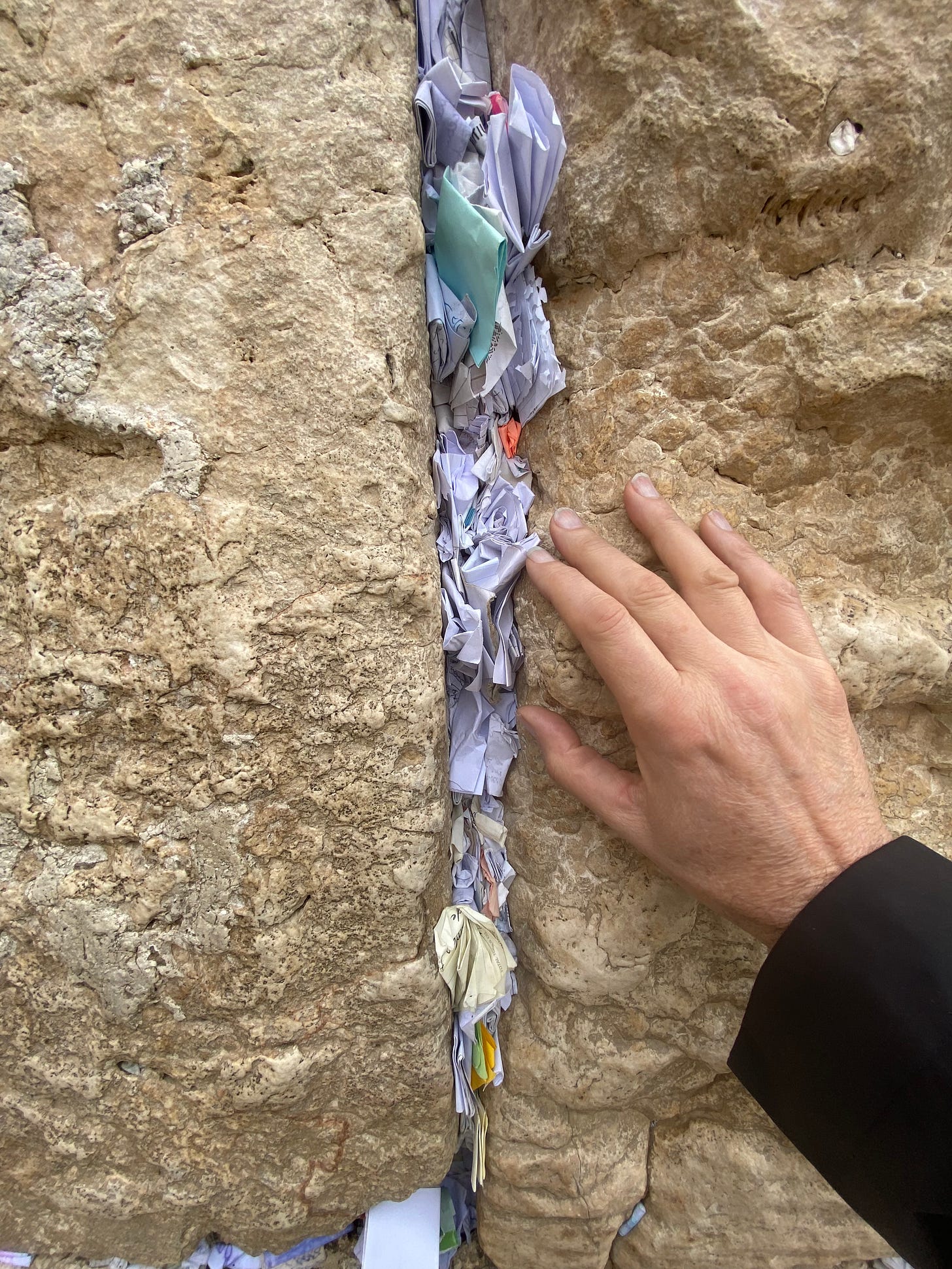
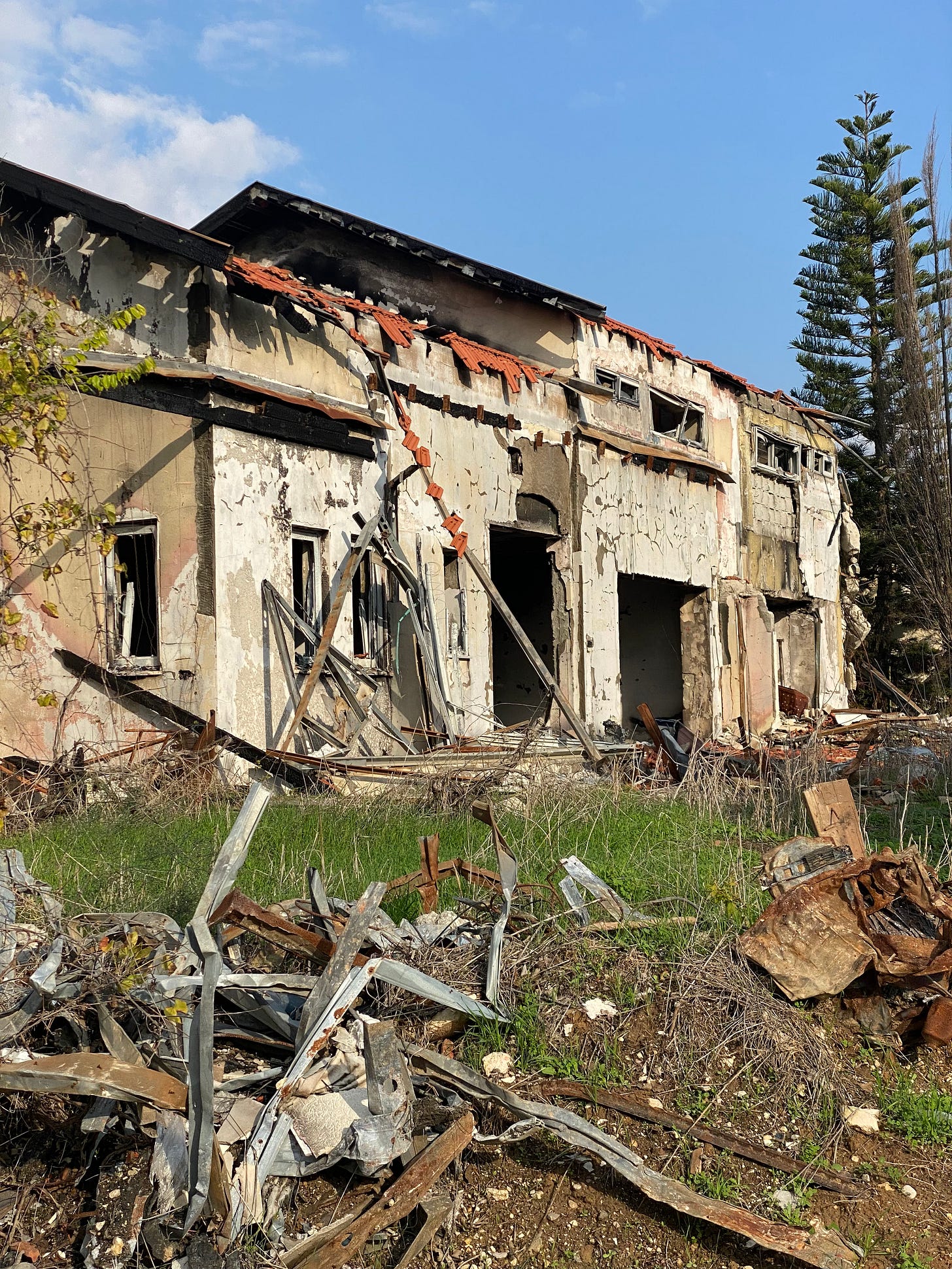
How could I not think and talk, and write and sing about all this—especially now, having recently stood and prayed at both the Western Wall, so near the Holy of Holies, and the blood-ravaged kibbutzim of Nir Oz and Be’eri? Is holiness not found in each of these places? And further, is holiness—and every large or minute sacralization of the so-called mundane—not the great task of humankind? Is transcendence and transformation not the goal of every artist, every father and mother, every lover, every sibling, every friend—every simple drawer of water and hewer of wood?
Even within each day’s routines, our familiar sights and sounds, all is being created constantly. Nothing is static. Nothing is what it appears to be. The wooden chair I am sitting on is neither wood nor chair. Those are its names, not its essence. “Wood” is a term for a collection of plant cells, molecules, atoms, quarks—all moving at an indescribably rapid pace to give the illusion of solidity, the appearance of reality. And beyond that—beyond what human ingenuity is currently capable of detecting—are words, a language that both encompasses and fills the universe: a stream of constant utterance from the constant Creator.
That is what I want to remind myself of. Nothing is random. Not even randomness itself. Nothing is rote or normal. All is miracle, whether perceived as such or not at all.
I also work very hard to remind myself of this:
It is easier to hate, to disdain, to revile people from a distance. It is easier to love people up close—when you sit with them, when you see their children, when you hear their laughter, when you come to know who and what they love.
I have felt this very much in recent days.
It is in the constancy, the vigilance, the rigor of a daily search—intended to lead me beyond my assumptions—that I have come a bit closer to a semblance of what I believe is beautiful and true.
A friend and mentor once told me that I would know I was approaching truth by three measures:
When I find I have more courage in expressing myself.
When I find I am more willing to compromise.
When I find I have more trust that everything happening to me is for the good.
From experience, I have also found the opposite to be true.
I know I am losing my grasp on truth by these inverse measures:
When I find I have less courage in expressing myself.
When I find I am less willing to compromise.
When I find I have less trust that everything happening to me is for the good.
On this trip, I was reminded of two ways to move beyond mere assumption. One is to fight against my tendency to be right. The other is to surrender to the infinity, the supreme Unknowable that is the Creator of all things.
Blessings to you and your families, dear reader—for health, for happiness, for abundance, for true peace, and for the delights and challenges of astonishment.