


There Will Be No Second Chance: A Final Call to Save Democracy
Regimes do not change in a single day. They erode—clause by clause, law by law—until the public grows accustomed to it. The disaster of October 7 was only the climax of a long process of rule by fear, incitement, and evasion of responsibility. Without real civic pressure—without refusing to play along—there will be no democracy left to save.
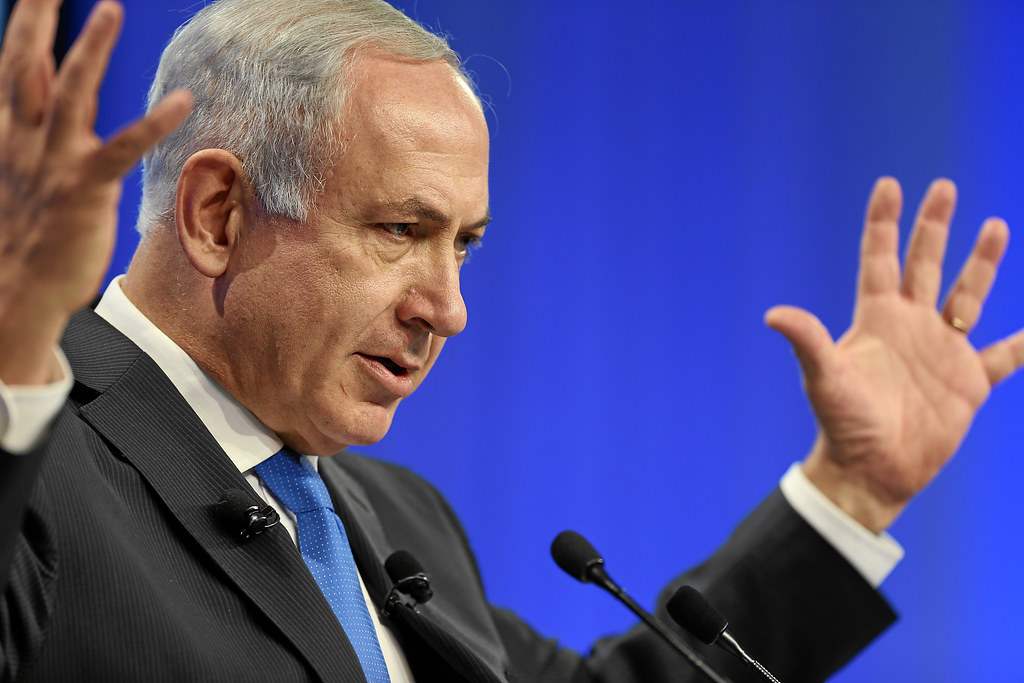
Prime Minister Benjamin Netanyahu: “A special state commission of inquiry, a commission equally balanced between opposition and coalition, is the correct way to uncover the truth.”
There are disasters that strike without warning, and there are disasters built slowly, brick by brick, while those responsible stand before us, speak to us, promise, explain—and we get used to it. The disaster we are living through now belongs to the second kind. It did not fall from the sky. It was not born in a single day, nor on October 7. It is the product of a long, stubborn, almost systematic process of controlled dismantling: of institutions, of norms, of truth, of accountability.
It did not surprise me. From the moment this man arrived here, in the late 1980s, after reinventing himself—biographically and politically—it was clear to me that he was not just another conventional right-wing politician, someone with whom one could debate or disagree. From the moment Benjamin Netanyahu returned from the United States, having already learned how American democracy works from the inside—and how it can be manipulated—it was evident that he brought something entirely different with him: a governing worldview that does not commit to democracy, but rather uses democracy for its own ends.
Even then, the pattern was visible: brilliant rhetoric, flawless English, a rare talent for framing reality—and above all, a deep understanding of the most primal fears of the Israeli public. Not fear as a fleeting event, but fear as a permanent state of mind. Not a concrete threat, but a constant sense of siege. And when you succeed in convincing an entire public that it is under perpetual siege, you no longer need responsibility, truth, or results. You need only to be “the protector”—or better yet, to brand yourself as such, as “Mr. Security,” even when you are responsible for the greatest security catastrophe in the history of the State of Israel.
When Netanyahu was elected leader of Likud, Yitzhak Shamir—a tough man, free of illusions—recognized this immediately. “An angel of destruction,” he called him. Not an insult, but a diagnosis. Shamir understood that Netanyahu did not come to lead an ideological movement, but to dismantle it and rebuild it as something else entirely: not a party, but a cult. Not a thinking public, but a congregation of believers. Not leadership, but a personality cult.
From there on, the method worked almost flawlessly: incitement instead of argument, pitting groups against one another instead of debate, verbal violence as a substitute for policy. Lies not as a failure, but as a working tool. Spin not as an emergency measure, but as a permanent strategy. Every crisis became an opportunity; every criticism, treason; every gatekeeper, an enemy. He thrives on it—on lies, on trickery, on spin (more on this soon in my new book, The Truth About the Lie).
None of this was accidental. It did not “get out of hand.” It was built—consistently—over decades. The assassination of Yitzhak Rabin was the moment when it could have been stopped. Not through revenge, but through truth: a real, deep, fearless investigation of the crimes of incitement, subversion, and agitation; an honest attempt to understand how a democratic society reaches a point where its prime minister is murdered by a Jewish citizen, driven by messianic belief and a sense of public legitimacy.
But it did not happen. The entire system—political, legal, media—chose “not to reopen wounds.” Only security failures were investigated. The technical margins. The parts that did not truly threaten the centers of power. Thus was born the illusion that one could move on without paying a price. And when there is no price, the behavior returns—more intensely.
From that moment on, the road to dictatorship was not a leap, but a slope. Each step appeared more reasonable than the last. Every deviation was presented as temporary. Every blow to democracy was explained as a security necessity, a response to a threat, a matter of “no choice.” And so, gradually, the distinction eroded—between truth and falsehood, between fact and opinion, between criticism and betrayal.
This Is What a Modern Dictatorship Looks Like
In recent years, under his leadership, the state has increasingly come to resemble a criminal organization: personal loyalties instead of rules, fear instead of law, silence instead of accountability. Affairs such as the submarine scandal, the Meron disaster, and other civilian and security failures—each could have brought down a government in a functioning democracy. Here, they were swallowed by background noise. Committees were formed, conclusions written, culprits marked—and nothing happened. Responsibility always stopped one rung below the top.
Then came the greatest disaster of all. A failure without precedent—in scale, intensity, and historical significance. A catastrophe that should have ended political careers that very day. A disaster that demanded silence, the taking of responsibility, and clearing the way for a genuine investigation.
But the man at the head of the system at the time did not take responsibility. On the contrary: he acted immediately to ensure that no one would truly examine it. He did not resign, did not step aside, did not establish an independent state commission of inquiry. Instead, he created noise, set up committees for everything except the core issue, dragged out time, confused the public, and fostered the sense that “everyone is to blame.” And while close aides in his office were working for Qatar, which financed Hamas, he relied on them to disseminate messages of hatred that served him—and Hamas alike. Once again, the same pathological symbiosis.
At the same time, a systematic, sophisticated, dangerous legislative process is advancing—one that eliminates democracy not with tanks in the streets, but with “legal” laws. Undermining the courts, crushing the gatekeepers, weakening the media, normalizing state violence. All wrapped in the language of sovereignty, governance, and the will of the people. All ostensibly done “by the book.”
This is what a modern dictatorship looks like. Not loud, not military, but legalistic. Not a coup, but erosion. Not in one day, but gradually—until one day you wake up and discover there is no way back.
And anyone who believes the solution will come from within is deceiving themselves. The system is closed. Power is concentrated. Interests are clear. Nothing will move without real civic pressure. Not a symbolic protest, not polite dissent, not an upgraded “Gallant Night.” Civil resistance. A complete shutdown of the economy. A mass march on Jerusalem. Civic refusal to play the game.
This is not a call for violence. It is a call to save democracy. History teaches us that countries do not fall in a single day—they fall asleep into their collapse. And we are already very drowsy.
This is the final call—not because we relish drama, but because time has run out. The slope is already steep. The only question that remains is where we continue to slide, and whether anyone will still dare to pull the brake.
The author is a businessman and political consultant and served as Director General of the Prime Minister’s Office during the second term of Prime Minister Yitzhak Rabin.