


He has a face made for radio
Featured Post
These elections are not a fork in the road
As we fret that the wrong outcome could spell catastrophe for Israel, it's worth remembering what has happened here over the past 3 years
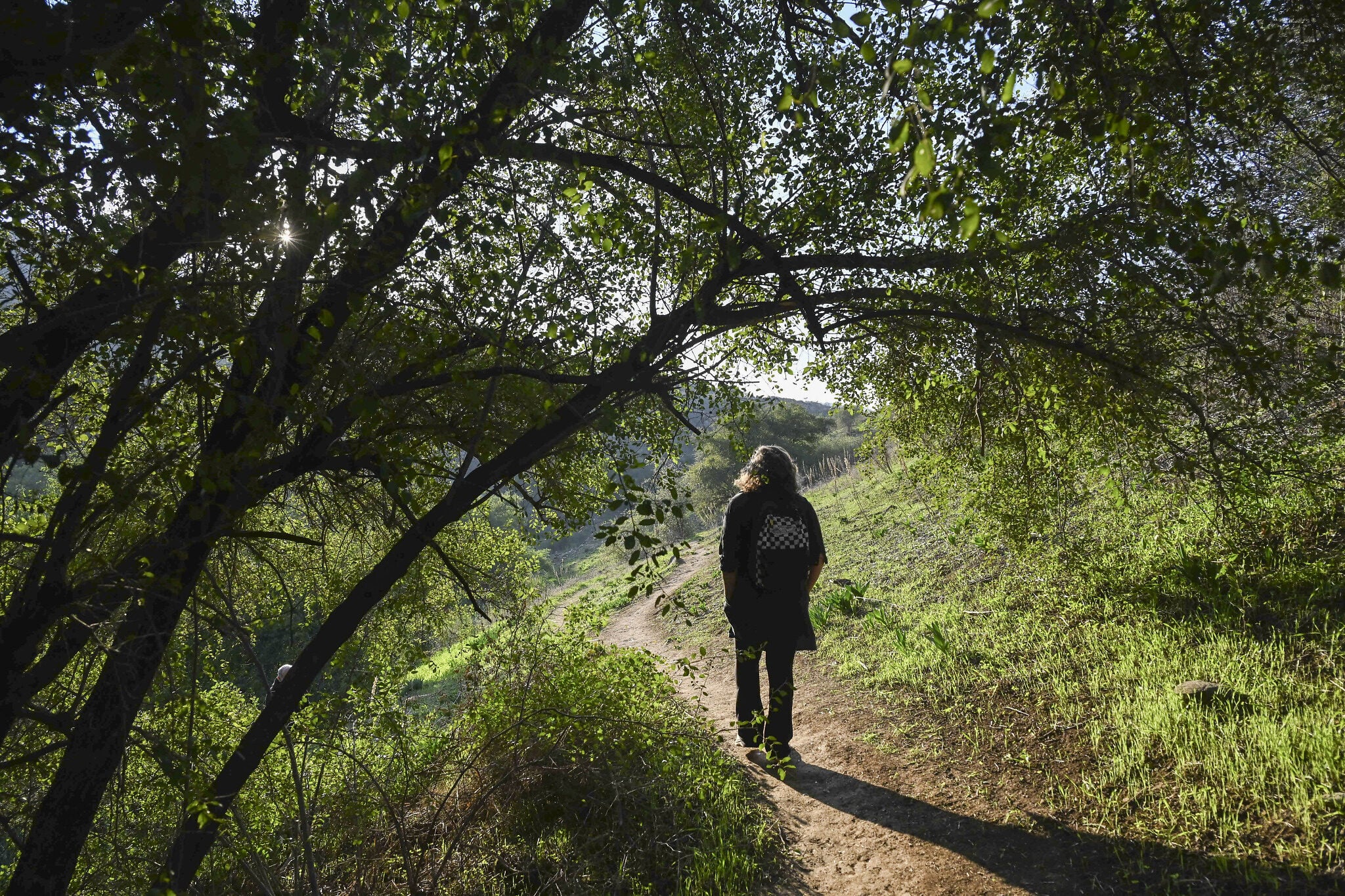
Hiking in nature in the Lower Galilee, northern Israel, December 20, 2025. (Michael Giladi/Flash90)
A lot of people say these are the most important elections we’ve ever had here. Some say, if they go the wrong way, disaster is sure to follow. I saw in one paper this weekend that if the wrong parties get to make the next government, “the Jewish People in Israel and in the diaspora will face the danger of extinction without any protection and with no savior” in sight.
I heard an economist on the radio explain that if the voters don’t make the right choice, high-tech here is liable to collapse, health care will crumble, credit cards will stop working abroad and there won’t be enough money to field an army that can keep us safe.
Biking past the big Haredi demonstration in Bnei Brak on Sunday night, I heard warnings that if the elections go south, the ultra-Orthodox face a spiritual holocaust.
The night before that, at the big center-left demonstration in Hostages Square, there were those who said that the country can’t survive four more years of what we’ve had for the past four years.
A viral campaign video goes, “We must win; otherwise, we’ll have not a liberal state, but a Halakhic state.” Another goes, “If they win, Jewish terror will explode in all of our faces.”
There are other apocalyptic predictions, too: that there will be mass emigration, the courts will falter, nations around the world will sever ties, that most Jews around the world will stop seeing Israel as a place that holds any claim on their allegiance and love.
A recent poll found that 79% of Israelis consider these elections either “especially important” or “the most important elections in the history of the state.”
For many, it seems, these elections are a fork in the road. We are voting to go either this way or that. And one way leads to catastrophe, and the other way, well, maybe not.
And these elections do matter a lot. The two leading candidates for prime minister, Benjamin Netanyahu and Gadi Eisenkot, differ in character, policy, worldview and vision. The coalitions each man hopes to create differ even more. Netanyahu’s would be more religious and Eisenkot’s more secular, Netanyahu’s more hostile to the courts and Eisenkot’s more embracing, and Netanyahu’s more skeptical of the motives of other countries and more willing to stand alone if need be (becoming a “Super-Sparta,” as he put it), and Eisenkot’s showing greater faith in diplomacy and fear of isolation.
I am on one side of this divide, and you must be, too. Both of us are right to think that the differences between the two candidates and camps matter.
But these elections are not a fork in the road, with one direction leading to catastrophe. They are not a referendum on whether Israelis want to live in a democracy or a theocracy. They are not a referendum about whether or not Israelis want war or peace. They are not elections that will decide the future of the country, this way or that. And, whatever they are, they will not be irrevocable.
This is true for many reasons. For one thing, for all that there are differences that matter between the camps, they are not as big as we sometimes imagine. Recent polls show that 87% of us think Hamas must be disarmed; 78.5% think Iran needs to be prevented from building nuclear bombs, by force if that is the best way. Nine in ten Israelis say we need a commission of inquiry to figure out what went wrong on October 7, and in our response to it. Eighty-four percent of Israelis say the courts need some reform; 55% say the reform the last government proposed goes too far. About 6 in 10 of us say that settler violence against Palestinians must be stopped. Numbers like these say that there is too much agreement among voters to believe we are at an it’s-this-way-or-that fork in the road.
In general, things are not as dire as we tell ourselves. We worry about our crucial state institutions – the courts, the army, the central bank, schools, universities, government ministries, local governments and hospitals. But they have been through harder times than any of us could have imagined six years ago, and they held up.
But the strongest reason to believe that ruin will not follow, even if these elections don’t produce the results we want (or, as seems likely, any clear-cut results at all), is what happened here on October 8, three years ago, and how we have gathered ourselves up ever since. People here often say that we learned after the attack on October 7 that we cannot count on our government as much as we thought, but that we can count on each other more than we thought. This is true.
On October 8 and ever since, most of us here saw most of us here rise up to do something, make something, fix something, supply something – anything that might help someone, anyone. We saw kids who were getting degrees abroad quit their semesters to crowd airports and wait for an open seat to take them back here, in hope of helping someone. We saw restaurants turn their fancy kitchens into factories of meals for evacuees. We saw people get into their cars early in the morning, and cruise in search of people needing to get somewhere. We saw millions of people volunteer. And what we learned from all this is, while it is true that some things here are more fragile than we knew, it is equally true that something remarkably strong has been built here. However these elections shape our future, they will not wreck it, and they will not undo our capacity to act to make things better, a capacity that we have lately seen is far greater than we knew.
And we are all human. At 10 p.m. on Election Day, if the exit polls show that the other guys won, I will feel something like despair at the thought of years of them running the country. If they show that no one won, I will worry about the months of instability ahead of us.
The next day, though, I will remember that, for all the challenges, all the fights, and all the uncertainty about the future, we are all still here: the right, left and center; religious and secular folks; Jews, Christians, Muslims, Druze and everyone else; Israelis and Palestinians. We will all still be here, trying to find a way to live together as we have for so long, and mostly failing. And we will try and fail again and then again, as we have been doing now for more than a hundred years, until, one day, we will try and not fail. And the elections of October 2026, whatever the results, will have been just another step along the way.