

Thirty Years Later: “My Country Is Gone” – A Prophetic Sentence in Retrospect
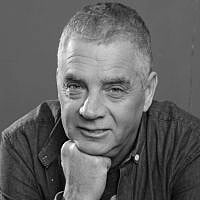
I said, thirty years ago, “My country is gone.” In retrospect, it was a prophetic sentence.
That terrible night I will never forget. I was among the first to arrive at the hospital. I rushed there and entered right after the stretcher, into the operating rooms at Ichilov. I was directed to a small room, where I sat with my dear friend, Professor Gabi Barbash, and tears streamed uncontrollably down my face.
“There’s still a chance,” he said, but soon I understood there wasn’t.
The room slowly filled with people: Dalia and Yuval, Tali, Dana, Eitan, and later, Leah was brought from the Shin Bet headquarters. A long hour of silence that felt like eternity, until Barbash came in and said quietly, in a broken voice: “Yitzhak is no longer with us.”
We went in, a small handful of family and friends, to say goodbye. He lay there, calm, his face uncovered, his body covered. Serenity upon his face. I had seen him like that dozens of times before, dozing off for a few minutes in the midst of an exhausting day. In my mind, it was just one of those moments. Deep down, I hoped he would open an eye, say something, wake us from the nightmare. I was shattered. Finished.
But this time the silence was absolute and eternal, and I felt that we had lost everything: not only Rabin, one of the greatest leaders in this nation’s history, but also the dream — and, to a great extent, the country itself.
I walked outside, and to the first microphone shoved in my face — Channel 11 — I said, almost without thinking: “My country is gone.”
At the time, it sounded like an exaggeration, a sentence born of anger, despair, and terrible grief. Even President Ezer Weizman called me and said, “Don’t say that, Shabas.” In retrospect, it was an almost prophetic statement. The country never returned to what it was before the assassination. It probably never will. Not in my generation, perhaps not even in the next.
Some say that October 7th was the outcome of the judicial coup, of the systematic weakening of all democratic institutions and security bodies under Netanyahu.
Others blame, rightly, the conception of strengthening Hamas and weakening the Palestinian Authority, and the childish belief that “money buys quiet.” Some point to the disengagement, to indifference, to complacency. Only the truly deranged still blame Oslo.
The truth is that October 7th was indeed the result of those days — but not of the agreement. It was the result of the murder, the incitement, and the state’s inability to deal with them. In other words, the roots of the dark era we are now living through lie in Yigal Amir’s bullets, which murdered not only a man, but hope itself.
Between November 4th, 1995, and October 7th, 2023, nearly three decades have passed, yet the connecting line is clear: from incitement to murder to the paralysis of state institutions; from hatred of the Left to hatred of democracy itself; from the destruction of Oslo to the ruin of the Negev and the Gaza Envelope.
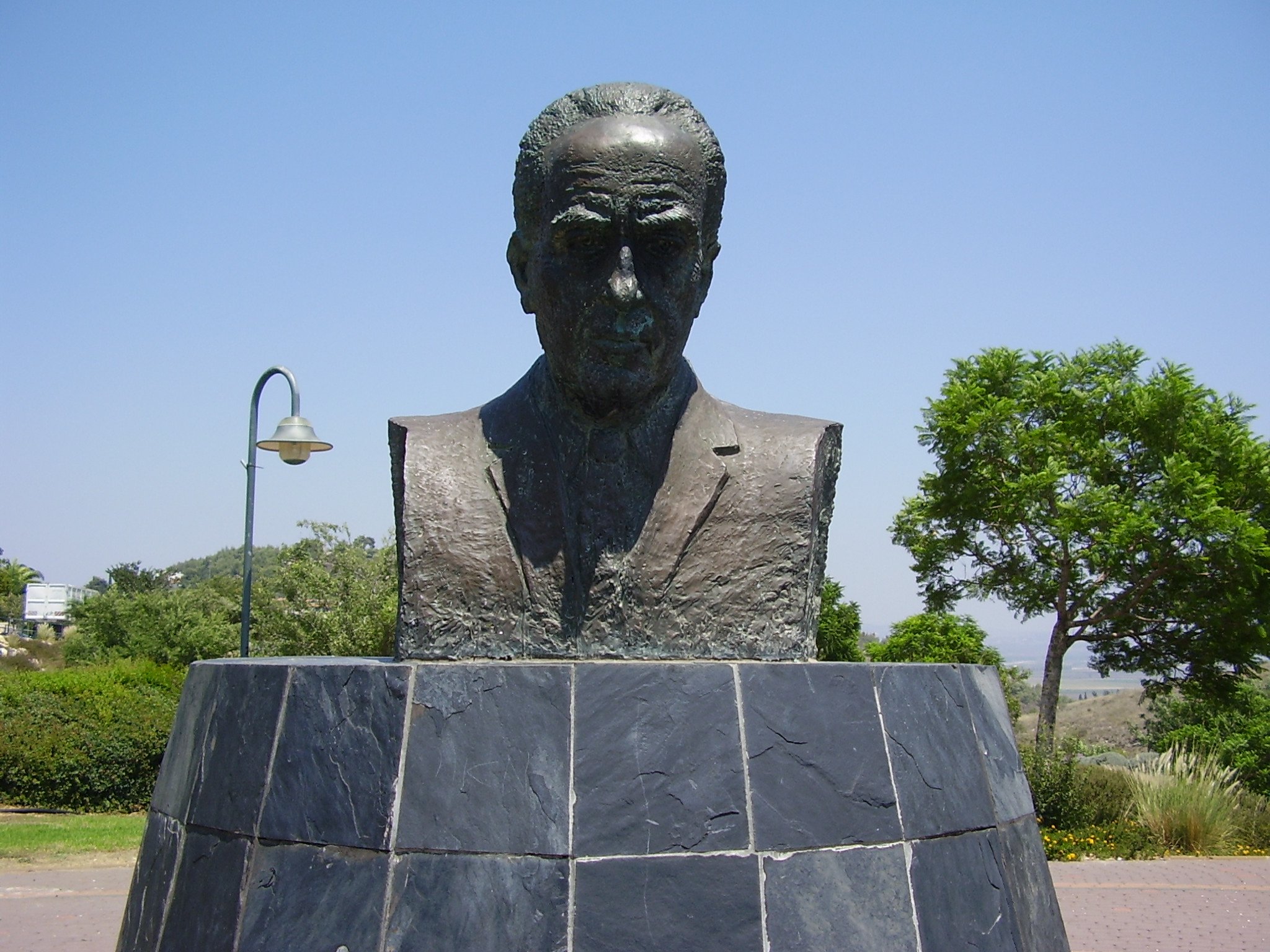
Rabin wasn’t a member of “Peace Now.” He was a pragmatist — an Israeli, a man of security. The security of Israel and its very existence guided his path. A Jewish, democratic, liberal state. He saw a bi-national state — the annexation of the West Bank — as an existential disaster for the Jewish people.
The Oslo Accords were not a mistake; they were hope. A first, brave attempt to end the conflict. They were not perfect, but they were possible. And for the first time, they created hope — hope that was murdered that same night along with Yitzhak, by a Jewish terrorist who saw himself as an emissary of the public. A public whose leader then, as now, heralded the ruin of the State of Israel.
Thirty years have passed since then, and today the ideological heirs of the assassin sit at the government table. One of them, a convicted supporter of terrorism, controls the police, holds the prime minister by the throat, and squeezes. The criminals have become ministers, so-called “leaders.”
When I look around today at the government, at the Knesset, at the streets, I feel as if we are back there: lost, confused, without a responsible adult. Or rather, with an adult, but not a responsible one, in the form of the American administration, which has taken ownership of us and turned us into a client state, as though we were Micronesia.
The only difference between then and now is that back then, we still believed we could fix things. Today, even that belief has eroded.
And yet, I refuse to give up. Because Rabin — the wise and direct man — taught me that peace is not a Nobel Prize but a leader’s responsibility; that compromise is not weakness but the only way to keep this home alive; and that without political borders, there is no moral sovereignty, and as we see these very days, there is no sovereignty at all (and there won’t be, but that’s another story).
Thirty years after the assassination, I carry Rabin’s image as a personal legacy: not to surrender to messianism, not to give up on the chance for peace, not to stop fighting for change, and not to lose hope, even when it is so very hard. Our task is to do everything to ensure that the bullets that pierced Rabin’s chest do not pierce our nation’s heart as well.
We still have the spirit, and even if not for Rabin’s memory, we owe it to ourselves to turn hope into action.