Three centuries of Jewish history, cancelled over Gaza
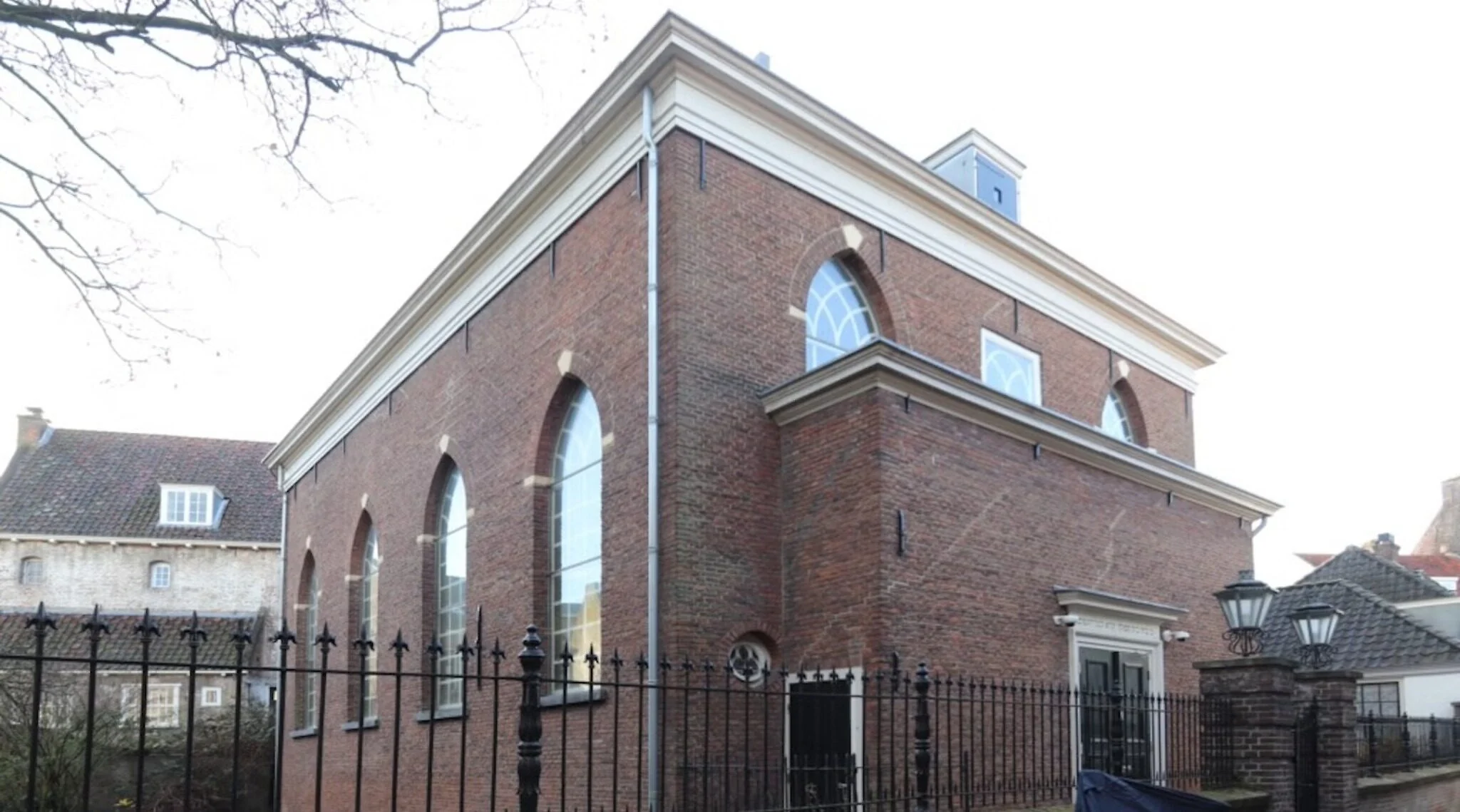
Since 1727, Jews have prayed in a synagogue on the Drieringensteeg in the Dutch city of Amersfoort. It is the oldest Ashkenazi synagogue in Western Europe that is still in use. Next year the small Jewish community there will mark its 300th anniversary with concerts, performances and a commemorative book. The plans also included an exhibition at Museum Amersfoort about the synagogue’s history and what it has meant to the city. The community had been working on it for five years.
Last week, with almost no warning, the museum pulled out.
The reason was not funding or scheduling. Paul Baltus, director of the city’s arts umbrella organization Amersfoort in C, pointed to the Middle East. “Since October 7, 2023, tension has increased throughout the world,” he said, which put an exhibition “in a completely different light.”
So, an exhibition about 300 years of Jewish life in a Dutch city was cancelled because of a war 2,000 miles away. Jitschak Elzas of the Jewish community called the decision “unacceptable.” He was right. Alexander van Dijkhuizen, the community’s chair, put it plainly: “It is apparently very difficult to distinguish between being Jewish and Israel.” He also asked the question the museum should have asked itself: “Has anyone talked to the police? Because I see no threat.”
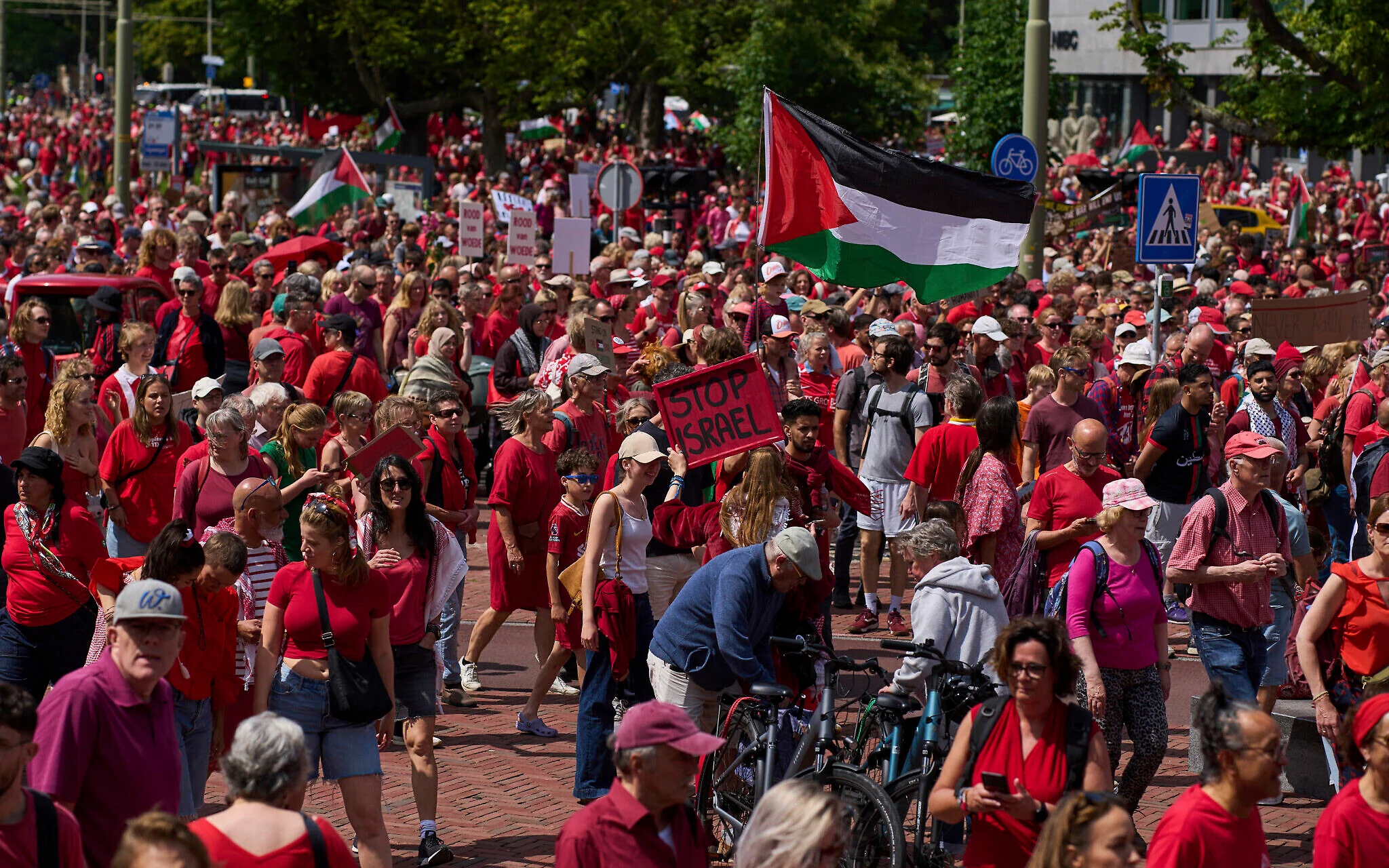
Sadly, Amersfoort is not an outlier. Since the Hamas massacre on October 7, 2023, institutions across Europe have cancelled, refused or quietly dropped Jewish events that have nothing to do with Israel.
In Geneva, a cinema refused to take part in the Jewish film festival’s 2026 edition. Its director said that showing films linked to Jewish culture “currently amounts to taking a position,” and demanded that the festival first criticize the Israeli government.
In Malmö, the Jewish International Film Festival could not find a single venue willing to host it.
In Kristianstad, Sweden, a local party cancelled its own Kristallnacht memorial, citing “what is happening in Israel, Palestine and Gaza.”
In Kraków, the Jewish Culture Festival cancelled its main public concert.
In London, Havering Council cancelled a public Hanukkah menorah lighting and reversed course only after a public outcry.
In Antwerp, a city-funded venue cancelled a booking by a Jewish school, then admitted it had “falsely and prematurely” linked the children’s school to the Israeli government.
In Vienna, organizers cancelled a talk about Jewish life in the city because security was too much of a burden.
A synagogue anniversary. A menorah lighting. A Holocaust memorial. A school event. A film festival. None of these were about Israel. All of them were about Jews.
Let’s be honest about what is going on. These decisions are cowardice dressed up as caution. At least at best, it’s cowardice. At worst, its prejudice. Either way, when an institution caves to an imagined mob or demands a political loyalty test, the message is the same: Jews are welcome only if they keep their heads down or disown other Jews.
No one in mainstream society would accept this for any other minority. Imagine a museum cancelling an exhibition on the history of a city’s mosque because of tensions in the Muslim world. Imagine a council taking down a Diwali display because of conflict in South Asia. There would be outrage, and rightly so. We would call it bigotry. Holding Jews collectively responsible for the actions of a state is bigotry, too. It is one of the oldest antisemitic tropes there is.
Every time an institution backs down, it rewards the people who would make threats, sometimes before anyone has even made one. It tells Jewish citizens that they are on their own. And it makes the next cancellation easier.
There is a better way, and it starts with leadership. In Amersfoort, local council members are already pressing the mayor to save the exhibition. One of them said, “The Jewish community is part of the city.”
That is exactly the right instinct. Mayors, ministers and cultural directors cannot just issue statements after the fact. They need to show up at the opening, the concert and the memorial. When leaders publicly stand with their Jewish communities, they set the norm for everyone else. Solidarity is how leaders bring society along and make clear that antisemitism will not set the terms of public life.
To be sure, that solidarity needs real protection behind it. European governments must fund security for Jewish communities and cultural events properly and over the long term, so that no museum or festival can treat the cost of protection as a reason to shut Jews out. Police must take threats against these events seriously and prosecute the people who make them. Jewish communities should never have to choose between safety and taking part in public life.
Amersfoort’s synagogue has lasted for three centuries. Its story deserves to be told on a museum’s walls, not hidden away because people are afraid.