


Writing Where Intelligence Meets Strategy
Three Officials Must Go
AI
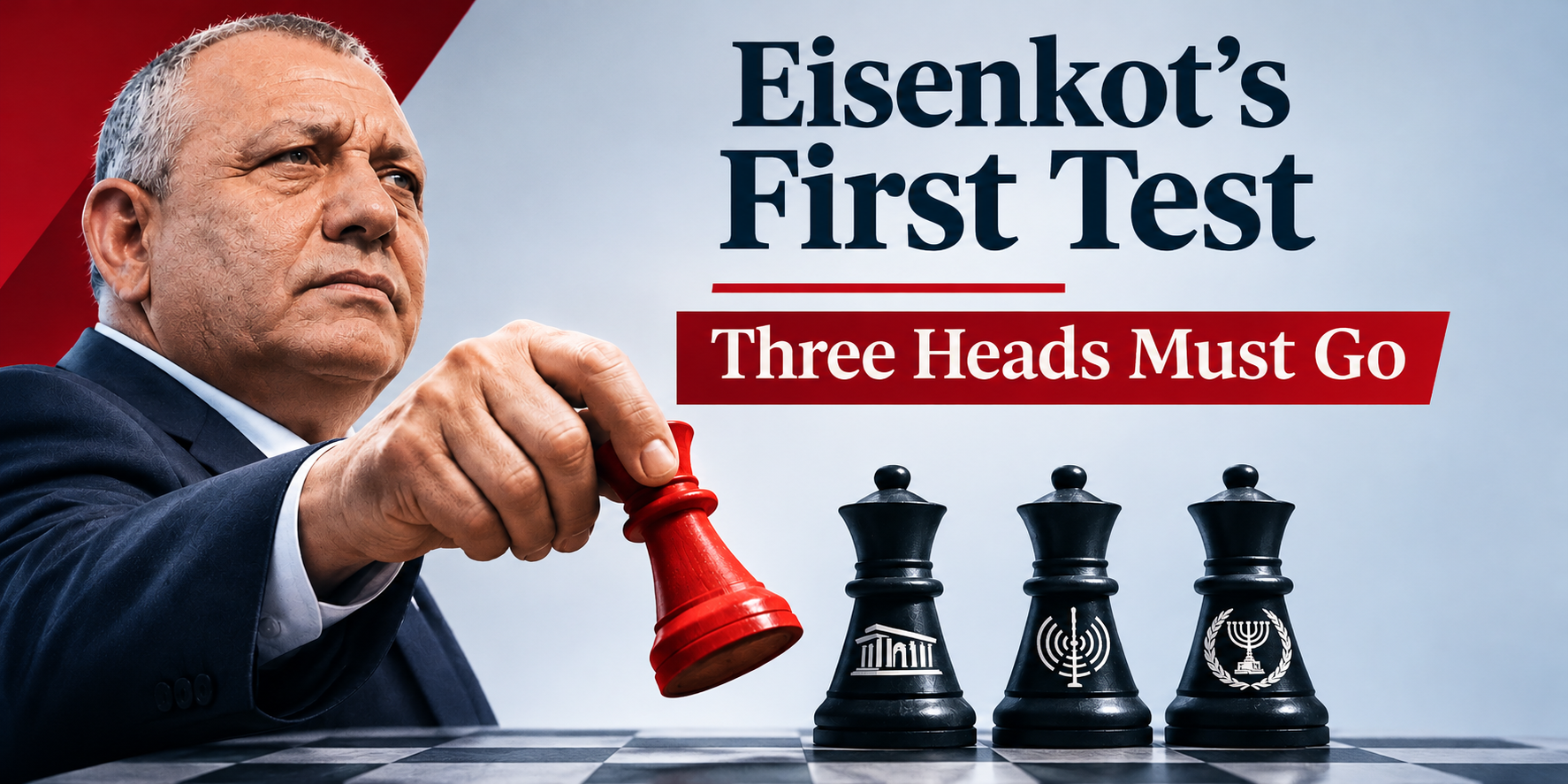
Removing the Knesset Speaker and the heads of the Shin Bet and Mossad is essential to restoring institutional independence and public trust in Israel.
If Gadi Eisenkot becomes Israel’s next prime minister, he will face an urgent task that leaves no room for delay or political compromise: removing three senior officials who, in my view, have turned Israel’s governing and security institutions into instruments of personal and political power.
To restore public trust, Israel’s national dignity, and its international standing, the incoming government must bring an end to the tenures of Knesset Speaker Amir Ohana, Shin Bet Director David Zini, and Mossad Director Roman Gofman.
The Knesset Speaker: Undermining the Rule of Law
The Speaker of the Knesset is entrusted with upholding the dignity of parliament, respecting the separation of powers, and safeguarding Israel’s democratic institutions.
Yet under Amir Ohana, parliamentary authority has been wielded in an increasingly confrontational manner against the Supreme Court, challenging the legitimacy and independence of the judiciary.
This is more than a political dispute. It is an assault on the foundations of Israeli democracy and the rule of law. The Speaker of the Knesset must not become an instrument of a partisan campaign against the judiciary. Allowing Ohana to remain in office would lend legitimacy to the continued erosion of Israel’s institutional independence.
The Shin Bet and Mossad: Political Appointments and the Election Day Disinformation Campaign
Even more alarming is the politicization of Israel’s intelligence leadership.
David Zini and Roman Gofman were appointed by Benjamin Netanyahu to head the Shin Bet and Mossad, respectively, from outside the organizations they were chosen to lead, without the specialized institutional experience traditionally developed within those agencies.
Against the backdrop of the Qatargate affair and classified-information leaks involving individuals in Netanyahu’s circle, these appointments raise serious questions about institutional independence and whether loyalty to the appointing prime minister has displaced loyalty to the state.
The most disturbing episode unfolded around the October 27 election, when allegations of widespread voter fraud in Israel’s Arab community became a central feature of a political campaign to undermine confidence in the election results.
In my assessment, Prime Minister Netanyahu and Shin Bet Director David Zini acted in coordination in a political disinformation campaign designed to cast doubt on the integrity of the vote. Statements originating from the Prime Minister’s Office promoted a false narrative of widespread electoral fraud, given added weight by the involvement of the Shin Bet director.
Equally troubling was Zini’s request for assistance from the Mossad director in investigating these allegations. The Mossad is primarily responsible for intelligence operations beyond Israel’s borders. Its involvement in investigating foreign interference may be legitimate when justified by genuine national security concerns. But allowing that involvement to serve a domestic political narrative crosses a dangerous institutional boundary.
Israel’s intelligence agencies do not belong to the prime minister. Their authority must never be used to lend national security credibility to partisan political campaigns.
The November 1 Statement: Public Rebuttal, Unanswered Accountability
On November 1, Central Elections Committee Chairman Justice Noam Sohlberg appeared in a joint public statement alongside Attorney General Gali Baharav-Miara, Shin Bet Director David Zini, and acting Elections Committee Director General Dean Livne.
Sohlberg made clear that the elections had been conducted properly and that the results reflected the will of the voters. He emphasized that most public reports concerning the Shin Bet investigation were inaccurate and that there was no basis for overturning the election results or casting suspicion on the Arab electorate. Suspicions of foreign interference and financing, he confirmed, remained under investigation.
The statement was issued with the Shin Bet director’s agreement.
This raises an unavoidable question: How did information from a national security investigation become part of a political campaign to undermine public confidence in an election, and why did it take a joint statement by Israel’s senior legal and security officials to refute the narrative being promoted?
Zini’s participation in that statement does not absolve him of responsibility for his conduct or for the political use of information connected to the investigation. In my view, it only underscores the seriousness of the affair and the need for personal accountability.
Immediate Removal: The First Test of a New Government
An Eisenkot government cannot credibly promise democratic renewal while allowing these three officials to remain in office.
It must act without delay on three fronts:
Immediately dismiss the heads of the Shin Bet and Mossad, in accordance with the law, while conducting a thorough examination of political interference within Israel’s security and intelligence establishment.
 Replace the Knesset Speaker through the appropriate parliamentary procedures, restoring institutional dignity and respect for judicial independence.
Establish binding safeguards preventing intelligence agencies from being used for political propaganda, partisan leaks, or the dissemination of false information.
Changing the Government Is Not Enough
Allowing these three officials to remain in office would cast a long shadow over any new government promising meaningful change. A transfer of political power cannot constitute democratic renewal if the mechanisms that enabled the erosion of institutional independence remain intact.
Only their immediate and decisive removal will send an unmistakable message to the people of Israel and the international community: the era in which state and security institutions are exploited to serve personal and political interests must come to an end.
Israel needs more than a new prime minister. It needs institutions that serve the State of Israel, not any individual political leader.
About the author: M. Brosh is the author of Cassandra’s Shadow, an espionage novel inspired by real events and Mossad operations. His writing explores the world of intelligence, covert warfare, and the geopolitical struggles shaping national security.