

Navigating new wilderness
Ticket, please!
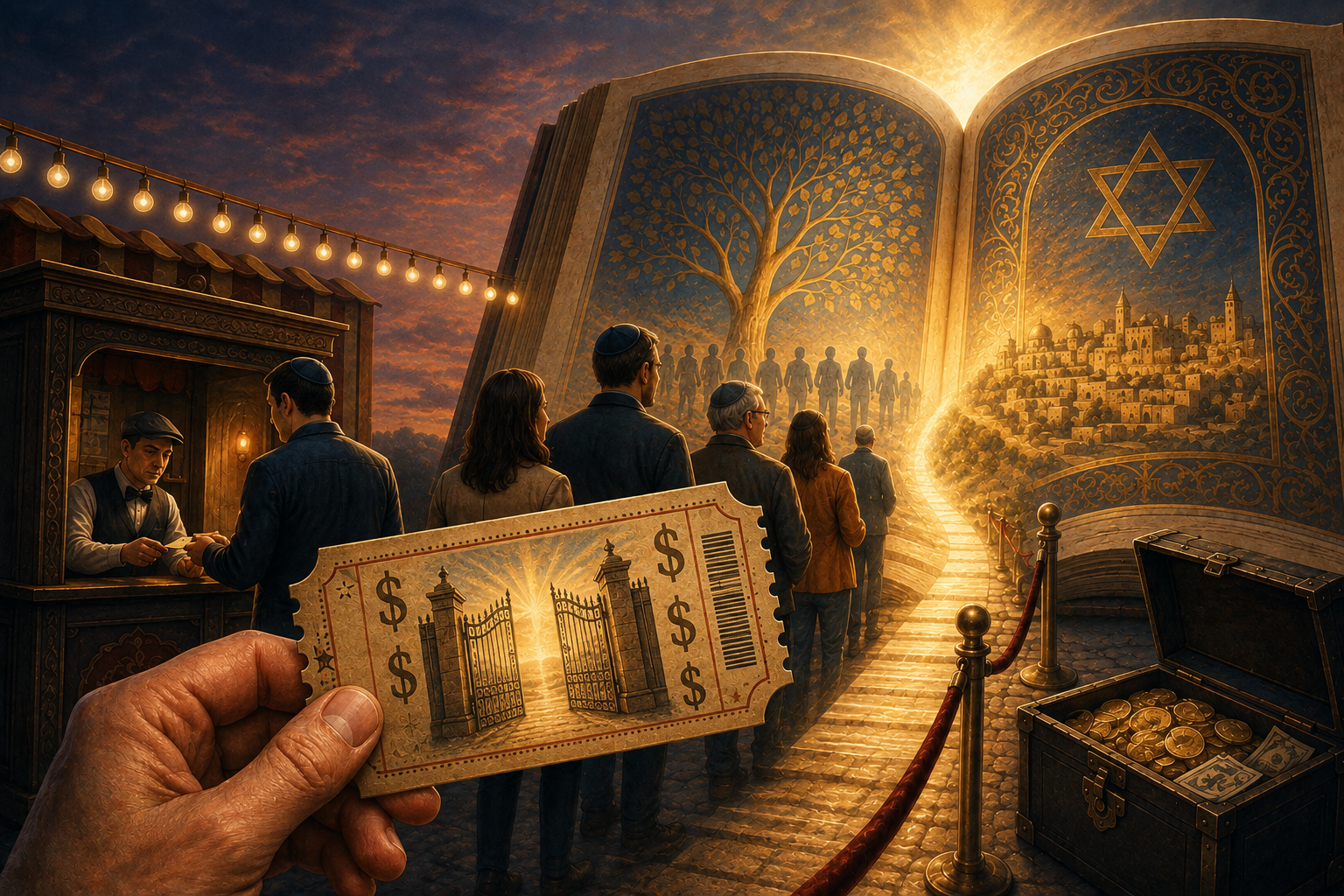
Preface: Per my usual M.O., when something impactful occurs to which I object, I need to publish something about it in my cobwebbed corner of the internets so that I can stop being a pain about it in conversations with people. Nothing in this post is intended to disparage or disrespect those who made the decisions to which I object; I just believe in open dialogue, and in putting myself on record when there is nothing else I can do.
***
We seek souls, not bodies.
It was that voice and that vision–articulated by one rabbi but shared by all I’ve worked with in this community–that inspired me to stay, to devote myself to this unique historic Jewish community for well over a decade. (I am pretty sure I’ve even included this quote in my previous TOI blogs.) And I’ve been honored to see this spring to life alongside some of the most special, brilliant, amazing, talented, committed, engaged souls I’ve ever met. Our culture is one of a “family,” as a recent past Board president used to say fondly every week in his announcements, and that is what people who meet us like best, in my experience. On occasion, the community still answers to aspects of its legacy that in my opinion no longer serve it. That is to be expected of any longstanding institution let alone a place with such a grand legacy. But in so many ways, I have felt that my community has been largely breaking free from what has most held it back in recent decades, as the needs of younger generations and the role of modern synagogues have changed irreversibly from the glory days.
Our open door (with free registration) High Holidays policy served as a tangible manifestation of the “souls over bodies” vision my rabbis here have lived. Everyone welcome; no “tickets,” only registration required for security reasons. This was announced warmly and proudly from the bimah every week leading up to the holidays. After all, though it had become a standard practice in larger congregations in some denominations, admission fees are antithetical to the Days of Awe, which pair collective joy and celebration with intense communal tshuva, that amazing word that means “return” with echoes of repentance and deep reflection. This kavanah from my spiritual leaders mirrored my own Jewish values, making me feel aligned with this community and invested in its future. It motivated me to lead services and musical programs mostly as an unpaid volunteer myself.
But this year, the website suddenly shows expensive tickets for nonmembers, as part of what I infer is a drive to incentivize membership with promo rates, like with cell phone plans. The site itself is quiet about the stark policy change, “business as usual” on a site unrecognizable after an equally stark design overhaul (I find myself ironically pining for “Merriwether” font…). While synagogue members were placed on constructive notice that tickets would be paid this year, I am unaware of any congregational discussion, survey, or vote.
From my vantage point, reversion to a transactional high holiday model reverses the synagogue’s stated mission and hard-fought strides toward inclusion and togetherness. One such stride was when the congregation voted for open High Holiday seating, a very painful change but in the direction we understood was in line with mission; or when the community incorporated aspects of the beloved “tent service” into the main service to bring everyone together.
Having a literal price of admission for communal atonement already sends a message–doing so after years of standing up to that practice practically screams that bodies, not souls, are what really matter to our community. No amount of financial justification can change the reality that key decisionmakers did not consider our highly-emphasized, inclusive high holiday policy to be mission critical.
That is not to diminish the impossible positions and dire financial straits in which many traditional synagogues find themselves. Survival desperation cannot be ignored. Many synagogues have closed their doors and shut off their lights. But are lights and doors also more important than souls? Not that there isn’t a way to save both a community and a building, but the maxim “innovate or die” is real and ticketing high holidays feels retrograde.
It is hard for me to picture this tactic succeeding, but it well may. There is a reason the Comcast / Verizon-style subscription model with new-member promos is profitable: just get those bodies in the door and then we can nourish their souls at full price. Can this blunt a form of capitalism reconcile with a mission so centered on spiritual journey? Once the financial norm is established, I can’t say for sure it doesn’t, and I’m not sure anyone can prove it either way, it being easier to track “body” metrics than “soul” metrics.
But we who must absorb this change after having viewed our inclusive policies as mission critical and worked for years in the opposite direction are foreseeably wounded. And we still have fresh wounds from last year, after the synagogue closed its affiliated Jewish preschool, breaking the hearts of young “alums” like my children who walk by it every time we go to shul. My little ones were part of the founding classes when it opened, just elementary schoolers when it discreetly closed. There was no alum celebration or closing ceremony or other community gathering to honor the chapter or the kids who loved the school called Love. Just a changed color scheme, new parking lot signs, and passing references to a change obliquely described as regrettable but necessary. Like these ticket prices.
I am rooted enough here now to make the effort that this post entails. But I know that personally, if I walked into the community this decision reflects today, it’s not somewhere I would stay. If I just moved to town and were looking for a place to spend the high holidays, I’d only need a couple seconds on the website before moving past it. That said, my quirky self and family do not fit comfortably within the target demographics of this community during its peak. We weren’t who would have been here when the building was crowded, so we probably shouldn’t be the people whose reactions matter when it’s not.
In any event, the Yom Kippur late afternoon chant / drum circle I have co-led for the past 13 years remains open and unticketed. (I can’t imagine they’ll kick you out for Ne’ilah at that point either.) I’d love to see you there.
Comments