From ramps to good lighting, the need for accessible synagogues is clear
I like that I can go to any shul (synagogue) in the world and feel at home. It’s a human need to pray, and for many, the synagogue is both the House of G-d and the heart of the community.
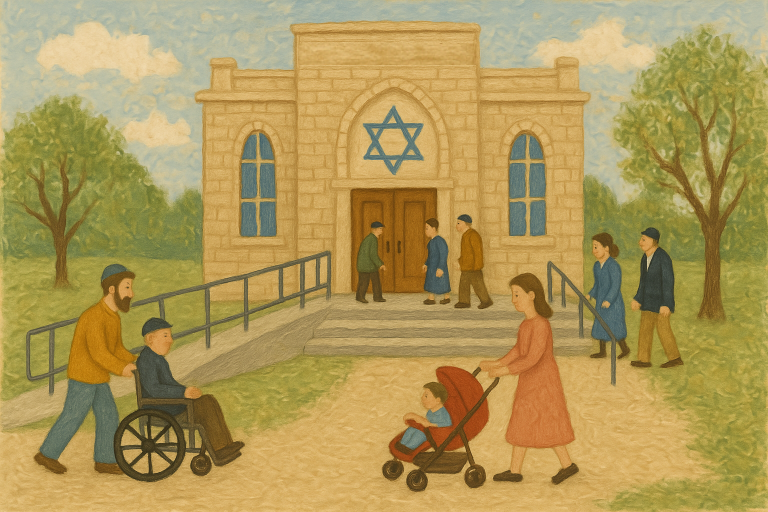
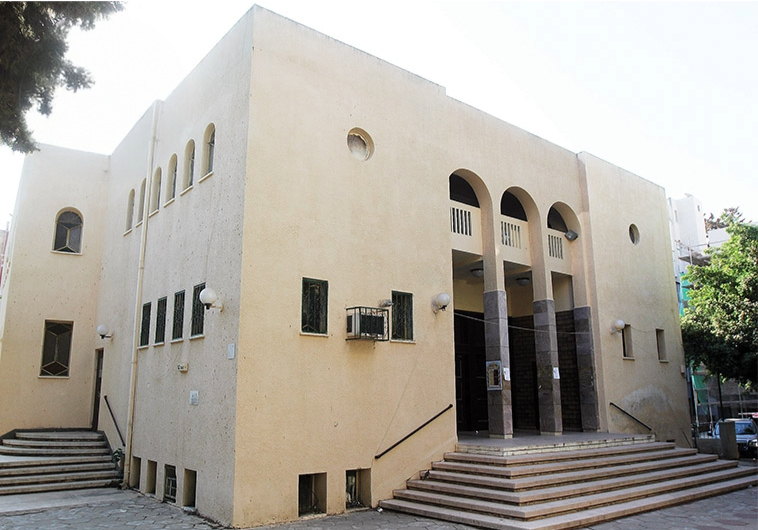
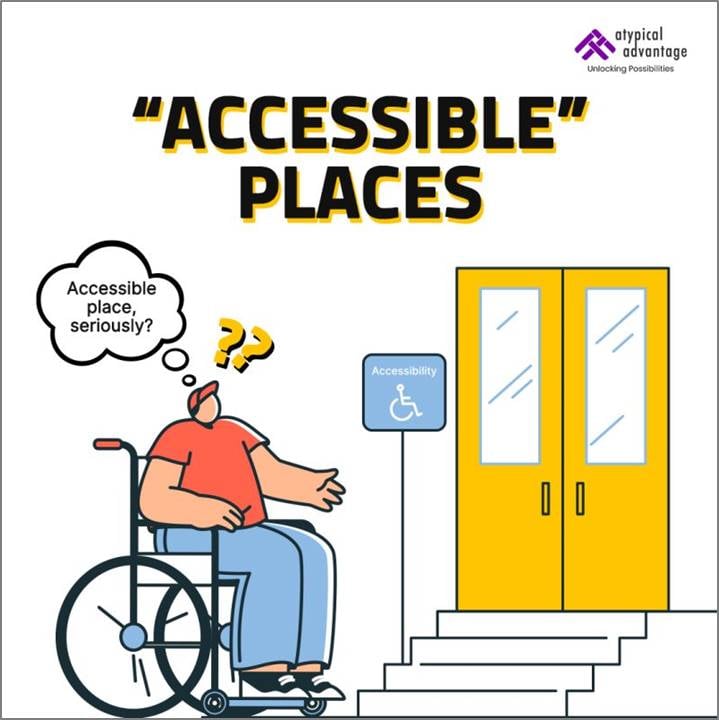
But synagogues often are not accessible to all, given the needs of people with disabilities. Can everyone in your community access the shul easily and comfortably, without obstacles? Many established synagogues, especially in Israel, have stairs without ramps, narrow passageways that prevent wheelchair access, inaccessible prayer areas, poor lighting, or overly intense lighting.
Over 1.4 million Israelis have some form of disability, and another 1 million elderly Israelis have mobility or sensory issues. Unfortunately, the last 21 months of war have seen a disproportionate increase in the number of younger people learning to live with physical disabilities. When segments of the population are prevented from praying in a shul, it harms their dignity, sense of self, religious freedom, and sense of community.
What does Israeli law say?
Israel’s Accessibility Law (Equal Rights for People with Disabilities, 1998) requires all public and religious buildings to be accessible, including synagogues. Despite this, accessibility compliance at religious sites is flimsy. Many synagogues across Israel remain inaccessible to people with disabilities, creating barriers that prevent full participation in religious and community life.
An accessibility study of 100 synagogues (2018) found that none of them is fully accessible. Only about half are partially accessible.
Accessibility means including everyone
Accessibility has become the catch cry of a generation that strives to include everyone. As public spaces, synagogues are legally required to be accessible. Accessibility for synagogues starts with making sure everyone can get into the building and participate in services. Access Israel, a non-profit organization dedicated to promoting accessibility and inclusion for people with disabilities and the elderly, provides concrete guidelines on how to make a synagogue accessible:
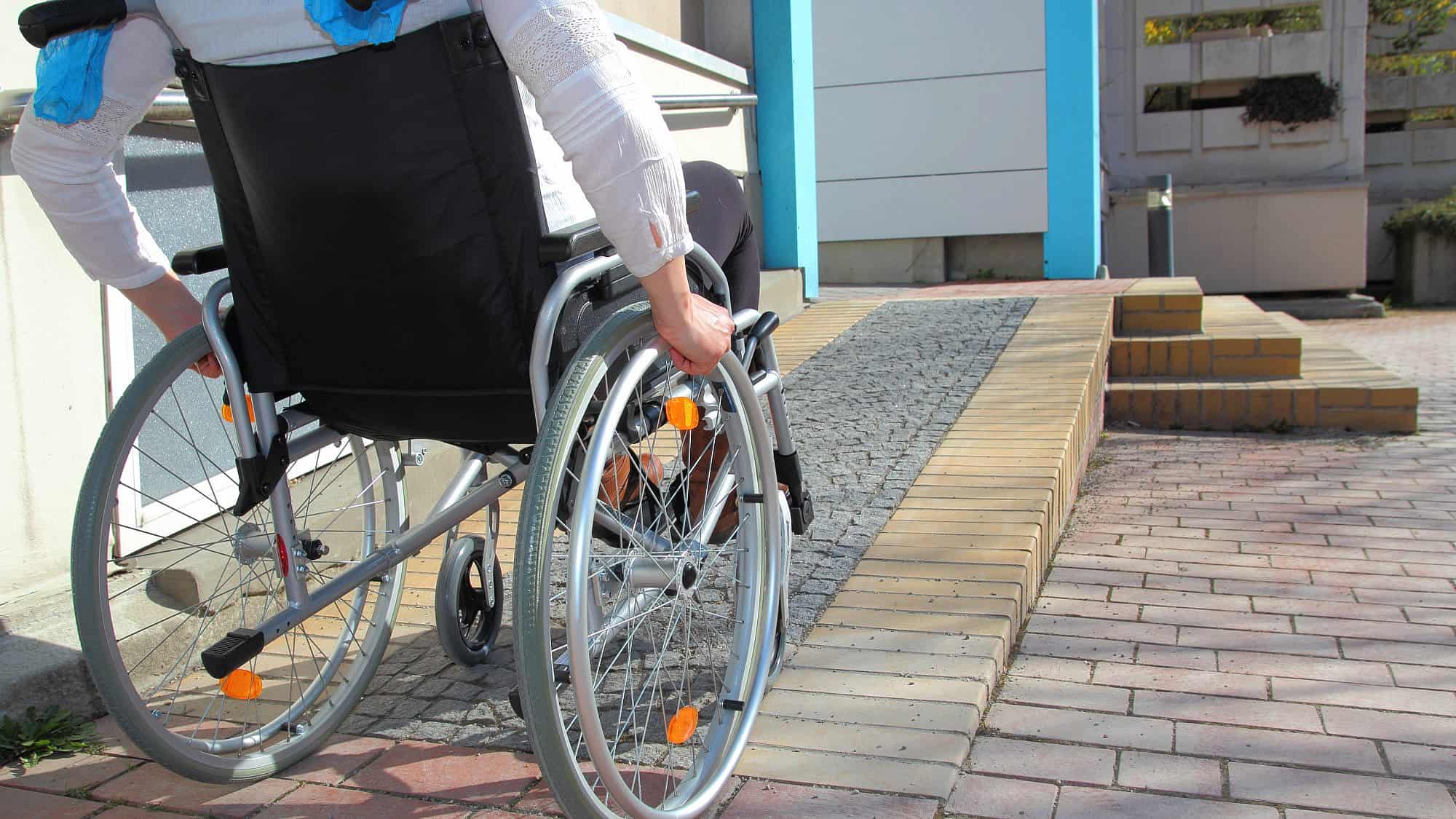
- Accessible entrances, routes and seating – There should be at least one accessible entrance to get in and out of the synagogue. The path and entrance should be wide enough for prams and wheelchairs, and seating should be accessible. (In synagogues from Rome to Sydney, many shuls have a few rows at the back for ladies who are unable to climb the stairs to the women’s gallery).
- Accessible bathrooms – At least one bathroom for men, and one for women, both clearly indicated.
- Signage and wayfinding – Clear signage should assist people in finding their way. This also helps orient new or visiting congregants. (Personally, I’ve lost count of the times I’ve needed to ask for directions to the women’s gallery).
- Accessible acoustics – The voices of the rabbi, chazan (cantor), and reader should be clearly understood throughout the synagogue, while minimizing background noise and echoes.
- Accessible lighting – There should be sufficient lighting to read, without being blinding, or causing discomfort. Lighting should be adapted for people who are sensitive to strong light.
Accessibility is not only for people in wheelchairs. It serves elderly people, parents with children in strollers, and people with hearing or vision impairments. For the wheelchair-bound, it’s also important that the bimah is accessible by a ramp.
Alun David, a wheelchair user, writes in the Jewish Chronicle that one of the most moving things that happened to him was the experience of being called up to the Torah. This was made possible by a bimah with a ramp. “Since I cannot always reach to touch the Sefer Torah (Torah scroll) with my tallit, the scroll is lifted down to an accessible position. It’s a simple thing, but to my mind, an example of practical adaptability and kindness.”
If there isn’t enough space for a permanent ramp, shuls need to consider how to call people to the Torah in a respectful and dignified way.
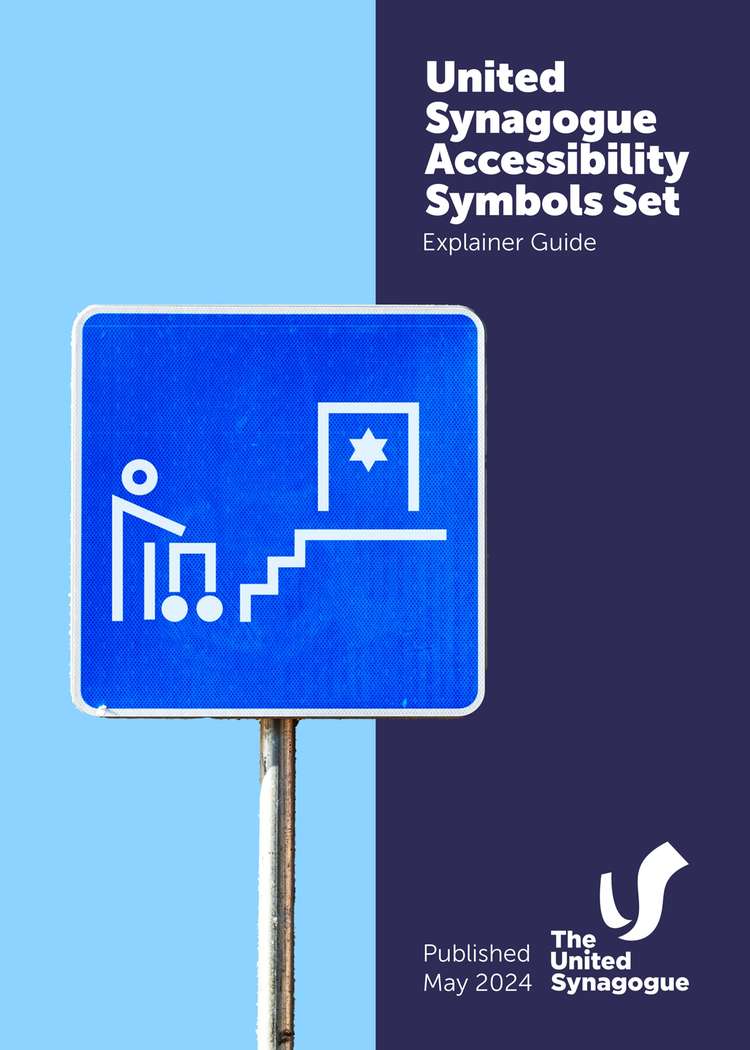
United Synagogue in the UK recently published an accessibility guidebook with symbols for accessible features in shul, such as a lower-floor women’s section, or large-print siddurim. This welcome initiative helps members see which synagogues offer accessible features.
The gap between general and religious accessibility
The synagogue accessibility issue has gotten barely any attention in the religious world. This is surprising, considering the importance placed on “loving your fellow neighbor as yourself” and not oppressing any minority groups.
Avrami Torem, former commissioner for Equal Rights of People with Disabilities, attributes the accessibility gap between general public buildings and religious buildings to the ”quiet character” of the religious population:
These are people who for years visited their synagogue or their neighborhood mikveh, were part of the community, and feel uncomfortable making demands or raising complaints to their fellow community members. It’s a situation that involves embarrassment. They find themselves in a kind of dissonance with their community members, when the synagogue is the heart of community life, and they are excluded from it. Very often they do not complain, and therefore someone needs to be their voice.
For me, raising the accessibility issue in my synagogue has come at great personal cost, from being excluded at evening services and having to pray outside, getting “the look” from other congregants, or losing friendships. After the number and type of light fixtures in my shul were changed, the resulting light intensity levels skyrocketed, and were more appropriate for Times Square than a shul. I was told to “get used to it.” In being true to myself and my physical limitations, I pay the price of not fitting in. In a small community, that is hard.
Kabbalat Shabbat at midday?
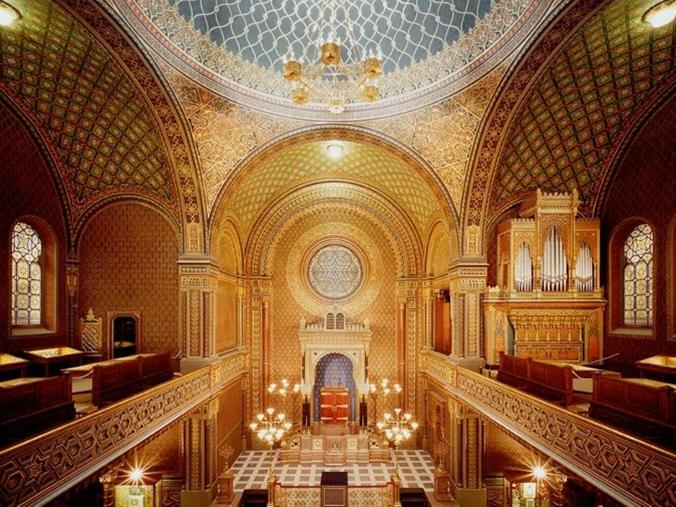
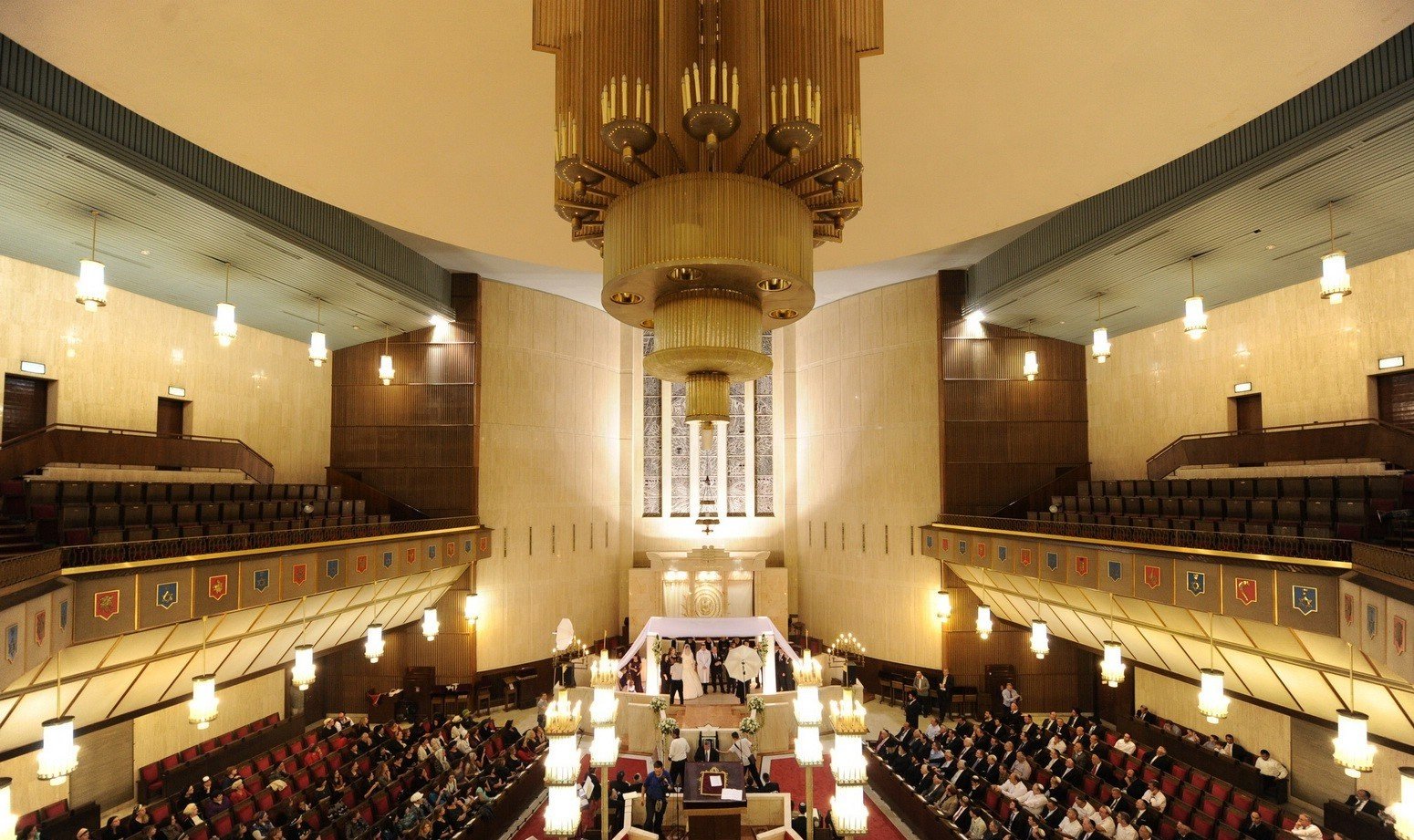
Synagogue lighting belongs to the sensory aspect of accessibility. For lighting to be accessible, there has to be enough light to read, but not so much that it becomes blinding. Many people, including myself, are sensitive to very intense light, especially at night.
It is a simplistic view that the only solution to any lighting problem is to provide more lighting. Lighting design requires a thought-out approach, and providing an extreme amount of lighting is not necessarily better; usually, it’s worse.
Can you imagine making the Kabbalat Shabbat service in the middle of the day? And yet, some synagogues are so brightly lit, it seems like welcoming the Shabbat Queen under the intense glare of an artificial noon.
Lighting design should sync with our natural systems. When the sun goes down, reduced light triggers a hormone in our brains called melatonin. This hormone calms and relaxes us, and it influences our biological 24-hour clock, reminding us to wind down at the end of a busy day. There’s a reason Kabbalat Shabbat is held during twilight: it’s a gentle time, a time to reconnect and contemplate, and to pause after a hectic week. Good synagogue lighting should respond to the purpose of the space, reflecting the sanctity and calmness of evening services.
Human beings are highly sensitive to light. Excessive lighting can be as harmful as under-lighting. Flickering lights or over-illumination, especially from fluorescent lights, can cause headaches, migraines, fatigue, and stress.
Many countries have recommended lighting guidelines for public places. These are developed by independent engineering authorities, such as the Standards Institution of Israel, CIBSE (UK Chartered Institution of Building Services Engineers), the US Lighting Authority, and Australian Standards.
The Israeli Standards regulation (IS 1918) gives specific guidelines for synagogue lighting: it should be bright enough to read, but not blinding. The CIBSE Lighting Guide for Places of Worship (2018) recommends that synagogue lighting should create a reverent and comfortable environment that supports practical needs — reading and access — and also evoke a spiritual atmosphere that is conducive to prayer, serenity and focus. Synagogue lighting should not be harsh or intimidating, but warm and inviting, creating a safe space for introspection.
What does Jewish law say about synagogue lighting?
There is no halachic guideline for lighting conditions in a synagogue. That’s hardly surprising since for hundreds of years, synagogues were lit minimally by candles and gas lights. Electricity has been available in public spaces in an evolutionary blink of the eye, only for the last 140 years.
The Talmud does say that a person should pray in a room with windows (Brachot 34b). Rabbenu Yona Gerondi (13th century, Spain) explains that windows allow light to filter into the synagogue, settling the thoughts of the person praying (mityashev da’ato). This has a calming effect on congregants, allowing them to concentrate on their prayers.
If the purpose of natural light from a window is to calm a person’s thoughts so they can pray with intention, then it follows that light from an artificial source should not disrupt a person’s thoughts, or interfere with their intent to pray.
In brightly lit places, like surgeries or manufacturing floors, strong light enables precision tasks that require fine motor coordination. In contrast, the synagogue is an environment for reflection and connection.
While we do not need to sit in the dark, or struggle to read by candlelight, it is worth thinking about the effect created by the High Priest on Yom Kippur. When he entered the Holy of Holies in the Temple, it was dark, except for the gentle light emitted from the burning pan of embers and spices he carried.
Promoting synagogue access is not just a charitable cause for those with physical disabilities ‒ it’s a basic principle of Jewish justice, embedded in Jewish tradition. When the Torah commands us: “You shall not put a stumbling block before the blind” this can be understood as any kind of physical impediment. Jewish law obliges us to be inclusive, and to extend access to everyone in the community.
From exclusion to inclusion
Like all public buildings in Israel, synagogues are legally required to be accessible. We live in an era of inclusivity and accessibility, and that applies especially to synagogues. People with disabilities are as much a part of the community as everyone else.
Unfortunately, there is an acute lack of awareness. Communal leaders and municipal authorities often don’t grasp the urgency or impact of specific accessibility needs in religious contexts. Or they do, yet accessibility isn’t prioritized because of budget constraints. What happens unfortunately is that people with disabilities feel excluded from their own communities, and are unable to exercise their fundamental rights to freedom of religion, or participation in services.
If I am not for myself, who will be for me?
There are people like the lawyer Avraham Roash, who has cerebral palsy and uses a wheelchair, and struggled for 17 years to make his local synagogues accessible. The synagogue boards refused to install a ramp, a measure that would have met the accessibility requirement. Roash persisted and filed lawsuits against both synagogues, and eventually they became accessible. Not everyone has the capacity or strength to pursue a legal challenge for equitable access.
While the Accessibility Law gives people with disabilities powerful tools to demand and enforce accessibility in public places and workplaces, most people are reluctant to take this on personally. Contacting the local accessibility officer, or the Commission for Equal Rights of People with Disabilities, is a good place to start. When people with disabilities start to voice their discontent and request accessible synagogues, the rest of the public will follow.
Rosh Hashanah is less than three months away. During the High Holidays, the number of synagogue visitors increases, including many who are not regular shul-goers. Despite the Accessibility Law existing for 27 years, many synagogues are still not accessible, and often people with disabilities find themselves outside, unable to participate.
Now would be a good time for community leaders to ensure that their synagogues are inclusive and accessible to all.
—
Thank you to Vanessa Levy-Mesman, Julie Szego, David Wiseman, and my husband Manuel Stein, for their valuable feedback.