Cohost of "Physics to God" podcast
Timeless and Timely: The Genius of the Torah
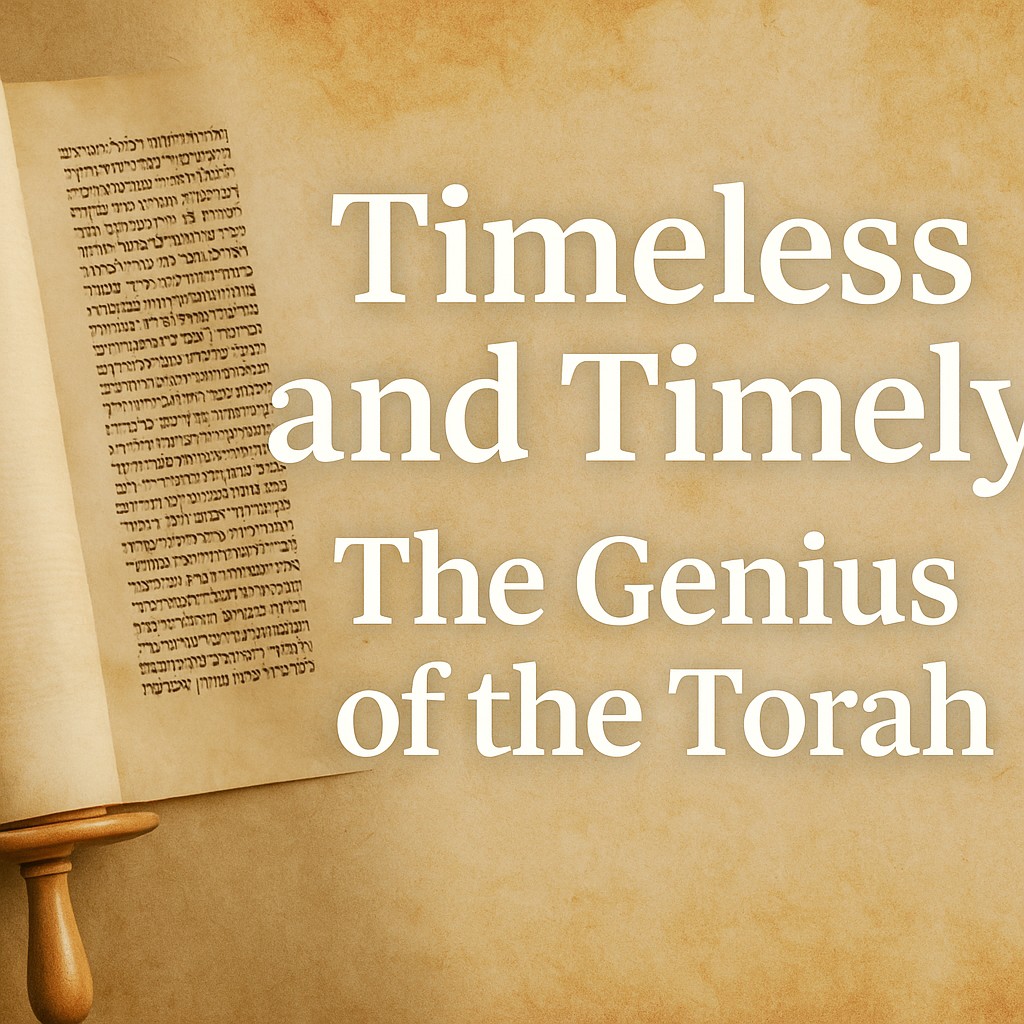
While halacha remains fixed, the Written Torah speaks anew to each generation, in some cases offering different lessons that shift with time.
One of the things I’ve always found remarkable about the Torah is how it balances what never changes with what can change. Certain laws are fixed for all time, while the messages we draw from the text often speak differently to each generation.
Take, for example, the prohibition against eating blood. Halachically, nothing has changed: just as Jews were forbidden to eat blood 3,000 years ago, we are still forbidden today. That part is permanent.
But then you look at the way the Torah phrases the command in Deuteronomy: “Be strong and do not eat blood.” Rashi brings two very different explanations of why the verse uses the words “be strong.”
The first is historical: in those days, people were deeply entrenched in blood-eating rituals and needed real strength to stop. The second is more philosophical: if we need strength even for an “easy” mitzvah like not eating blood—something people supposedly don’t even desire—then how much more strength is required for harder mitzvot, like resisting theft or improper relationships.
At first glance, the two explanations seem to factually clash. Was eating blood something people craved, or something they didn’t have any desire for?
The answer lies in changing times. In the ancient world, paganism was powerful. Idol worship and occult practices were everywhere, and some cultures, including ancient Jews, believed that drinking blood could give them visions of demons. Avoiding it required enormous strength. Over the centuries, partly through the efforts of the Torah, those practices faded. What was once a burning desire became taboo, and today the very thought disgusts us. The mitzvah never changed, but how hard it feels to keep it certainly has.
You see something similar in the very beginning of the Torah. In Genesis, the description of creation was often read by early commentators as including a reference to the four classical elements: earth, water, fire, and air. That made sense for their time. Today, with the advances of modern science, we know the basic building blocks of the universe aren’t those elements at all but fundamental particles like electrons and quarks. The verse hasn’t changed, but our lens for understanding it has.
That’s the genius of the Torah. Some things are eternal and unmovable. The halachic core doesn’t change. However, at the same time, the message of the Written Torah was sometimes intended to be interpreted differently by different generations. The Torah is both timeless and timely, guiding us through changing worlds without ever losing its eternal foundation.