
Tisha B’Av was never really about the Temple
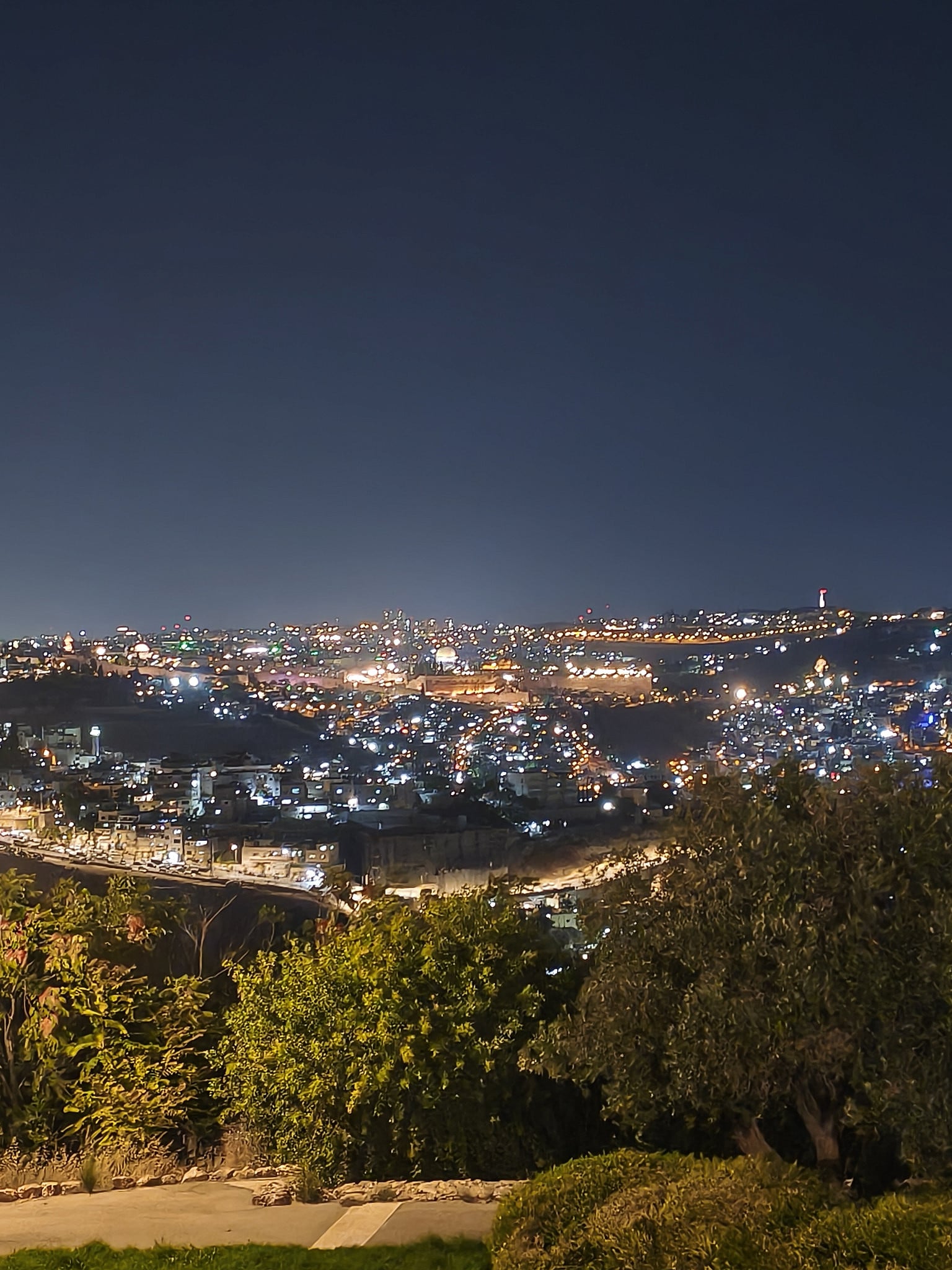
The inevitable happened last night. I joined the wrong Tisha B’Av service. I dislike cliches at the best of times, but “only in Israel,” I concede, captures that experience. No puns intended.
“Ugh! C’mon, where’s the gold?” I grumbled under my breath as my phone’s camera refused to focus on the perfect panorama in front of me. “It’s the lighting,” I sighed. Then, I suppressed a laugh.
For there I was, a Jewess on Tisha B’Av in the State of Israel in 2026, using the Dome of the Rock – the spiritual edifice, the heart of it all, whatever it all may be – to center a photograph. Of the Old City, I might add. If you have ever physically overlooked Jerusalem on a scorching summer’s day, describing the sunlight as blinding is not metaphoric.
Thankfully, our Sages decided to read the Book of Lamentations (Eicha) at night.
I abandoned the chance of a sunset photograph which I’d hoped to share with loved ones, and I meandered onwards – I had time to spare before Ma’ariv. Multiple groups of police officers walked by me. No one seemed concerned. Their drone however, for the sake of public service improvement, was infuriating. I don’t think Eicha was meant to include musical accompaniment supplied by a robotic fly.
But I guess – it being Tisha B’Av and all – it was worth finding something meaningful in the drone. That’s what we do as humans. We search for meaning and for signs. For hope that it will get better or that this or that was meant to be. Whatever it, this or that may be. Tisha B’Av, the thousands-year-old day of calamity, has either been or begun indescribable horrors.
I have an assortment of memories when it comes to Tisha B’Av. Being bored stiff during Eicha, quite literally, as a child; adults discussing who would stay home with us kids because the Holocaust films were not age-appropriate; endless nightmares after watching my first Holocaust documentary; and of course, calculating the best time to start baking so that I’d get myself to the end of the fast.
Tisha B’Av has always been characterized as externalized grief. Holocaust films followed by the most boring video compilation of famous Rabbis preaching morality were a childhood staple. Since making Aliyah, I’ve listened to equally tedious motivational speeches about the need to upgrade the day’s liturgical addition describing how Jerusalem lies in ruins. “But look! Look around us! Jerusalem is being rebuilt more and more every day!”
They clearly don’t read the news. (Or worry about rent.)
I wonder sometimes if Jerusalem has ever been so defined by hatred. Gleeful self-entitlement. Disrespect. Exhilarating immunity from the law because God is on your side.
Last night, one of my first concerns was that I wouldn’t hear Eicha. I’d long figured I was at a different service, but when they began saying psalms (maybe they do kinot before Eicha?) that seemed to go on and on, I felt my religious observance objecting. Are they some revisionist community that aims to make Tisha B’Av “relevant”? I felt rude to leave.
I don’t know whether they are indeed revisionist, but I did hear Eicha and for the first time, Tisha B’Av felt real.
Because as I gazed in historical awe at the Temple Mount, they read excerpts from The Jewish War by Josephus. Factions killing each other because they believed the other was destroying Judaism and Jewish values. Politics moved from fiery debates into fiery storehouses. People starved to death. The streets ran with blood. Brother turned against brother. Who cared if you too were a Jew?
Tisha B’Av is so often painted as first and foremost, the destruction of the Temples. Only after that fact are the traditional reasons provided – murder, immorality, idolatry, and baseless hatred. The Temples were destroyed because…
We’ve made it about a building. The Temple was destroyed because we sinned.
With that logic, Jerusalem does not lie in ruins. With that logic, it makes sense in some way that we need to watch Holocaust films, documentaries of pogroms, learn about the Inquisition – historical periods that are slipping away out of tangible memory. “You’re supposed to feel sad.”
But… don’t we have enough to mourn every day? How many people have said that October 7th was their wake-up call? Josephus might as well have been describing October 7th, 2023 rather than the summer of 70.
We don’t understand why things happen. We can point at historical factors; we can assign blame. And we should. Because it is not about the Temple first, it is about our morality above all else. We are not passive players. Throwing our hands up and saying “God will save us” or that “this is what God wants” or “God is punishing us” – yeah maybe but maybe not. As the speaker said last night, Tisha B’Av is a time to mourn. To allow ourselves to feel grief and pain. We must reflect and think through what happened, but the pain is not something we should simply explain away. Tisha B’Av is the one day we are granted as a nation to cry for what we have lost. For what we have suffered until today. For the pain of what it means to be human. It’s a pain to be carried with us into building a better world. Into rebuilding Jerusalem as she should be.