To Live Like We Mean It
In the past week, I published two essays exploring the future of Jewish life. The first, Why Don’t We All Just Go?, asked what would happen if American Jews stopped treating Israel as a hypothetical homeland and finally returned home. That question prompted immediate reactions. People spoke candidly about the cost of housing in Israel, the challenges of finding work without fluent Hebrew, the pressure placed on families whose children will one day wear a uniform and serve. These responses came quickly and confidently because aliyah, for all its emotional weight, is an action we can still safely discuss from a distance.
The second essay, To End Exile, about what it means to remain in America, received a more complicated reaction. It was widely read — but sparingly discussed. Few argued with its premise, yet few engaged with it directly. Silence can be many things, but here it seemed to reflect an uncomfortable truth: dreaming about a different life is easier than taking responsibility for the one we already have. Imagining departure lets us feel moral clarity without paying a price. Staying requires work, commitment, and visibility — real investments that begin tomorrow morning, not someday.
If we are going to have an honest conversation about the Jewish future, then we have to ground it not in memory or fear, but in what the data already shows. According to Pew Research (2021), 93% of American Jews believed antisemitism was a problem in this country and 45% said there was “a lot” of it. That survey predates October 7. It predates the campus encampments, the professors praising atrocities, the open calls for violence in city centers. It is reasonable — and sobering — to assume the numbers have since sharpened, even if the new data has not yet caught up.
Recent studies from UJA-Federation of New York show that in 2024–2025, 22% of Jews who reported antisemitism had been physically threatened — not digitally harassed or verbally mocked, but physically threatened. Meanwhile, Jewish day schools across the United States now spend an average of $339,297 per year on security, according to the Teach Coalition’s 2025 report — an 84% increase over the pre–October 7 period. That is not an “extra protection” supplement. It is a structural cost of existing.
These numbers tell a story no one wants to read, but all of us are living inside. They point to a shift in the way American society sees Jews — from insiders to outsiders in the span of a single cultural season.
And yet, even as external pressures grow, internal supports weaken. Only 25% of Jewish children in the United States attend Jewish day schools, according to the Jewish People Policy Institute’s 2024–2025 assessment. Most will receive the entirety of their general and moral education from a society increasingly comfortable casting Jews as villains or relics. Jewish identity cannot thrive if its foundations are outsourced to institutions with no stake in its survival.
Our communal structures reflect a similar imbalance. While many synagogues report the strain of maintaining attendance and budgets, others — particularly Chabad institutions — have seen a surge of engagement; the Jewish Federations of North America’s 2025 survey found that 44% of their participants reported deeper involvement since October 7. The uptick is encouraging, but it does not offset the broader decline. Engagement spikes during crisis but fades in calm. The infrastructure that sustains Jewish life cannot rely on adrenaline.
It is tempting to believe that because life remains comfortable for many of us, the threat is exaggerated. But comfort is not the antidote to danger — it is the condition under which danger grows unnoticed. Jewish apathy has never been a shield. It has only ever been a countdown.
So what does responsibility actually look like?
It does not mean living on alert, ready to pack a suitcase. It means shaping your environment before your environment shapes your children.
It means showing up — literally.
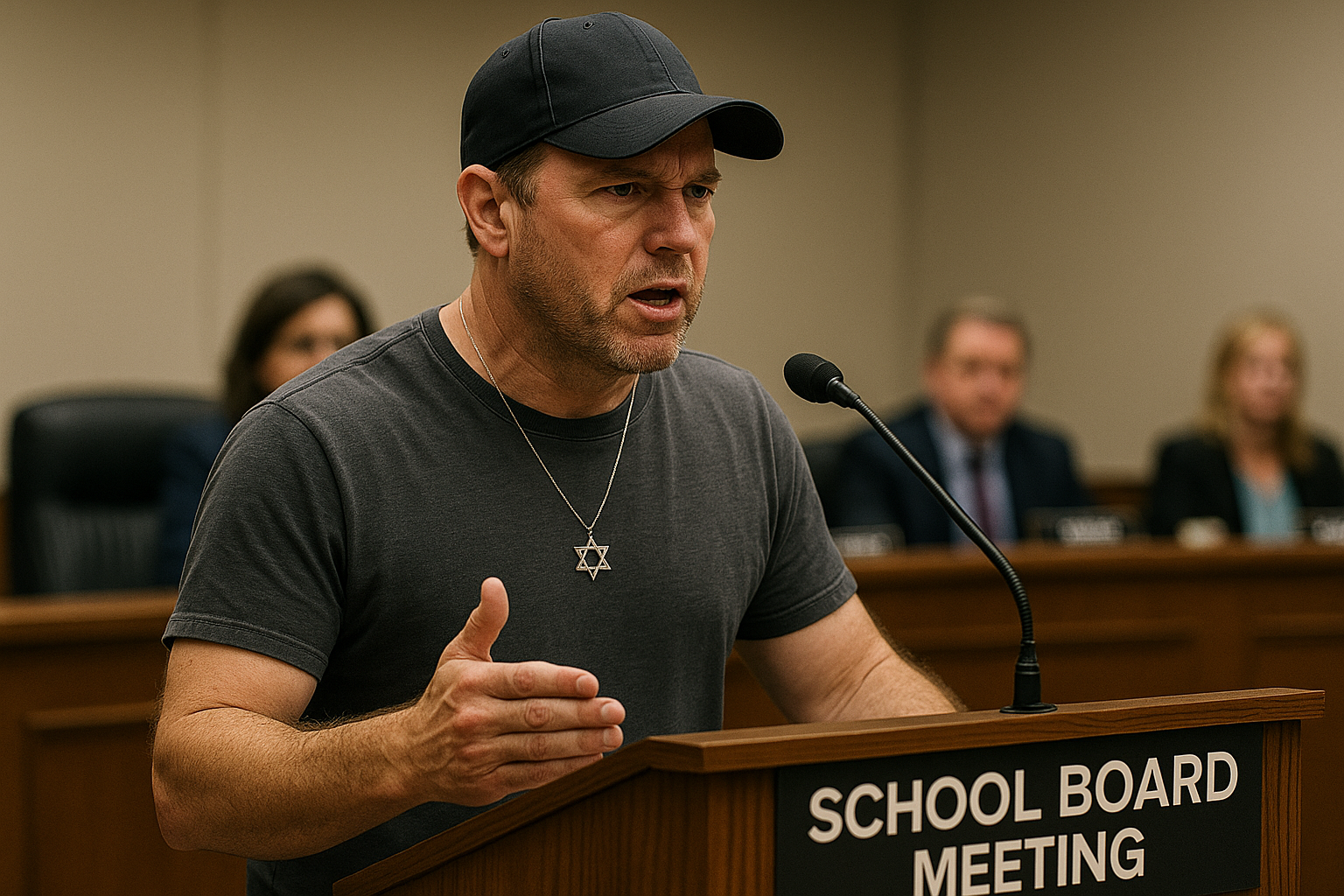
Your local school board may seem distant from Jewish life until you realize it controls the curriculum that will determine whether your children are taught that Israel exists to defend itself or exists to oppress others. School boards decide what history is included, how Jewish identity is framed, whether antisemitism is understood or dismissed. Showing up once a year is not enough. It must become a rhythm of presence.
City councils and state legislatures decide whether public funds support security for religious institutions. They decide zoning that affects whether Jewish schools, mikvaot, and eruvim can exist freely. They determine whether hate crimes are prosecuted or excused. Civic power belongs to those who occupy the room — and often, we are not there.
Local libraries host the programs that shape cultural imagination. They choose which voices are amplified and which are portrayed as harmful. If we are absent, narratives do not remain neutral — they shift. Visibility is not a luxury; it is a defense.
Be present in public spaces. Wear a Magen David not as a statement of danger but as a statement of belonging. Host events, join neighborhood associations, run for small offices like precinct delegate or library commissioner. These acts seem minor, but cumulatively they decide whether Jews remain a familiar part of the civic landscape or fade into the margins.
But civic engagement, however important, cannot replace Jewish identity.
The gaps in Jewish literacy are not subtle. Pew’s 2020 study found that while the overwhelming majority of American Jews feel proud to be Jewish, fewer than 20% regularly attend synagogue and only 16% can read Hebrew phonetically. The Jewish People Policy Institute reports that while general involvement remains steady, deep engagement continues to decline. Many know how to defend Jews online, but far fewer can explain Shabbat or name a biblical book beyond Genesis. When Jewish education becomes optional, Jewish continuity becomes accidental.
At the same time, many families simply cannot shoulder the high costs of private Jewish schooling. Financial barriers make it even more essential that we insert ourselves into public education — not merely as parents watching from the sidelines, but as teachers, administrators, and board members helping ensure accuracy, dignity, and fairness. We cannot leave the telling of our story entirely in the hands of others.
Knowledge is not elitism; it is durability. A Jewish identity grounded only in universal ethics — while noble — is unmoored. Those values are not exclusively ours, and without the roots that distinguish us, they disappear into the majority culture without leaving descendants who know what made them Jewish at all. Judaism has survived because it carries a homeland inside its texts and traditions. We cannot defend what we do not know, and we cannot love what we have never learned.
Jewish continuity is not guaranteed by existing. It is guaranteed by insisting.
Responsibility means strengthening the institutions that strengthen us: schools, youth programs, security systems, adult learning, leaders who translate worry into structure. Volunteer before the crisis, not during it. Invest where it counts, not only where it comforts.
If Jews move to Israel, they assume the burdens of sovereignty: service, cost, and the weight of history on daily life. If Jews remain in America, they must assume the duties of minority life: civic involvement, educational investment, public advocacy, and unapologetic Jewish living. Both paths require effort, courage, and a willingness to stand in the light.
There is one thing we can no longer afford: floating between those options, imagining that Jewish life continues on autopilot. Cultures do not survive because their grandparents cared. They survive because every generation decides — actively — that they must.
Jewish continuity in America will not collapse from a single crisis. It will erode the way it is already eroding: slowly, quietly, through disengagement disguised as normalcy. The warning signs are not distant. They are budget items, enrollment numbers, survey results, locked doors, and security guards standing in front of Hebrew schools on quiet weekday mornings.
In the first two essays, I asked what might happen if we left and what would be required if we stayed. This third piece is about acknowledging the moment we are in. It is a moment that demands clarity. It is a moment that demands ownership. It is a moment that no longer allows the luxury of indifference.
There is nothing ordinary about being Jewish right now. There is nothing passive about survival. Choosing to remain a people — here or anywhere — means acting before crisis dictates our choices. It means taking responsibility before fear forces our hand.
This is the part where we wake up.
Our future depends on how many of us choose to.