To Michigan AG Nessel and liberal Jews everywhere: Jewish survival isn’t immoral
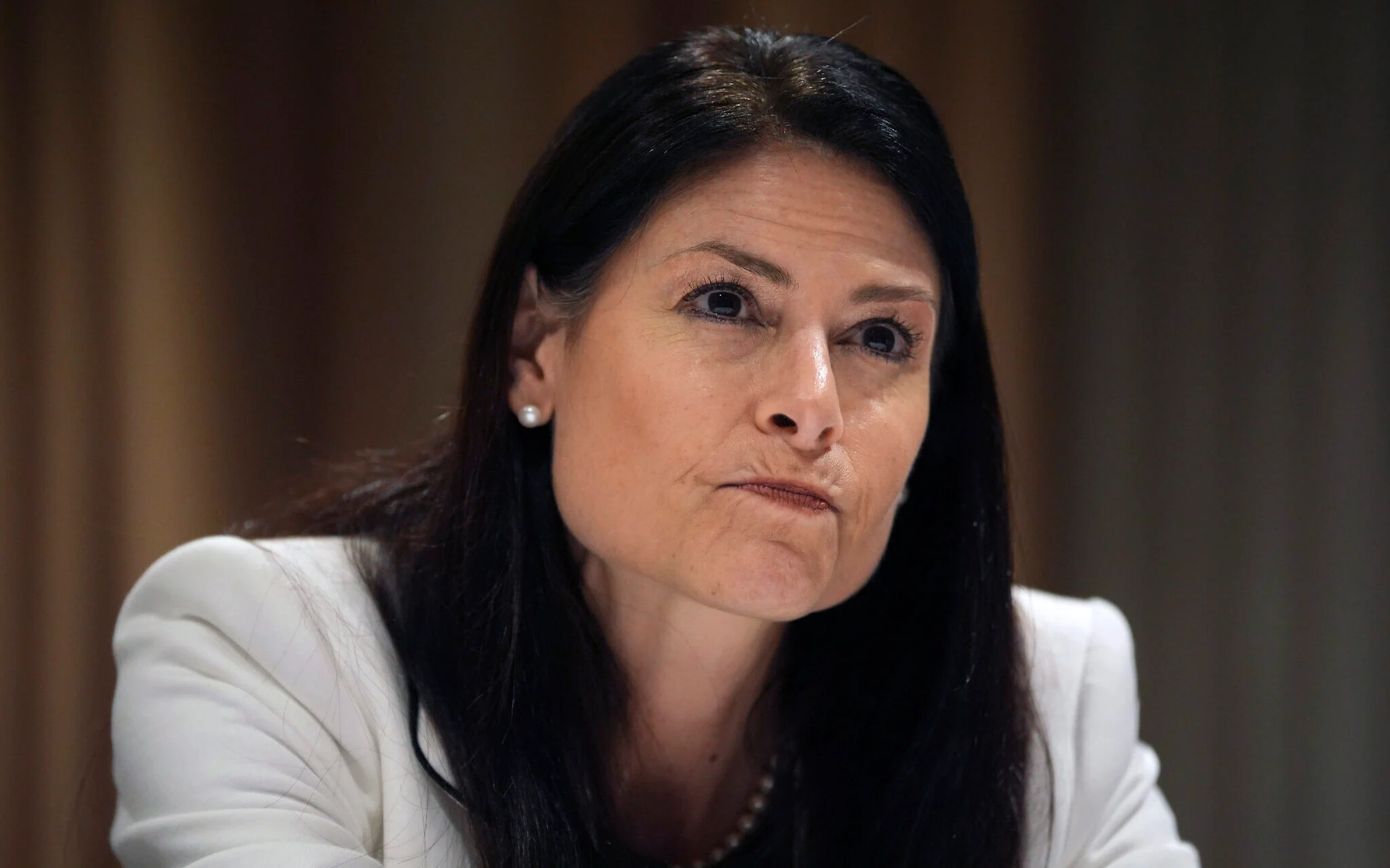
When Michigan Attorney General Dana Nessel got up in front of a room of Jewish Democrats last weekend and told them they may need to sacrifice the safety, and even the future, of their own people in exchange for saving the rest of humanity, many of us were shocked, and for good reason.
Her words brought to mind the European Jews a century ago who told their fellow Jews to stop advocating against antisemitism because it hurt their country.
According to news reports, Nessel reached for Queen Esther as the model, saying it might now be up to Jewish Democrats to follow in Esther’s path. But that is the Purim story turned inside out. Esther did not sacrifice the Jews for a greater good. She sacrificed herself for the Jews. To recruit her as the patron saint of setting Jewish safety aside is to get the story grotesquely backward.
But being shocked lets us off the hook. What Nessel said was not a slip. Inside a certain logic, she makes sense.
A week earlier she had reiterated her concerns over Abdul El-Sayed, the Democratic Senate nominee, focusing on the excuses he offered after Temple Israel synagogue and its preschool outside Detroit were attacked. Now she appeared to be preparing to support him, or at least to stand out of his way, and she seemed to be reaching for vocabulary that would make this justifiable on Jewish grounds.
What we must understand is that in doing so, Nessel drew on a way of thinking that has been common in parts of American liberal Judaism for decades. The idea is that Jewish survival is not really a value at all but an interest, and when interests conflict with values, values are supposed to win.
The longer I stayed, the more I realized it had, even if it wouldn’t always admit it, its own sacred cows and orthodoxies. What surprised me most was that the fights weren’t only about practice or politics. They were about what counted as a Jewish value in the first place.
Back then, the hot conversations were about intermarriage and assimilation, fought largely through the population studies sociologists were producing.
As a sociologist and community builder, I had to take a side. I felt strongly that giving up on valuing Jews marrying Jews as a value was wrong. That didn’t mean we couldn’t include Jews who had made other choices. It meant that a community has the right and the responsibility to articulate an ideal: that a Jew who cares about Judaism should want a partner who cares about it too. Democrats want to marry Democrats. Nobody thinks that’s bigotry.
The people who pushed back in those early debates, and sometimes battles, were not fringe figures. They were rabbis, sociologists, and communal leaders I respected. And what they offered was not simply disagreement but a questioning of the premise itself.
I was told that my argument was about Jewish survival and Jewish continuity, and that these were not values. They were just interests. The Jewish values they cared about were inclusion and loving others. These values couldn’t conflict with mine because mine weren’t values or were inferior values.
It took me a long time to understand what I was hearing. I had to read philosophers like Martha Nussbaum, who treated particular loyalties as morally suspect, a step away from what is genuinely good. Here is how she puts it:
Once someone has said, “I am an Indian first, a citizen of the world second,” once he or she has made that morally questionable move of self-definition by a morally irrelevant characteristic, then what, indeed, will stop that person from saying . . . “I am a Hindu first, and an Indian second,” or “I am an upper-caste landlord first, and a Hindu second?” Only the cosmopolitan stance . . . has the promise of transcending these divisions, because only this stance asks us to give our first allegiance to what is morally good — and that which, being good, I can commend as such to all human beings.
Read it carefully. Family, people, and nation are “morally irrelevant.” Loyalty to them is a “morally questionable move,” the first step down a slope that ends in caste. By this logic, a mother who feeds her own child before a stranger’s child has done something morally questionable.
This goes deeper than policy. It is an argument about what is allowed to count as a moral value at all. Jonathan Haidt made the point in The Righteous Mind that right and left don’t just hold different values; they disagree about which things count as values. If loyalty and sanctity never make the list, the entire conversation changes.
That’s the soil Nessel’s speech grew in. If Jewish safety and Jewish survival are just interests, then of course they can be traded for something nobler. Of course they rank beneath the fate of humanity. What made her stand out is that she just said this out loud at a moment when our very survival is at stake.
Which is why the fight ahead of us is not mainly about El-Sayed and those like him, who, despite recent apologies, platformed the likes of Hasan Piker and responded to a terrorist attack on a synagogue with “hurt people hurt people.” The more important fight is internal: the reawakening and rededication of the Jewish people.
That rededication has already begun over the last couple of years, but it needs to become more intentional. It asks us to reclaim the language of family to describe our people. Our family matters to us, and it is sacred. Its survival and flourishing are neither provincial nor morally inferior. They sit at the heart of our moral obligations.
This does not make us un-American. Great American patriots fought the melting-pot theories that said no group should be allowed its own values. The best lesson of multiculturalism, and even of identity politics, is that America is at its best when the families inside it flourish, with their own attachments and their own things held sacred. A Jewish community that says our family matters fulfills that America rather than threatening it.
In two days, Jews from Amsterdam to Johannesburg to Montevideo to Haifa will read the same words on Shabbat, the Torah portion of Nitzavim: the part of Moses’ dying speech where he turns to the people before they cross the Jordan. He tells them this magnificent story isn’t just their parents’.
It’s theirs.
He reminds them that the covenant is horizontal: no one has a greater share of the Jewish story or a shorter line to God than anyone else. He makes sure they know they are bound to each other across time and space. And he insists that, though his words are spoken on the plains of Moab in a particular year, they are timeless.
He says this outright: This covenant is not with you alone, but with those standing here today and with those who are not here today.
Read that against Nessel’s speech. She offered up “the very future of our own people” as something we might trade away. Nitzavim says the future of our people is not ours to trade. It was pledged before we got here, and it belongs to people who don’t exist yet.
Moses is describing the core of our Jewish values: a worldview in which all groups and all families should treasure the covenant that binds them together.
It is tempting to make this about Nessel. She is probably beating herself up right now over words that were poorly thought through. But the problem is the environment that gave birth to those words, and how many Jews are still enthralled with it. The problem is how much of the left still assumes particularism is bad, and Jewish particularism worst of all, the one attachment that still has to apologize for itself and explain why it deserves to survive.
Nessel asked her audience what their Jewish values tell them to do. Nitzavim has an answer. Moses asks us to keep the covenant, ours and no one else’s, and trusts that keeping it is how we will bless the world.
We have to make that argument again, out loud, and to ourselves first.
Shabbat Shalom,
Mijal