


Torah U’Parnassa (Part 2)
When Modern Orthodoxy Lost Its Mission
In Part I of this series, I described four broad paths that today’s Modern Orthodox young adults are taking: the Zionist, the Progressive, the Yeshivish, and the Modern Orthodox Professional. Each offers a different answer to the same question: What does it mean to live a meaningful Jewish life?
This article addresses a different question: Why is the thoughtful, moderate center losing ground to the more mission driven alternatives?
Modern Orthodoxy has unquestionably succeeded in producing highly educated, civically engaged, and professionally successful Jews. The question is not whether the movement has succeeded. Clearly, it has.
My argument is that Modern Orthodoxy has gradually lost the compelling religious philosophy that once defined it. Young adults are choosing to leave Modern Orthodoxy in search of greater meaning. As that philosophical vision faded, the movement’s institutions: day schools, summer camps, synagogues, and communal organizations, became the primary source of identity and belonging. Over time, many of those institutions also drifted from their original mission. Instead of transmitting a distinctive religious and intellectual vision, they emphasized college admissions, professional success, and sustaining an ever more expensive upper middle class lifestyle.
In other words, Torah U’Madda gradually gave way to what I call Torah U’Parnassa: a movement defined less by a shared religious philosophy than by the economic success needed to sustain its institutions.
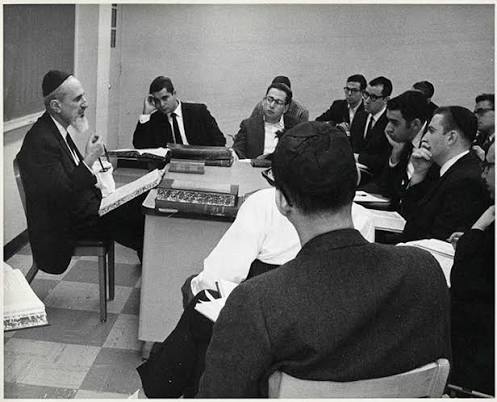
Rabbi Joseph B. Soloveitchik’s philosophy of Torah U’Madda gave American Jews a framework for embracing the best of Western civilization and secular education while remaining deeply committed to halacha and Jewish tradition. In practice, it opened the door for Modern Orthodox Jews to pursue professional careers while fully participating in both the Jewish and secular worlds.
Throughout the twentieth century, many of the movement’s flagship institutions were built around the Rav’s vision. They succeeded not only in preserving the Modern Orthodox way of life but also in creating strong communal bonds that kept many Jews connected to Orthodoxy, even as their personal level of religious observance varied.
In a 2014 article for Commentary Magazine, Jay Lefkowitz coined the term “Social Orthodoxy” to describe Jews who value belonging to the Jewish community and continue practicing Jewish ritual primarily as a way of remaining part of that community. As Lefkowitz writes, “Modern Orthodox Jews are more focused on living a Jewish life than they are on theology or a rigid set of rules.”
Lefkowitz identified an important shift, but I believe the movement has changed even further. Modern Orthodoxy is no longer defined primarily by a shared religious philosophy, or even by a shared social identity. Over the past several decades, Torah U’Madda has gradually given way to what I call Torah U’Parnassa: an Orthodox lifestyle centered on sustaining its institutions through economic success.
Secular Culture Has Changed
The original vision of Torah U’Madda assumed that Western civilization contained ideas worth engaging from literature, philosophy, and classical music to science and higher education. Today, many religious Jews see the surrounding secular culture in a different light. Mainstream culture is shaped by social media, materialism, political polarization, and changing norms around sexuality and identity.
As a result, many young Jews are asking a different question: Why integrate with a culture they no longer admire or trust?
For some young adults, the answer is to reject secular culture and seek greater meaning in a different way of life. As I described in Part I, many are drawn toward identities that offer a clearer sense of purpose, stronger values, and a more defined vision for the future.
Institutions No Longer Transmit a Clear Mission
In the Modern Orthodox community, culture is transmitted primarily through its institutions. We often think of schools, camps, and synagogues as places that teach Judaism through Torah and mitzvot. But their greatest influence may be less formal. They shape the values, priorities, and identity of the next generation.
Take summer camp as one example. Earlier generations attended camps like Massad, where Zionism and the Hebrew language were central to the mission. Bunks competed over who spoke the most Hebrew, and the entire camp experience was designed to cultivate a love of Israel. Today, many Modern Orthodox camps compete on amenities instead: newer facilities, expanded sports programs, and experiences that rival secular camps. Rather than asking how to develop the next generation of Jewish leaders, camps compete to offer the best overall experience.
The same shift can be seen in Jewish day schools. As college admissions have become more competitive, many schools have expanded AP courses and extracurricular activities. These are worthwhile investments, but they often come at the expense of other priorities. After twelve years of Jewish education, many graduates still cannot hold a conversation in Hebrew or explain major chapters of Jewish history. From life in the European shtetl to the Soviet Jewry movement and the founding of the State of Israel, too many students leave day school without a strong foundation in the story of the Jewish people.
None of this is an argument against AP classes or modern facilities. The question is what message students absorb when those priorities consistently receive more attention than cultivating a distinctly Modern Orthodox vision of Jewish life.
The Rising Cost of Belonging
As participation in day schools, summer camps, and synagogue life has become more central to Modern Orthodox identity, the cost of belonging has steadily increased. A recent Times of Israel report by Zev Stub found that many Modern Orthodox families earning between $150,000 and $400,000 a year before taxes still struggle to afford a middle-class Orthodox lifestyle.
The single largest expense is Jewish day school tuition. As Stub reports, “In many schools, particularly in large communities, tuition can easily range from $20,000 to $30,000 and above per child annually… tuition for families with four or more children can easily reach $50,000 to $100,000 per year.” Those figures do not include Jewish summer camps, which often cost $5,000 to $8,000 per child, higher housing costs associated with living within walking distance of a synagogue, kosher food, holiday expenses, or simchas such as weddings and bar and bat mitzvahs.
None of these expenses are new. What has changed is the expectation that maintaining a Modern Orthodox lifestyle requires a level of professional and financial success that is increasingly out of reach for many families. In that sense, the rising cost of belonging reflects a broader shift from Torah U’Madda to Torah U’Parnassa.
Why Ashkenazi Communities Are Especially Vulnerable
Community building looks very different in Ashkenazi and Sephardic communities. As Mijal Bitton writes in Sapir Journal, “For liberal Ashkenazi Jews, upward mobility has historically meant raising children who outearn their parents and move to better neighborhoods. For MENA Sephardic Jews, it means raising children who can afford to stay nearby, even as housing prices rise, because no one wants to leave.”
Bitton argues that Sephardic identity is transmitted primarily through family, shared culture, and close knit communal networks. By contrast, Ashkenazi identity depends far more on communal institutions. As the cost of participating in those institutions continues to rise, it threatens one of the primary ways Ashkenazi communities transmit Jewish identity from one generation to the next.
Increasingly, young adults raised in Modern Orthodoxy are deciding that they either cannot afford this model or no longer believe it reflects their values. As I argued in Part I, many are instead embracing the Zionist, Progressive, or Yeshivish paths.
What is striking is not that these young adults have stopped searching for spirituality or meaning, but that they are finding it elsewhere. The Zionist finds purpose in building the Jewish state, the Progressive in pursuing social justice, and the Yeshivish in Torah learning and halachic commitment. Each offers a clearer mission and stronger sense of purpose than many young adults currently find within Modern Orthodoxy.
This shift also has institutional consequences. Three of the four identities ultimately opt out of reproducing the Modern Orthodox model. The Zionist raises a family in Israel, the Progressive is less likely to send children to Jewish day school, and the Yeshivish invests in a different educational system. Only the Modern Orthodox Professional is likely to remain within the same network of day schools, camps, synagogues, and communal institutions that shaped them.
The Loss of a Shared Vision
Another challenge is the lack of leadership in Modern Orthodoxy.
A few weeks ago, I posed an icebreaker at a Shabbat meal: “Who is the leader of the Jewish people today?”
The immediate response was, “No one.”
After a few moments, the answers started coming. Some named Rachel Goldberg-Polin, who became a leading public voice in the campaign to bring her son Hirsch home from Hamas captivity. One Yeshiva University student suggested Rabbi Hershel Schachter, one of Modern Orthodoxy’s foremost halachic authorities. Others pointed to media personalities like Ben Shapiro or political leaders such as Bibi Netanyahu and Donald Trump, whose policy decisions will shape the future of Israel and the Jewish people. Still others mentioned the enduring influence of Rav Soloveitchik and the Lubavitcher Rebbe.
What struck me was that almost every answer was political or cultural rather than spiritual. And in the cases of the Rav and the Rebbe, while their teachings continue to shape countless lives, they are no longer here to guide their movements through today’s challenges.
Modern Orthodoxy is not lacking institutions. It is lacking a unifying moral and philosophical voice. At a moment when young Jews are searching for meaning and direction, the movement has no widely recognized leader capable of articulating a compelling vision for its future.
As we approach the month of Elul, I am reminded of the Yom Kippur piyyut Ki Anu Amecha that says, “We are Your flock, and You are our Shepherd.” Yet today, Modern Orthodoxy often feels like sheep without a shepherd, a community rich in institutions but without a single voice capable of guiding the movement through this pivotal moment in Jewish history.
In Part III, I’ll move from diagnosis to prescription. Can Modern Orthodoxy recover its sense of mission? More importantly, can it once again offer young Jews a compelling answer to the question that opened this series: What does it mean to live a meaningful Jewish life?