

Mathematics Teaching Professor, Author
Toronto Holocaust Museum: Keeping Survivor Voices Alive
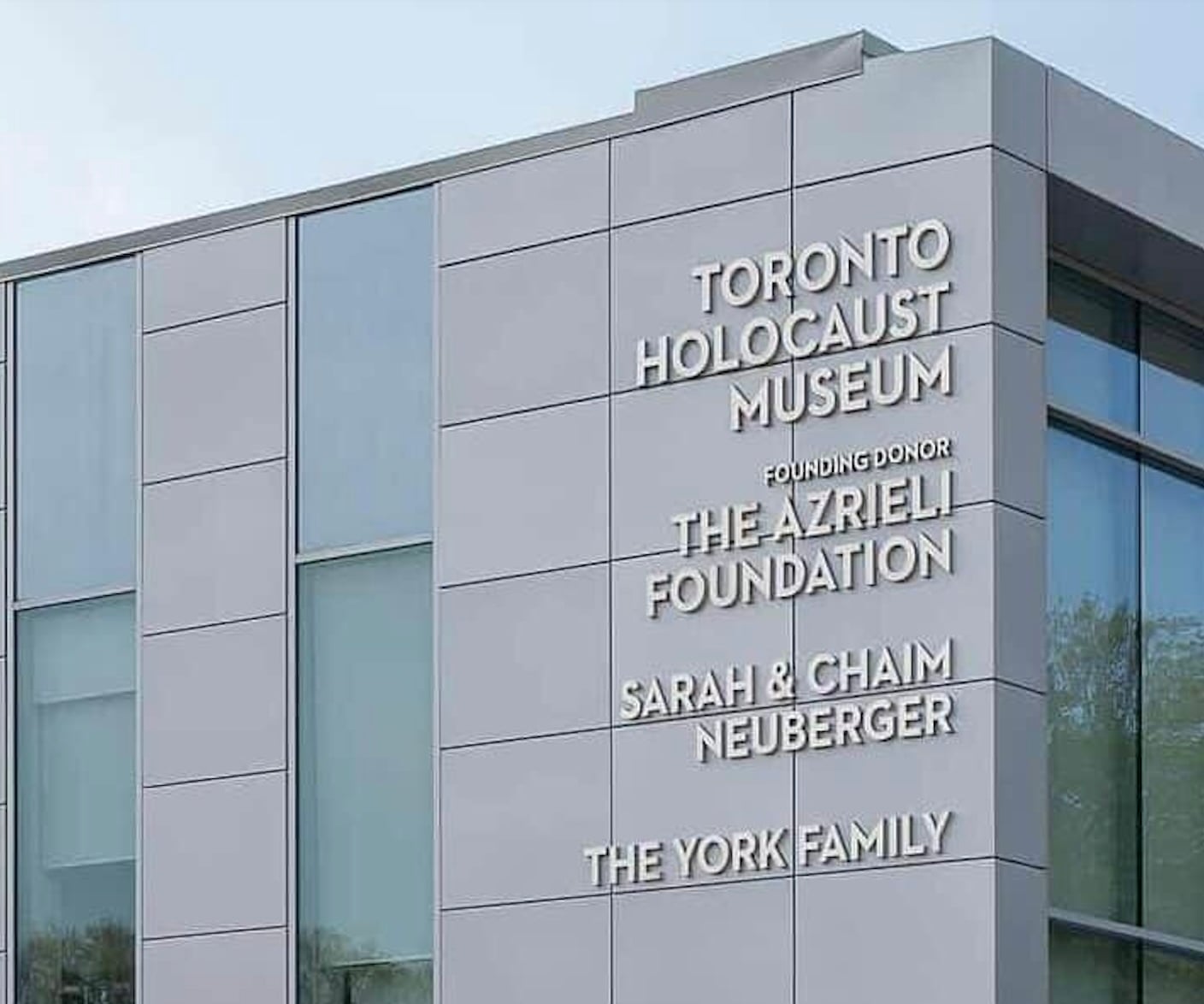
Toronto Holocaust Museum (Source: Toronto Holocaust Museum)
The Toronto Holocaust Museum offers a powerful space for learning, reflection, and dialogue about the Holocaust and its lasting impact. Through immersive exhibitions, survivor testimonies, and educational experiences, the Museum helps visitors understand this history while exploring its connections to today’s world. As a center for Holocaust education and a voice against antisemitism, bigotry, and hatred, the Museum encourages critical thinking, empathy, and a commitment to human rights.
I would like to thank the esteemed Michelle Fishman, Director of Marketing and Communications, for her support and guidance.
Museum
The Toronto Holocaust Museum keeps the stories of Holocaust survivors alive by placing their voices at the heart of its educational programs. Survivor testimony gives people a personal connection to history, helping them understand the devastating impact of the Holocaust through firsthand experiences. These stories inspire empathy, resilience, and a commitment to standing against hatred and discrimination.
Two of these voices are Judy Weissenberg Cohen and Edward (Eddie) Fisch.
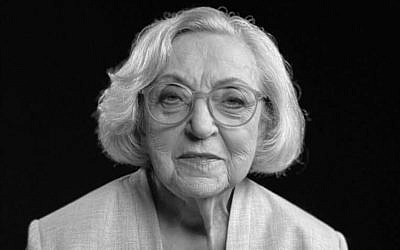
Judy Weissenberg was born in Debrecen, Hungary, and in 1944 was deported to Auschwitz-Birkenau, where she was separated from her mother and aunt. She was later sent to Bergen-Belsen, forced to work in a Junkers aircraft factory, and survived a four week death march before being liberated in 1945.
Eddie Fisch was born in Budapest, Hungary, and lost his father to forced labour during the war. After his mother was deported to Auschwitz-Birkenau, Eddie and his brother survived by moving between Swiss-protected safe houses and later hiding in the Budapest Ghetto until the city was liberated in 1945.
After the war, both Judy and Eddie immigrated to Canada and built new lives with their families. Today, they continue to share their experiences through the Toronto Holocaust Museum, helping educate future generations about the Holocaust and reminding us of the importance of protecting human rights, challenging prejudice, and ensuring these events are never forgotten.
Exhibits
The Toronto Holocaust Museum’s core exhibition is divided into four galleries, Persecution, Atrocity & Devastation, Liberation & Aftermath, and Life in Canada, which guide visitors through the history of the Holocaust from its beginnings to its lasting impact. Each gallery combines historical photographs, authentic artifacts, digital timelines, interactive maps, and detailed displays to help visitors understand the events in their historical context. The exhibition presents a thoughtful and balanced account of the Holocaust while highlighting Jewish experiences, resilience, and the importance of preserving these stories.
At the heart of the museum are the voices of Canadian Holocaust survivors, whose personal testimonies are featured throughout the galleries in interactive listening stations. Their firsthand accounts of persecution, loss, resistance, survival, and rebuilding their lives create a powerful connection between visitors and history. By combining these personal stories with historical evidence and information about Canada’s role during and after the Holocaust, the museum encourages visitors to reflect on the lasting impact of these events and inspires them to continue learning about the importance of human rights, tolerance, and combating hatred.
Theater Experience
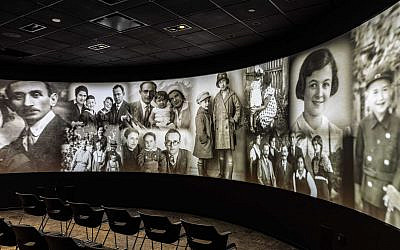
The Toronto Holocaust Museum uses innovative technology to help visitors connect with the history of the Holocaust in meaningful ways. As visitors begin their journey, they watch “A Tapestry of Moments”, an immersive film projected across a 180-degree curved screen. Through historical photographs, archival footage, music, and voices from across Europe and North Africa, the film celebrates the richness and diversity of Jewish life before the Holocaust, offering a powerful reminder of the vibrant communities that were forever changed.
The museum also features “The Last Goodbye”, an award-winning virtual reality experience available until May 2027. Using VR headsets, visitors accompany Holocaust survivor Pinchas Gutter as he travels through the Majdanek concentration camp in Poland, including the railway car, gas chamber, shower room, and barracks, while sharing his personal story of suffering, survival, and resilience.
Younger visitors can explore “Childhood Interrupted”, an age-appropriate program based on survivor Yael Spier Cohen’s experiences that supports the Ontario Grade 6 curriculum.
Another moving installation, “Silhouettes of Survival”, honors the journeys of Jewish refugees and Holocaust survivors who rebuilt their lives in Canada after the Second World War. Together, these experiences encourage visitors to reflect on the Holocaust’s lasting impact while inspiring learning, empathy, and remembrance.
Ekstein Family Learning Lab
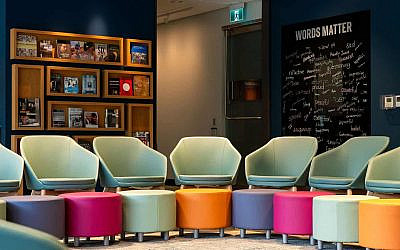
Located within the Anita and Frank Ekstein Holocaust Library, the Ekstein Family Learning Lab is a flexible educational space designed to encourage active, hands-on learning. It hosts student programs, research, public lectures, specialized workshops, and rotating exhibitions that deepen visitors’ understanding of Holocaust history. Currently on display is a selection of artwork from “Two Roses“, a graphic memoir that explores the life and legacy of Holocaust survivor Rose Lipszyc. Through art, education, and discussion, the Learning Lab provides visitors with new ways to engage with history and reflect on its enduring lessons.
Online Resources
The Toronto Holocaust Museum extends its educational mission beyond its galleries by creating innovative online resources for students, educators, and families. Designed to promote critical thinking and meaningful discussion, these interactive programs include multimedia activities, lesson plans, and virtual learning experiences that help people explore Holocaust history and its ongoing relevance.
Two outstanding examples are “Unpacking Canadian Antisemitism”, a ready-to-use lesson featuring a 20-minute documentary that examines how antisemitism has shaped Canadian history and continues to affect society today, and the “Virtual Museum”, which brings the museum experience into classrooms. Through survivor testimonies and Canadian perspectives, the Virtual Museum supports the Ontario Grade 6 Social Studies curriculum and allows students to explore Holocaust history from anywhere.
The museum also offers “Unlearn It”, a resource hub that equips educators and parents with practical tools to recognize, prevent, and respond to antisemitism in schools, communities, and online. “Unlearn It” resource is in partnership with Facing History & Ourselves, and the Centre for Israel and Jewish Affairs (CIJA).
Education Program
The Toronto Holocaust Museum’s Educator Portal provides teachers with resources, guidance, and opportunities to connect with experts and fellow educators. Designed to support meaningful Holocaust education, the portal offers classroom materials, professional learning, and tools that encourage dialogue and critical thinking.
The Childhood Interrupted teacher resources include ready-to-use lessons that introduce students to Holocaust history and the experiences of Canadian survivor Yael Spier Cohen. The program combines pre-visit activities, a museum or online exhibition experience, and post-visit projects that allow students to continue exploring the history through timelines, classroom museums, and reflection.
Historical Backgrounds
Jews first arrived in Canada in 1760 following the British conquest of New France. Prior to this, settlement was banned under French rule, which strictly required colonists to be Roman Catholic.
Toronto’s Jewish history began in the early 1800s, when a small number of English and German Jewish merchants explored the area, then known as York, a developing colonial town with rough roads and a growing population. The first documented Jewish settler was Judah Joseph, who arrived in 1838. Soon after, Jewish community life began to take shape, with Toronto’s first Jewish congregation established in 1849 and its first synagogue opening in 1856.
By the 1880s, Toronto’s Jewish population grew significantly as many Eastern European Jews arrived, escaping persecution and pogroms in Europe. Many settled in The Ward, a crowded but lively downtown neighborhood near Yonge and Queen Streets, which became a center of Jewish cultural, religious, and community life.
By the 1910s and 1920s, the community had largely outgrown The Ward and moved west to Kensington Market and the Spadina Avenue corridor. Here, Jewish life thrived in Yiddish.
The 1930s brought both cultural growth and rising antisemitism for Toronto’s Jewish community, which became the city’s largest minority group. Tensions culminated in the Christie Pits Riot of 1933, a six-hour conflict sparked after a baseball game and fueled by antisemitic hatred.
During this period, restrictive Canadian immigration policies prevented many European Jews fleeing Nazi persecution from finding refuge. By the 1940s, Toronto’s Jewish community, centered around Kensington Market and Spadina Avenue, remained a close-knit and active community that supported the war effort while facing discrimination at home and worrying about the fate of relatives in Europe.
The Toronto Holocaust Museum grew from Holocaust remembrance efforts that began in the late 1940s, when the Federation of Polish Jews of Canada organized commemorations of the Warsaw Ghetto Uprising. In the following decades, these initiatives expanded to include Holocaust education, survivor speakers, school programs, and community outreach.
By the 1970s, the Holocaust Remembrance Committee recognized the need for a permanent memorial in Toronto. During this period, the city’s Jewish population grew significantly, with many English-speaking Jews relocating from Montreal due to political changes in Quebec. Toronto soon became the center of Jewish life in Canada.
Planning and fundraising for a Holocaust memorial began in the 1980s, bringing together community members, government support, and families honoring relatives lost in the Holocaust.
Which brings us to 1985.
In 1985, Canada was entering a period of change, moving beyond economic challenges toward greater consumer optimism and a new political era shaped by discussions of free trade and shifting national priorities.
Toronto was transforming from an industrial city into a growing multicultural center, with expanding neighborhoods, a vibrant arts scene, and a changing urban identity.
For Toronto’s Jewish community, 1985 marked a period of growth and transition. Many Jewish families had moved north along Bathurst Street, influenced by migration from Montreal and the expansion of community institutions. The community was evolving from its downtown roots in areas like Kensington Market into a thriving suburban cultural and religious hub.
It was in that year, 1985, that local Holocaust survivors established the Holocaust Education and Memorial Centre, which later evolved into the highly interactive Toronto Holocaust Museum.
The Holocaust Education and Memorial Centre opened in September 1985, featuring a Hall of Memories with memorial tiles, along with audiovisual presentations and exhibits on Jewish history and the Holocaust. Following its opening, the Centre began offering tours led by Holocaust survivors for schools and community groups, ensuring that firsthand testimonies remained at the heart of Holocaust education.
In the 1990s, the Centre expanded its programs, supporting survivors, engaging younger generations, creating student initiatives, and establishing the Anita Ekstein Holocaust Resource Library. In 1992, responsibility for the Centre was transferred to the UJA Federation, where it remains today.
Over the years, the Centre continued to grow through exhibitions, educational programs, survivor testimony projects, and human rights initiatives. Renamed the Sarah and Chaim Neuberger Holocaust Education Centre in 2009, it reached a new milestone in 2023 with the opening of the Toronto Holocaust Museum, a state-of-the-art space dedicated to remembrance, education, and preserving survivor voices for future generations.
The Toronto Holocaust Museum continues a legacy built on remembrance, education, and survivor voices. Through its exhibitions, programs, and interactive experiences, the Museum ensures that the lessons of the Holocaust remain meaningful for future generations, ensuring the Holocaust survivor voice is kept alive.
Contact Information:
Toronto Holocaust Museum, 4588 Bathurst St, Sherman Campus North, ON M2R 1W6
Phone: (416)631-5689
Email: info@thethm.org
Website: https://torontoholocaustmuseum.org/