View From the Diaspora
Trapped in China
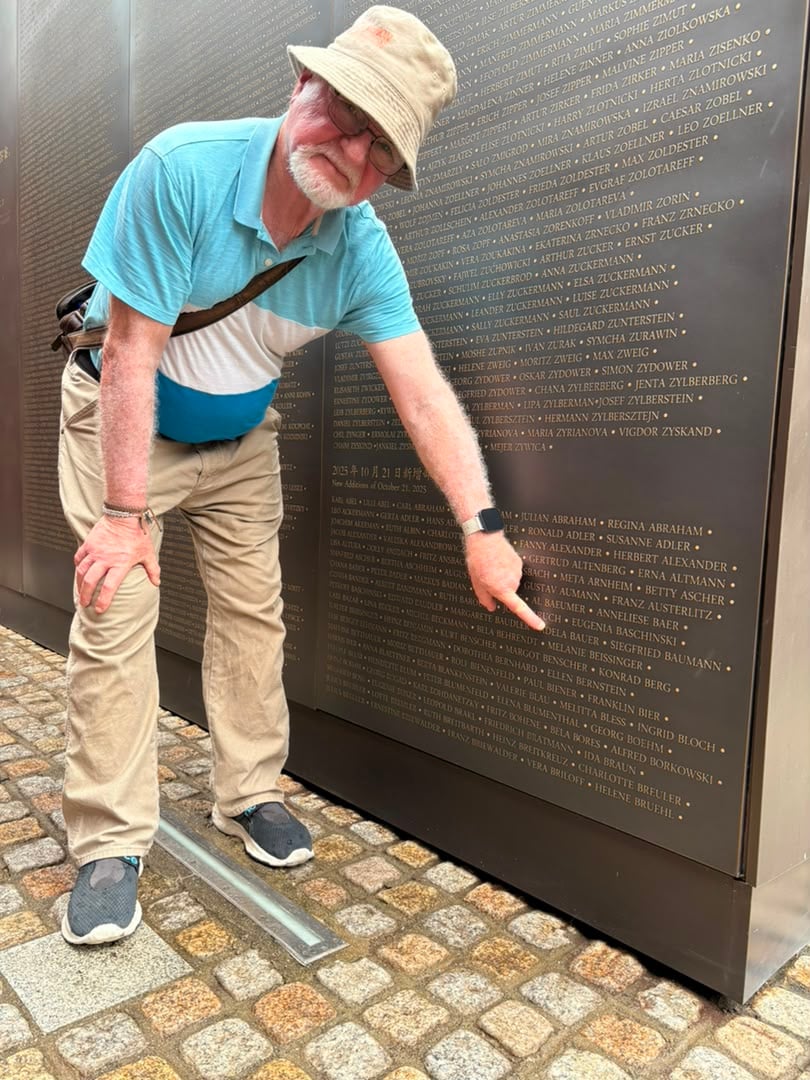
Photo Courtesy of Shanghai Jewish Refugees Museum
China and I are not friends.
I first realized that long ago when, passing through one of its many airports, an unsmiling immigration officer confiscated my favorite oversized razor. And again, years later, when during a two-day-multiple-airport layover, my then-eight-year-old son and I had to beg for water because, well, we had no local currency, and no one accepted Visa.
“I don’t blame the Chinese airport and airline employees for our misery,” I wrote at the time. “It’s not their job, after all, to take care of ignorant foreigners. Oh, wait, yes, it is.”
So, you can imagine the precautions we took to facilitate our recent four-night stay in Shanghai. First, we scheduled it during our return trip from California to the Philippines to get an automatic 10-day transit passage rather than applying for visas at the embassy. We also downloaded the country’s premier paying app called Alipay. And finally, we arranged to meet up with a longtime online friend, a Chinese journalist who lives in the city.
Why, you might ask, would I go to such lengths to visit a place that scares the heck out of me? The answer is simple: because I owe that place my existence. Because, in fact, without it, I might not be alive.
Let me explain.
My mother was a German Jew, barely 18 when Hitler took power in 1933. In short order, most of her family got deported to Poland, where her parents and younger brother died in gas chambers. Her sister, Klara Bauer, survived by hiding with 11 other Jews in the basement of a German major’s home; an ordeal recounted in the award-winning 2023 film, Irena’s Vow. And her older brother, Leo Bauer, eventually became a major media figure in communist East Germany, got sentenced to death for alleged treason, did hard labor in Siberia, and finally returned to West Germany where he became a senior advisor to then-Chancellor Willy Brandt.
My mother’s salvation, however, lay in what some have called the “Shanghai Ark,” one of the world’s few places—another was Manila—where European Jews could live in relative safety. It was there she met my father, an American merchant sailor, shortly before the 1941 attack on Pearl Harbor. And it was there—under Japanese occupation—that she survived long enough for his family to bring her to Southern California following World War II.
“Many former refugees and their descendants come here to tell us their stories,” Keira Li, in charge of visitor reception, told me at the Shanghai Jewish Refugees Museum in the former “designated” area of the Hongkou district to which the Japanese consigned the Jews. “We are always eager to hear of their experiences.”
Some of those experiences have been skillfully transformed into fascinating displays depicting refugee life in China, including crowded rooms with shared tables and beds; cafes where they lingered and socialized; and their resurrected cultural life, including weddings, concerts, and holidays.
Others show history’s unfolding: the Allies’ accidental bombing that killed a close friend of my mom’s, and Japan’s plan to exterminate the Jews had the war continued.
All of which stirred me to the core. But the strongest emotion came as we inspected the great Wall of Names, which lists most of the estimated 20,000 Jews who spent the war years in Shanghai. And there, on the wall’s back end amid a new group of engravings added just last year, glimmered the familiar name of Adela Bauer.
I thought of how often she had expressed gratitude to the Chinese for enabling her survival. And how, in doing so, they had enabled my own.
Our planned departure was as inconvenient as I’d feared, delayed by an unexpected flight cancellation that stranded us for 24 hours. Trapped in China, I mused, just as my mother had been years before.
But this felt different. The new bottom line: I can think of far worse places to be trapped. In fact, I’ll probably return in the future to enjoy a few more of these Shanghai entrapments.
(First published in The Manila Times)
Related Topics
Related Posts