


Owner of the world's largest Herzl collection
Treasure Trove: What’s So Jewish About the Harlem Globetrotters?
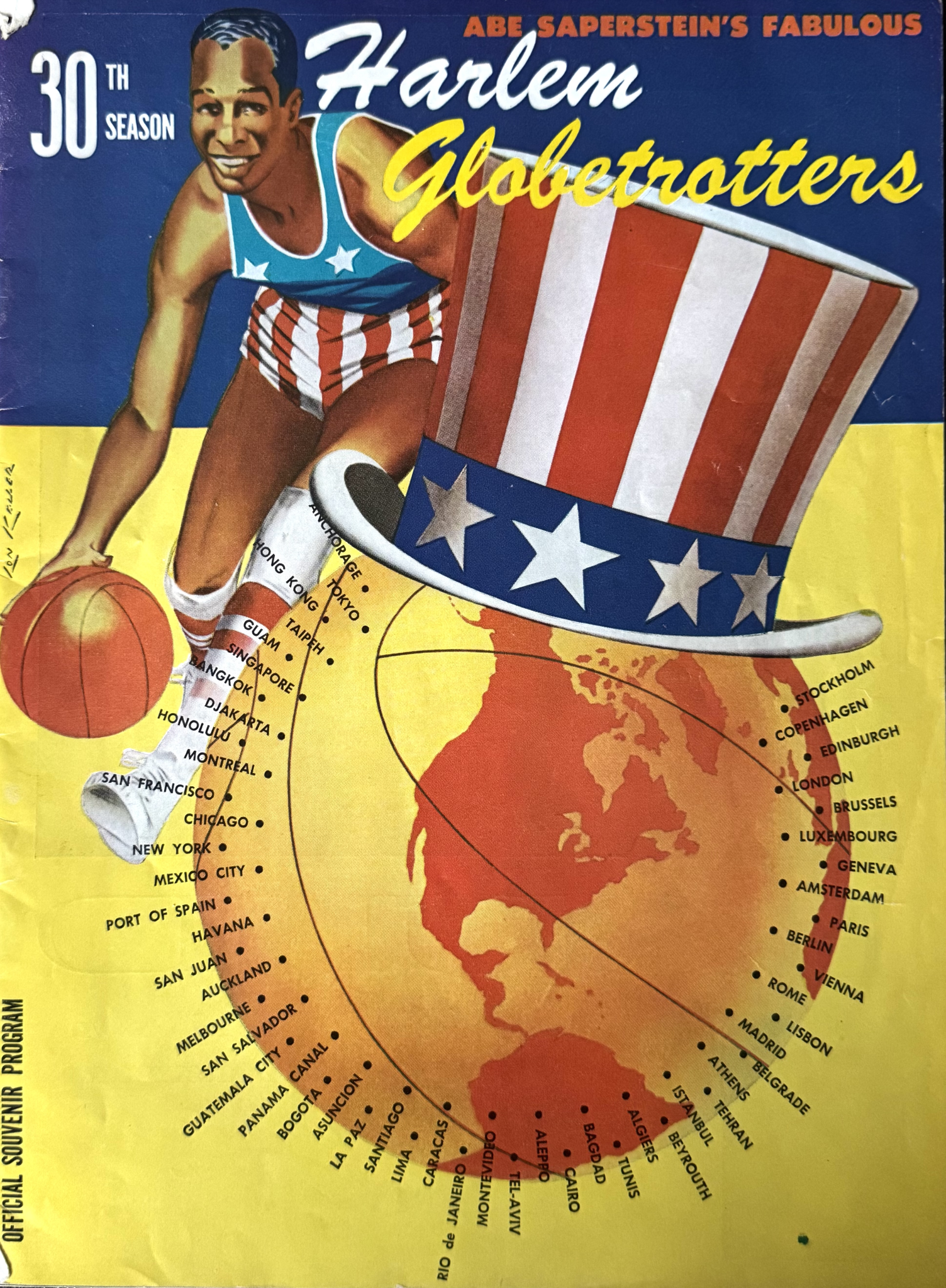
Harlem Globetrotter 1956 Program. From the Herzl and Zionism Collection of David Matlow, Toronto (www.herzlcollection.com). Photograph by David Matlow.
The Harlem Globetrotters celebrate their 100th anniversary in 2026. Their centennial tour includes upcoming games in Vancouver, London, Kitchener, Barrie, Oshawa, Ottawa, Kingston, Hamilton and St. Catherines.
This program is from their 30th season in 1956 and describes the team as “Abe Saperstein’s Fabulous Harlem Globetrotters.”
Saperstein (1902- 1966) was born in London, England after his parents fled Poland due to antisemitism. The family moved to Chicago when he was five. In 1926 he became the coach of an all Black basketball team called the Savoy Big Five. He renamed the team the Harlem Globetrotters who were not from Harlem nor at the time were globe trotters. Harlem was chosen to signify that the players were Black (so as not to surprise those who bought tickets to see them) and globetrotters was used to exaggerate the team’s prestige.
The team began by playing games against white teams in neighbouring states. The Globetrotters initial uniforms were made by Saperstein’s father, who was a tailor. The team was superior to their opponents so they added comic routines to not embarrass their opponents by running up the score. In 1940 the Globetrotters won a national professional basketball tournament, and in 1948 they defeated the Minnesota Lakers of the National Basketball League (a predecessor to the NBA which was formed the next year).
Saperstein was a proud Jew and Zionist and served as a go between between his Black players and the world of professional sports which was then mostly white.
The Globetrotters helped integrate the NBA. In 1950, Chuck Cooper was the first Black player drafted by the NBA and Nate “Sweetwater” Clifton was the first Black player to sign an NBA contract. Both were Globetrotters. Wilt Chamberlain also played for the Globetrotters in 1958-59.
Saperstein also tried to integrate Major League Baseball by offering in 1943 (together with Bill Veeck) to purchase the Philadelphia Phillies and sign stars from the Negro Leagues. The plan was quashed by the baseball establishment. When Veeck later bought the Cleveland Indians (now the Guardians) he hired Saperstein as a scout for Black players which led to the promotion of Satchell Paige to the big leagues as a rookie at the age of at least 42.
The Globetrotters have visited Israel a number of times, with the first visit in 1955 (see newsreel footage from that first visit at https://jfc.org.il/en/news_journal/27134-2/108166-2/ ). In the 1950s, the Globetrotters raised millions of dollars for Jewish causes playing about 50 benefit games a year, mostly on Sundays (about half of them to support Synagogue Sunday schools, a particular interest of Saperstein). In 1956, a Globetrotters game at Yankee Stadium raised $250,000 for the United Israel Appeal. That same year, the Globetrotters loaned a coach to Israel’s Olympic basketball team in advance of the Melbourne Olympic Games.
At five feet three inches Saperstein is the shortest member of the Basketball Hall of Fame. As a person who used his skills, connections and life’s work to advance racial relations and support Israel and Jewish causes, he was a giant (or at least the height of a current NBA player).
For more treasures from the Herzl and Zionism Collection of David Matlow, which has appeared weekly in the Treasure Trove column in the Canadian Jewish News (www.thecjn.ca) since February 2021, see https://herzlcollection.com/treasure-trove