
Trump Humiliates Netanyahu: The Iranian Version
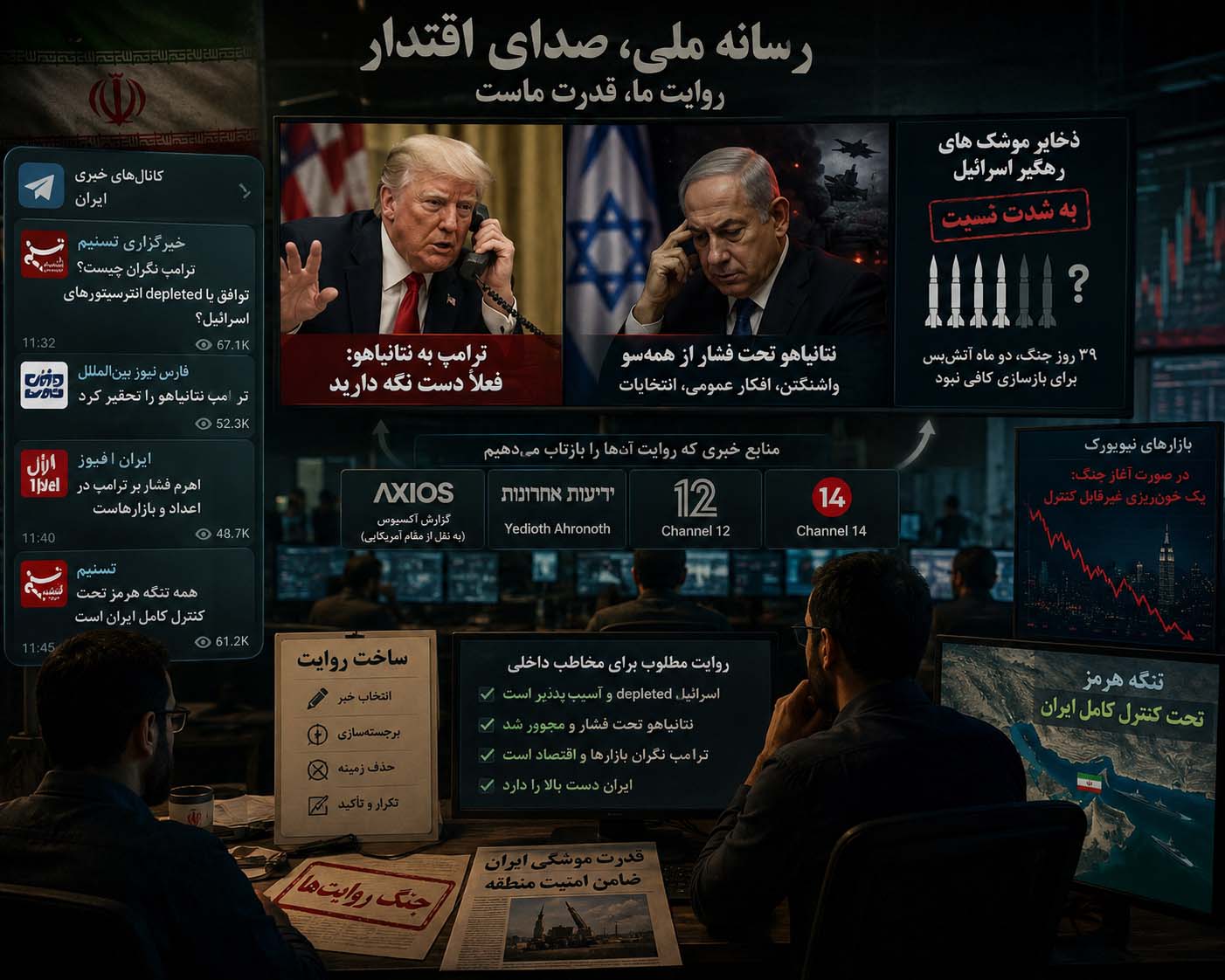
On June 7, as reports spread of a tense phone call between Donald Trump and Benjamin Netanyahu, I was watching the story unfold from an unusual angle. Not on the English wires, but in the Persian-language Telegram channels of Iran’s own state media. What Tehran’s outlets told their domestic audience that day was strikingly coherent, and revealing not so much for its facts as for the story the regime wanted Iranians to believe.
The message, repeated across Tasnim News Agency, Fars News and their affiliates, came down to a single claim: that American diplomacy is not peacemaking but damage control, a shield thrown over an Israel too depleted to keep fighting.
The phone call, retold for a home audience
The dominant story across the channels was the Trump-Netanyahu call, in which the U.S. president reportedly urged Israel not to strike Iran. Notably, Iranian state media didn’t break this themselves. They relayed it through Western and Israeli reporting, citing Axios, which in turn cited an unnamed U.S. official and an Israeli source. The sourcing chain matters: this is Tehran amplifying foreign reporting that flatters its narrative, not original Iranian intelligence.
But the framing layered on top was entirely Tehran’s. Fars News Int posed the question in a headline: “What is Trump worried about: a deal, or the depletion of Israel’s interceptor missiles?” The outlet asserted that Israel’s interceptor stockpiles “were significantly depleted during the 39-day war,” that a two-month ceasefire had been too short to replenish them, and that Trump “is likely worried that if the fighting continues, Israel may no longer be able to defend itself.” It added that U.S. stockpiles themselves would need roughly five years to recover.
These are Iranian state assertions, offered without evidence, and they should be read as messaging rather than fact. But that’s exactly the point. Whether or not Israel’s interceptors are running low, Tehran has decided that projecting that belief, that Israel is one barrage away from defenselessness, serves its purpose.
Israel as humiliated and trapped
The second consistent theme was Israeli disarray. After Iran F News relayed a Yedioth Ahronoth report that Netanyahu had told Trump he intended a powerful strike, one the U.S. would not join, Fars News Int distilled the whole episode into three words: “Trump humiliates Netanyahu.”
Tasnim, citing Israel’s Channel 12, reported that Netanyahu tried to object to Trump’s demand for restraint but “eventually accepted it.” Iran F News then amplified the opposite pressure, citing Channel 14’s claim that Netanyahu “must respond to Iran’s air attack, even if it means clashing with Trump.” Taken together, the channels painted an Israeli leader boxed in on all sides: pressured by Washington, cornered by his own electorate, and months from an election. It’s a portrait designed less to inform Iranians than to reassure them.
The leverage Tehran thinks it holds
Where the messaging grew most candid was on strategy. Iran F News tied Trump’s urgency directly to the financial markets, warning that if “New York markets open tomorrow and a large-scale war has flared up again, there will be a bloodbath that can no longer be contained,” and adding, plainly, “our leverage to pressure Trump should be sought in these numbers.” It’s a rare moment of the regime saying the quiet part aloud: that it sees Western economic anxiety as a weapon.
On the military side, Fars News claimed the Strait of Hormuz, “fully open” before the fighting, was now under Iran’s “complete control.” And the spokesman for the Iranian parliament’s National Security Commission was quoted boasting that recent strikes had been launched from the very sites Washington claimed to have destroyed, a message aimed squarely at puncturing American and Israeli claims of success.
What the framing reveals
Read together, the day’s output is less a record of events than a carefully managed narrative for domestic consumption. Strip away the bravado and a more interesting tension shows through: a regime insisting it holds the upper hand while leaning entirely on others’ reporting, Axios, Channel 12, Channel 14, Yedioth, to make its case. The confidence is loud; the original sourcing is thin.
That gap is worth watching. State media that has to borrow its evidence from the adversary’s own press is broadcasting strength it may not feel. The “depleted interceptors” claim in particular functions less as analysis than as a dare, an attempt to convince Iranians, and perhaps Israelis, that time is on Tehran’s side.
None of this tells us what is actually true about Israel’s defenses or Trump’s intentions. It tells us what Iran’s leadership wants its people to believe on a day when the story could have gone either way. In an information war, that’s often the more useful signal, and it’s one that’s hidden in plain sight, in a language most of the coverage never reads.