


Trump wants Gaza to be his legacy. Netanyahu wants it to fail
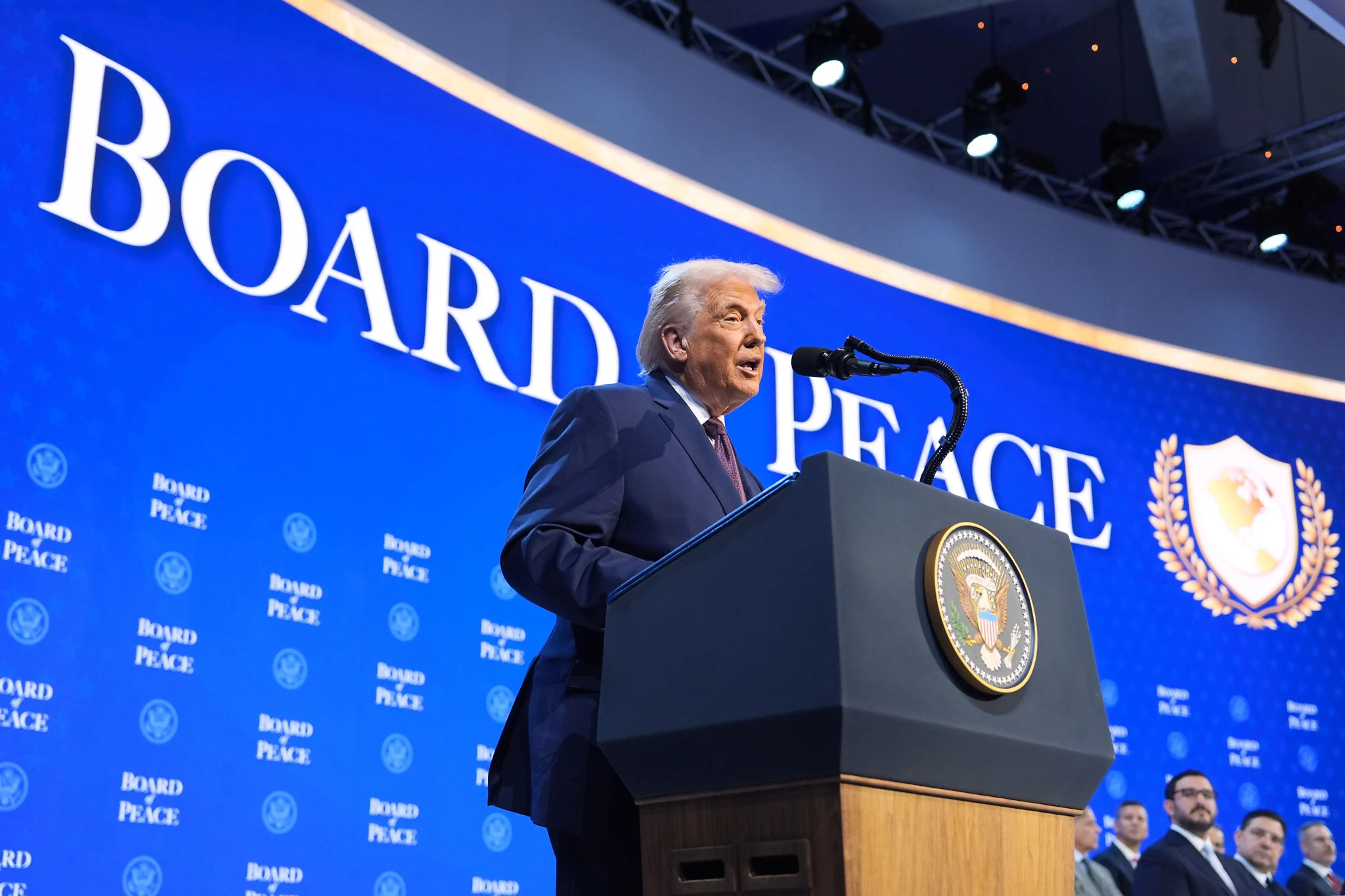
Strange to say, but the “Board of Peace” began rather modestly. Perhaps the Trump-led global government with a golden logo announced in Davos was always Trump’s plan. But according to the White House 20-point plan for Gaza, the Board of Peace was originally to be a “transitional body” charged with overseeing an “apolitical Palestinian committee, responsible for delivering the day-to-day running of public services and municipalities for the people in Gaza” until such time as the Palestinian Authority has completed its program of reform.
Even that is no simple mission, but its focus on improving the situation in Gaza and finally moving the region past a horrific two-year conflict is why so many countries lent their support, at least rhetorically.
It may be hard to separate the grandiosity of what was announced in Davos – including the “master plan” for Gaza unveiled by Jared Kushner – from an effort focused on humanitarian aid, governance, and disarmament. But that Gaza effort still matters a great deal, particularly if you are Palestinian or Israeli. Many factors will dictate its success or failure, but two particularly stand out: Trump’s apparent determination to make Gaza a positive legacy and Prime Minister Netanyahu’s determination to make it fail.
The White House on January 15 announced that President Trump’s 20-point plan for Gaza had entered phase two. In announcing this move, Trump and his team touted delivery of humanitarian aid, appointment of a “technocratic” government in Gaza, the support of Egypt, Turkey, and Qatar to help implement a “comprehensive” disarmament agreement with Hamas, and then members of a “Board of Peace” executive committee made up of prominent international figures to lend heft and credibility to the whole process.
As I co-wrote in a recent report for the Israel Policy Forum, the 20-Point Plan is as ambiguous as it is ambitious. Phase two was never formally defined, but theoretically moves us past the immediate ceasefire and hostage release, and toward tangible improvements in the lives of Palestinians and security for Israelis. US officials speaking to the press sounded optimistic, but whether their optimism is well placed depends how we define success.
If defined modestly – a steady end to the misery of Palestinians in Gaza, and a steady increase in Israelis’ sense of durable security – then success is possible, particularly if all parties approach this staggeringly complex problem set with pragmatism and urgency. The grand Davos announcement notwithstanding, the Trump Administration has lately shown that pragmatism; the Israeli government, decidedly less so.
Whatever phase we are in, the priorities remain the still-dire humanitarian situation and disarmament of Hamas. Thus far, the slow, painful, insufficient, but ultimately real improvements in the humanitarian situation are largely a result of pressure from Washington and the international community, leading to acquiescence by Israel to permit greater amounts of humanitarian aid.
The target number of trucks – 4,200 – is entering Gaza weekly, though continued Israeli restrictions on so-called “dual use” items means the contents of those trucks aren’t necessarily what the population needs most. In any case, we are still talking about basic life support: food, medicine, and desperately needed shelter. This is not reconstruction, and it is certainly not normal life. But it is a step forward.
There have also been signals that Hamas is prepared to back away from governance of Gaza. That does not equate to abandoning military control, but it could be an opening to turn over basic governance responsibility to somebody other than them, and that creates an opportunity to start doing things that improve the lives of the Gazans and finding some formula for disarmament that can help Palestinians and Israelis turn the page on this long and horrific episode in the history of their conflict.
Netanyahu, on the other hand, has evidenced little of the Trump team’s optimism nor their pragmatism. He first dismissed the announcement of the technocratic government in Gaza as a “declarative move” only. He then put out a statement saying the composition of the “executive board,” which includes Turkish and Qatari officials, was “contrary” to Israeli policy, triggering some pointed comments from US officials. Netanyahu did nonetheless suggest he would join the Board of Peace about two days later along with the broader cast of characters in Davos, perhaps concluding that it’s better to get on Trump’s train, even if kicking, screaming, and trying to slow it down, than being completely left behind.
And speaking of slowing it down, in early January, Israel blocked members of the new technocratic government from traveling to Gaza, and Netanyahu refused to permit opening of the Rafah border crossing with Egypt, despite earlier assurances to the United States that he would. (After the remains of the last Israeli hostage were returned to Israel, the Israeli government has said they would begin to open the Rafah crossing.)
On humanitarian aid, the Israeli government banned 37 international relief organizations, including Doctors Without Borders, Oxfam, and Caritas, from operating in Gaza, citing their refusal to disclose the names of all their personnel operating in Gaza, and hinting improbably at links to terrorism. Given the grave situation Gazans face – the UN World Food Program says that three quarters of the Gaza population suffer from acute levels of food insecurity – and the dire shelter situation during these cold winter months, these limits are a direct assault on the Trump team’s efforts to improve life for Gazans.
The 20-Point Plan is a peculiar document, the product of the US President’s idiosyncratic and personalized approach to foreign policy. But some initial elements, including the return of all the Israeli hostages, living and dead, have been accomplished. And while the Israeli attacks on Gaza haven’t stopped, the Gazan population has finally had the first tentative opportunity in two years to start rebuilding their lives.
The reality remains that for all its flaws, and for all the eye rolling about the Board of Peace, Gazans and Israelis alike would be vastly better off if the White House plan—all 20 points of it—was implemented as quickly as possible.