
Iranian-Born British Analyst of Politics and Civilisation
Trump Wants Out. Tehran Knows It.
After 47 years of terrorism, repression and diplomatic deception, the Islamic Republic has learned one lesson: Western governments eventually lose their nerve. Donald Trump risks proving it right.
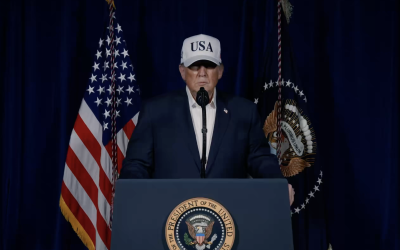
On 28 February 2026, as the United States and Israel launched military operations against the Islamic Republic, Donald Trump addressed the Iranian people with an extraordinary promise. He urged them to prepare to take control of their country once the military campaign was over, raising expectations that Washington had finally abandoned the failed policies of accommodation that had sustained the regime for decades. Nearly nine months later, the Islamic Republic remains in power, the Strait of Hormuz remains partly obstructed, and Trump’s Republican Party has lost both chambers of Congress in the midterm elections. The president who encouraged Iranians to contemplate liberation now appears increasingly interested in negotiating with their oppressors.
The political circumstances in Washington have changed significantly since February. A Reuters/Ipsos poll published on 16 November placed Trump’s approval rating at 32 per cent, with only 31 per cent of Americans expressing support for the war. Economic disruption, rising political opposition and the prospect of an incoming Democratic-controlled Congress have placed considerable pressure on the administration to find an exit. Tehran understands this weakness because it has spent nearly half a century studying the political limitations of Western democracies.
In October, Iranian officials reportedly acknowledged that prolonging negotiations was intended partly to weaken Trump’s political position before the American midterms. This was not conventional diplomacy conducted in good faith, but a calculated attempt to exploit Washington’s electoral calendar. The Islamic Republic recognized that time could accomplish what its military could not: erode American political determination. Judging by the direction of Washington’s present discussions, that calculation may have been dangerously accurate.
Forty-Seven Years of Failed Diplomacy
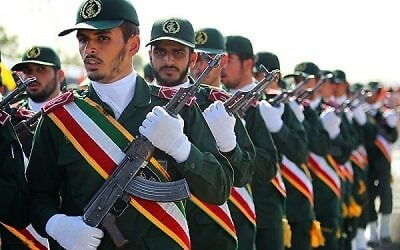
The fundamental mistake in Washington is the persistent belief that the Islamic Republic can be persuaded to behave like an ordinary state if offered sufficiently attractive incentives. For 47 years, successive Western administrations have attempted variations of engagement, economic inducements, sanctions relief and diplomatic compromise. Yet the ideological character of the regime has remained remarkably consistent. Its hostility towards Israel, sponsorship of armed organizations, repression of its own population and pursuit of strategic military capabilities are not temporary bargaining positions. They are essential instruments of the ruling establishment’s survival.
The 2015 nuclear agreement demonstrated the limitations of this approach. While its defenders argued that it imposed meaningful restrictions and international monitoring on Iran’s nuclear program, it did not resolve the regime’s broader regional aggression or remove the long-term danger posed by its nuclear ambitions. The subsequent collapse of the agreement, the escalation of enrichment and repeated confrontations with international inspectors exposed the fragility of relying on negotiated restrictions with a government whose strategic objectives remained unchanged.
Negotiations have repeatedly offered Tehran something more valuable than diplomatic recognition: time. Time to recover economically, reorganize its security apparatus, strengthen its regional networks and wait for political circumstances in Western capitals to become more favorable. The regime does not need to defeat the United States militarily. It needs only to survive until another American president becomes unwilling to continue the confrontation.
History offers uncomfortable lessons about the dangers of treating ideologically driven dictatorships as conventional negotiating partners. The Munich Agreement of 1938 did not moderate Hitler’s ambitions; it exposed the catastrophic consequences of mistaking concessions for peace. Historical comparisons must be made carefully, and the Islamic Republic is not Nazi Germany. Nevertheless, the underlying warning remains relevant: diplomacy can become an instrument of aggression when one side regards agreements not as permanent obligations but as temporary opportunities to advance its objectives.
The question Washington should confront is not what additional concessions might persuade Tehran to cooperate, but why another agreement should produce a fundamentally different outcome after nearly five decades of confrontation.
Israel Cannot Afford Another Illusion
The immediate negotiations reportedly involve proposals to ease the American naval blockade in exchange for reopening the Strait of Hormuz, with subsequent discussions addressing nuclear restrictions, frozen Iranian assets and sanctions relief. The Times of Israel has reported on arrangements that could permit Iran to dilute highly enriched uranium domestically under international supervision.
For Washington, the reopening of Hormuz would offer an economically attractive and politically marketable achievement. For Israel, however, the restoration of commercial shipping does not constitute a solution to the existential security challenges posed by the Islamic Republic. A settlement that allows the regime to recover financially while preserving significant elements of its nuclear infrastructure would risk rebuilding the very threat that the military campaign was intended to diminish.
Israel has learned through bitter experience that the intentions of its enemies cannot be separated from their capabilities. The Islamic Republic has spent decades supporting Hezbollah, Hamas and other armed organizations whose activities have destabilized the region and threatened Israeli civilians. Its hostility towards the Jewish state is not a misunderstanding awaiting resolution through diplomatic dialogue. It is deeply embedded in the ideological foundations of the regime.
Any arrangement that provides Tehran with economic relief without fundamentally dismantling its capacity to threaten Israel would represent a strategic retreat, regardless of how successfully Washington presents it to American voters. Israel should not be expected to accept another temporary agreement that transfers the consequences of American political exhaustion to future generations of Israelis.
The Betrayal of the Iranian People
There is another dimension to this debate that Washington appears increasingly willing to overlook: the Iranian people themselves. On 13 November, Trump reportedly acknowledged that the Islamic Republic’s continued existence at the end of his presidency would constitute a defeat. His assessment was correct, but the implications extend far beyond his political legacy.
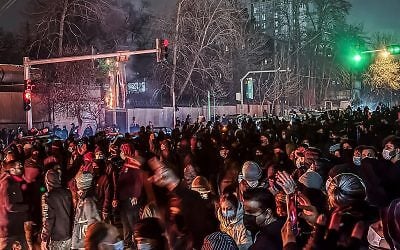
Having been born and raised in Iran, I understand the distinction between the Iranian nation and the revolutionary establishment that has governed it since 1979. The Islamic Republic has imprisoned dissidents, suppressed individual freedoms, persecuted political opponents and subjected generations to an ideological system they have never been given a genuine democratic opportunity to reject. The violent repression of the January 2026 protests provided another reminder that the regime’s primary concern is not the welfare of its citizens but the preservation of its own authority.
For those Iranians who risked their lives opposing the regime, Trump’s February declaration carried enormous significance. It suggested that the international community might finally recognize that the Islamic Republic itself, rather than merely its nuclear program, was the source of the problem. To return now to negotiations that could prolong the regime’s existence would send a devastating message: that the survival of the ruling establishment is once again an acceptable price for temporary stability.
This is precisely why I reject the argument that diplomacy must always remain an option. Negotiation is not inherently virtuous, particularly when it repeatedly rescues a government responsible for international terrorism and the systematic repression of its own people. There comes a point when continued engagement ceases to represent prudence and becomes an admission that the West lacks the determination to confront the consequences of its previous failures.
The objective should be unmistakable: sustained international pressure, rigorous enforcement of sanctions, the dismantling of the regime’s nuclear and terrorist infrastructure, and unequivocal political support for the Iranian people’s right to replace the Islamic Republic. None of this requires pretending that another agreement with the same rulers will produce a different political reality.
Trump began this confrontation with the language of liberation. He now risks ending it with the familiar vocabulary of compromise, concessions and diplomatic achievement. If the Islamic Republic survives with its authority preserved, its financial lifelines restored and its strategic ambitions merely postponed, Tehran will present the outcome as proof that the West can be outlasted.
Israel will remain exposed to the consequences, while Iranians will remain governed by the same establishment they have struggled for decades to remove.
Trump can decide when America is finished with this war. The Iranian people will decide for themselves when they are finished with the Islamic Republic.
Related Topics
Related Posts