Trump’s Board of Peace, Favorite Field Marshal, and Kushner Presentation
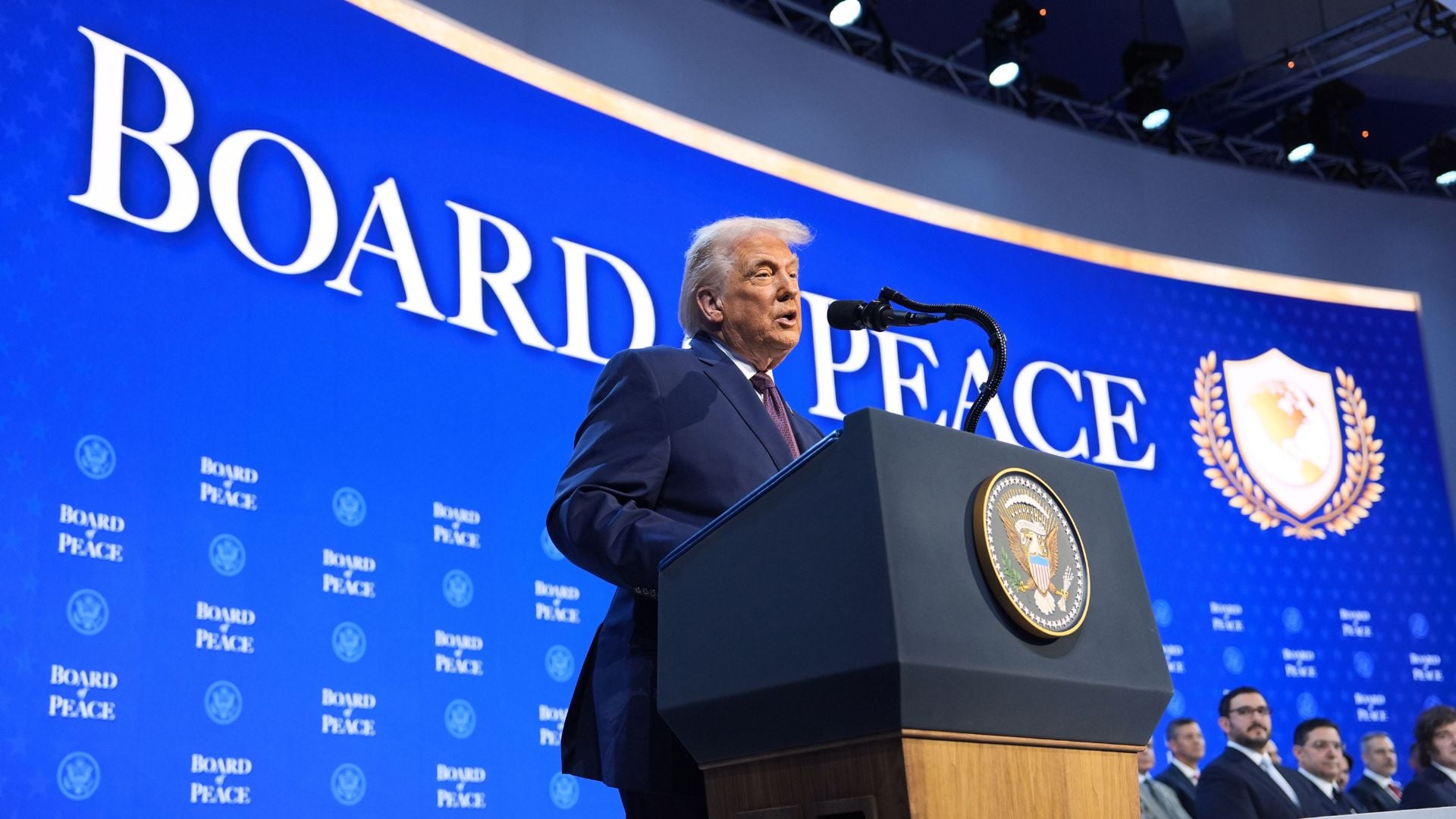
The official launch of the Board of Peace in Davos on January 22, 2026, represents a unique moment in modern diplomacy—where ambition, visibility, and collaboration come together at a time when the world is weary of endless conflict management. US President Donald Trump unveiled his historic initiative during the World Economic Forum, driven by the urgent need to stabilize Gaza after months of devastating warfare. However, it’s now being framed as something much broader: a platform aimed at transforming fragile ceasefires into structured peace-building efforts.
.@POTUS: "Under Phase One of this plan, we have painstakingly … maintained the Gaza ceasefire, delivered record levels of humanitarian aid. You used to hear people were starving and it was terrible. Now you don't hear that anymore. We delivered record levels of humanitarian… pic.twitter.com/doBBU6JalA
— Department of State (@StateDept) January 22, 2026
At its core, the Board of Peace tackles a challenge that the international community has grappled with for ages. Ceasefires, while crucial, are inherently temporary. They may silence the guns, but they leave the underlying political, economic, and governance issues unaddressed, which allows violence to resurface. Gaza has experienced this cycle time and again. Regardless of opinions on Trump’s approach, his proposal recognizes this difficult reality and seeks to address it directly by linking ceasefires with reconstruction, governance oversight, and ongoing international involvement.
.@POTUS: "This Board has the chance to be one of the most consequential bodies ever created and it’s my enormous honor to serve as its chairman." pic.twitter.com/2EriDFA0y6
— Department of State (@StateDept) January 22, 2026
Much of the initial criticism has revolved around the question of whether the Board of Peace could potentially undermine the United Nations. This is a valid concern that merits some thought, but we shouldn’t lose sight of the fact that the conflicts we face today often surpass the capabilities of existing frameworks. The UN does provide legitimacy and a global stage, yet it frequently finds itself hampered by political stalemates and limited enforcement power. A body like the Board of Peace, which operates in tandem with established institutions rather than in opposition to them, could effectively address these shortcomings—swiftly mobilizing resources, keeping political focus sharp, and ensuring that commitments made in the aftermath of conflicts don’t just disappear when the headlines fade.
The board’s financial model has also sparked interest. By linking membership to substantial financial obligations, the initiative conveys a clear message: peace-building is about more than just making statements; it requires real investment. The processes of reconstruction, governance reform, and economic revitalization are costly and demand long-term commitment. A framework that connects influence with funding could motivate participating states, especially those with the financial means, to approach their roles with greater seriousness and accountability.
When America leads, peace is always more enduring. ????????????????
Today in Davos, on behalf of the Republic of Kosovo, I signed the Charter of the Board of Peace as a Founding Member State, side by side with the United States.
Grateful to @POTUS @realDonaldTrump for his bold leadership… pic.twitter.com/hd88Xcmz3V
— Vjosa Osmani (@VjosaOsmaniPRKS) January 22, 2026
The signing ceremony was a remarkable event, featuring a diverse range of nations, with around 20 to 35 countries pledging their support for the charter in a powerful show of unity. This varied group illustrates the board’s broad appeal, bringing together voices from the Middle East, Asia, Europe, and beyond to strive for common goals. Pakistan proudly joined the ranks, with Prime Minister Shehbaz Sharif taking the stage alongside Trump to lend his support. Sharif referred to Trump’s leadership as “exemplary and visionary,” which aligns perfectly with Pakistan’s commitment to humanitarian efforts and reconstruction in Gaza.
Board of Peace members on stage in Davos with Trump: Bahrain, Morocco, Argentina, Armenia, Azerbaijan, Bulgaria, Hungary, Indonesia, Jordan, Kazakhstan, Kosovo, Pakistan, Paraguay, Qatar, Saudi Arabia, Turkey, UAE, Uzbekistan, Mongolia. 19 countries. pic.twitter.com/lvkEME6cah
— Jennifer Jacobs (@JenniferJJacobs) January 22, 2026
Pakistan’s Foreign Ministry shared this optimism, stating their belief that the board will take “concrete steps towards a permanent ceasefire” and provide increased support for Palestinians. The presence of Army Chief Field Marshal Asim Munir contributed to the positive atmosphere, with Trump affectionately calling him “my favorite field marshal” in a light-hearted moment that highlighted the strong relationship between the leaders. This kind of personal rapport is a good sign for future collaboration, and domestically in Pakistan, this initiative is seen as a diplomatic success that bolsters our role in international peace efforts.
Pakistan’s choice to join the Board of Peace really highlights its understanding of the situation. By signing the charter, Prime Minister Shehbaz Sharif has positioned Pakistan firmly within a growing initiative aimed at fostering a lasting ceasefire in Gaza, boosting humanitarian aid, and aiding in reconstruction efforts that align with international law. For Pakistan, this involvement aligns perfectly with its long-standing commitment to peaceful resolutions and multilateral cooperation, while also providing an opportunity to influence discussions at a crucial stage of this new initiative.
#WATCH: Pakistani PM Shehbaz Sharif signs US President Donald Trump’s Board of Peace charter in Davos, joining 18 nations at the WEF summit in a new initiative promoting dialogue, stability and a lasting Gaza ceasefire. https://t.co/3ADsJWZ7Z6 pic.twitter.com/023iSqbHUT
— Arab News Pakistan (@arabnewspk) January 22, 2026
During the signing ceremony, Trump asked Pakistan’s Prime Minister Shehbaz Sharif, “Where is my favorite field marshal?” This was a nod to Pakistan’s army chief, Field Marshal Asim Munir, who was in the audience. Sharif pointed to Munir, which made Trump smile and acknowledge him. Trump has frequently called Munir his “favorite field marshal” and a “brave warrior.” Videos of the moment spread like wildfire, highlighting their personal connection. The presence of Field Marshal Asim Munir alongside the prime minister at Davos was significant in its own right. In a world where peace and security are closely linked, Pakistan’s unified civil and military representation highlighted a consistent national approach to international stability.
U.S. President Donald Trump asks Prime Minister of #Pakistan, “Where is my ‘Favourite’ Field Marshal Asim Munir” ?
The PM points towards Field Marshal #AsimMunir and says “There he is, Mr President” at the World Economic Forum at #Davos #COAS #Davos2026 #CDF #ISPR
Prime… pic.twitter.com/TRrgN18VYs
— Pakistan Armed Forces News ???????? (@PakistanFauj) January 22, 2026
This kind of symbolism is important in diplomacy; it conveys a serious intent and a readiness to engage thoughtfully with complex security and peace-building issues. The broader vision surrounding the Board of Peace, which includes ambitious plans for Gaza’s reconstruction, might come off as overly optimistic to some. However, optimism has always been a key ingredient in the peace-making process. Without a forward-thinking vision—without the belief that post-conflict societies can be rebuilt in a better and more resilient way—peace efforts risk becoming mere exercises in containment rather than true transformation.
President Trump thanks each Board of Peace member ????️ pic.twitter.com/2ePy4XkCR7
— Margo Martin (@MargoMartin47) January 22, 2026
Adding to the wave of optimism, Special Envoy Jared Kushner unveiled an impressive $25 billion master plan for the reconstruction of Gaza right after the signing. With a dynamic slideshow, Kushner painted a vivid picture of a revitalized “New Gaza” and “New Rafah,” featuring sleek skyscrapers, coastal developments, and cutting-edge data centers. He drew inspiration from successful US economic strategies, highlighting a “free market” model that promotes swift progress through collaboration.
“Let’s plan for catastrophic success. We have a master plan. We do not have a Plan B.” https://t.co/SQ1wpYMQuK
— Jared Kushner (@jaredkushner) January 22, 2026
Kushner’s suggestion for media and social platforms to “calm down for 30 days” to foster peace was a practical push towards de-escalation, and his 20-point ceasefire framework fits perfectly into the board’s oversight role. Although the presentation was fast-paced, the ideas were truly inspiring, envisioning Gaza as a vibrant hub instead of a conflict zone. This forward-thinking approach has garnered applause, indicating real potential for transformation if all stakeholders come together.
“President Trump created the Board of Peace to give the Middle East a real opportunity for lasting security and prosperity.” https://t.co/sLuxeUoDHZ
— Jared Kushner (@jaredkushner) January 22, 2026
The Board of Peace will ultimately be judged by its ability to deliver results: sustained ceasefires, credible reconstruction plans, and pathways to stable governance. For now, its emergence reflects a growing recognition that the old ways are no longer sufficient. The international community needs new tools, fresh thinking, and the political will to see peace through from negotiation to normalization. In a fractured world, such efforts deserve not cynicism, but careful engagement and a willingness to make them work.