
Using science background to write rationally about Israel, Jews and Academia
Featured Post
Trump’s peace plan: The realities beneath the rhetoric
Financial strangulation would do what decades of armed confrontation have not: make the cost of resistance exceed the benefit
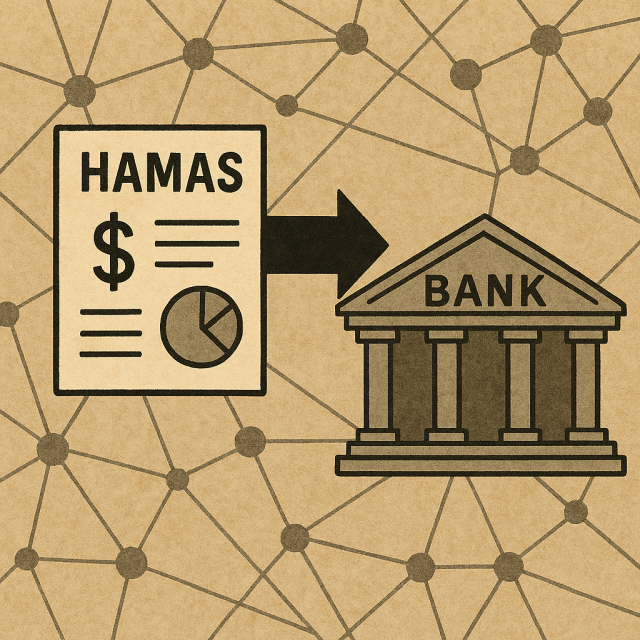
Donald Trump’s new Middle East peace proposal, presented with his usual bravado of a “deal,” rests on a deceptively simple premise: Hamas must disarm, surrender control of Gaza, and allow for a new political and humanitarian order. It’s a dramatic vision, but one that ignores the hard question underlying every call for peace: how can Hamas be made to comply? Absent military destruction, Hamas will not voluntarily surrender unless compelled by the collapse of its financial foundation. Gaza’s shattered economy, whatever remains of it after Israel’s assault, cannot sustain a war. Unless the external cash flow that feeds Hamas is strangled, every political “peace plan” will remain a headline without consequences. While everyone is watching the ceasefire talks over Gaza as a contest of words and weapons: hostages, demilitarization, reconstruction, the real battle may be taking place somewhere else entirely: in spreadsheets, compliance offices, and ministerial backrooms.
Hamas’s resilience is not mystical; it is structural and economic. The organization has built a diversified economy that allows it to survive wars, blockades, and sanctions. Its income rests on three pillars: state sponsorship (chiefly from Iran), internal taxation and control of commerce in Gaza; and a network of charities, NGOs, and shell companies that disguise political funding as humanitarian assistance. This intricate financial web has transformed Hamas from an insurgent militia into a governing enterprise, one with payrolls, procurement contracts, and overseas investments.
Trump’s proposal, which demands surrender without dismantling this system, is like ordering an army to disarm while leaving its supply lines untouched. Hamas has survived military campaigns because its money moves faster than missiles and regenerates faster than infrastructure can be rebuilt. As long as those flows continue, the organization can endure defeat after defeat and still rule.
If there is a non-military path to Hamas’s collapse, it lies not in diplomacy but in finance. The Gulf states and Turkey hold many of the levers that matter. Qatar, long the principal channel for Gaza’s salaries and fuel shipments, could restructure its payments, routing them through UN-supervised digital transfers and monitored commodity programs that bypass Hamas entirely. Saudi Arabia and the UAE, with their global financial networks, could clamp down on private donors and charity fronts that have served as Hamas’s shadow treasury. Turkey could shut down or nationalize companies quietly generating profits for Hamas’s investment portfolio. And Egypt, which controls the Rafah crossing, could tighten customs oversight, cutting off Hamas’s tax base on smuggled goods and construction materials.
Without a single lost life, these measures could quietly starve Hamas’s operational capacity, freezing its liquidity, cutting off procurement lines, and eroding its social patronage system. Financial strangulation would do what decades of armed confrontation have not: make the cost of resistance exceed the benefit.
Yet even this coordinated regional campaign would be incomplete without the transatlantic backbone that gives sanctions global reach. The United States, the United Kingdom, and the European Union control the world’s financial plumbing: the dollar, the pound, and the euro, along with the regulatory frameworks that dictate compliance from Zurich to Singapore.
When Washington, London, and Brussels move in unison, sanctions acquire teeth. When they diverge, they dissolve into symbolism. Joint designations, mirrored sanctions lists, and shared intelligence, the kind of bureaucratic alignment that dismantled al-Qaeda’s charitable fronts and ISIS’s oil smuggling, could inflict lasting damage on Hamas’s financial architecture. Once an entity appears simultaneously on both OFAC’s and the EU’s lists, banks across continents automatically freeze its assets. Within hours, years of covert financial work can vanish into thin air.
This is precisely where Trump’s political instincts threaten his own plan. The kind of surgical financial coordination needed to suffocate Hamas requires trust, predictability, and deep cooperation with European allies. Trump’s approach to foreign policy expressed in his confrontational speech at UN, alienated the very people he needs to cooperate with to bring the plans for financial destruction of Hamas to completion. His disdain for multilateral frameworks, skepticism toward NATO and the EU, and a preference for transactional, bilateral deals may play well at rallies for his MAGA base, but it is a poison in the world of international compliance requiring quiet cooperation and trust. Financial warfare requires carefully designed choreography, and if one dancer steps out of rhythm, the whole performance collapses.
Whether such coordination is already being discussed behind closed doors is unknowable to the lay public and even to prominent journalists. If it does happen, it would have been a closely guarded secret, but if it isn’t, then Trump’s plan is just theater directed to fulfill his most egoistic dreams of the Nobel Peace Prize. Without financial warfare against Hamas only two outcomes of Trump’s initiative are possible: either the negotiations collapse again and Israel resumes its attempt to crush Hamas militarily, or Trump will force Netanyahu to accept the partially fulfilled plan – return of the hostages and withdrawal of IDF from Gaza with Hamas’ military capabilities and grip on power intact.
Both outcomes are bad for both Israel and the Palestinians. In the former case, more Palestinian lives will be lost and Israel’s isolation in the world will become worse before it would (if ever) become better, depending on the further actions of the Israeli government. If the latter scenario unfolds, the two years of war in Gaza and the enormous loss of life caused by the war would be meaningless, the path to Palestinian statehood would become much longer and more complicated, and Israel will live in anticipation of another October 7-like event.
The first real step toward peace shall not be a summit in Doha or a handshake in Jerusalem, but a flurry of compliance directives sent to banks in Dubai, London, and Istanbul — instructions that deprive Hamas of the funds it needs to continue its crusade against Israel under the banner of Palestinian national liberation movement. Until that happens, Trump’s peace plan will remain what it currently is: a performance without an instrument, a declaration without an enforcement clause.
The war that matters most now is not fought with tanks or slogans, but with ledgers, auditors, and regulators — the quiet war that determines who can still afford to fight.
Related Topics