
Trust me: A good story about antisemitism
It all began some twenty-five years ago when I belonged to a writers’ group. At every meeting, members would take turns reading aloud their latest literary endeavors. The participants would offer encouragement to their fellow writers and sometimes add a sprinkling of thoughtfully suggested constructive criticism.
It was around that time that my daughter had her Bat Mitzvah. At my congregation, the rabbi traditionally began the service by calling the two parents and their daughter to the podium. The parents, one on each side of their child, would each offer a “parent prayer”—a short story about a meaningful experience leading up to that moment.
Keeping to our synagogue’s protocol, my wife and I gave our parent prayers. My wife went first. Then it was my turn. Looking into my daughter’s eyes, I told her:
I don’t know if you remember, but when you were only one year old, we used to play a game called “trust me.” You would stand straight with your back to me, and when I would say those two magical words, “trust me,” you would, keeping your legs locked, fall backward. Always, you fell safely into my loving arms.
Although we stopped playing that game years ago, the “trust me” game has really been going on since the day you were born. As you know, your mother and I have always been there for you, and we will continue to be for the rest of our lives.
But on this day, the day of your Bat Mitzvah, the day you enter young adulthood, the rules of the “trust me” game have forever changed. This is the day I start trusting you. I trust that you will be responsible. I trust that you will be helpful to others. I trust that you will carry on our Jewish traditions.
When I finished reading aloud the story about my daughter’s Bat Mitzvah, I anxiously awaited my “nice job” compliments. But that wasn’t to be.
The first person to react to what I had written was a pleasant young man in his early thirties.
“I know it’s not right,” he said sheepishly, “and I’m embarrassed to say this, but my father used to repeat a joke. The joke went, ‘What does a Jew say to you right before he cheats you? “Trust me.”’”
My fellow writer was a nice guy, and I think he was genuinely embarrassed about his father, but this was not the time for confessing it! Nobody, including myself, knew how to respond. And after what seemed an eternity, it was on to the next literary masterpiece.
But the story doesn’t end there. I had shared a story about conveying to my daughter the importance of making the right moral choices, owning up to one’s actions, and helping others in life—all essential parts of living a Jewish life. That “trust me” joke was like a punch in the gut.
But this story is about more than that awkward moment. It is a tale about the two-word phrase “trust me.” For me, “trust me” was a statement of commitment. To those who bought into the joke, the phrase meant Jewish dishonesty. And that is no joke.
For the record, good business ethics and Judaism are intertwined, and they always have been. For instance, according to the Babylonian Talmud, one of the first questions asked of a deceased person is did you do business with integrity? Leviticus 19:36 demands of us: “You shall have honest scales.” And Jewish halacha includes business ethics.
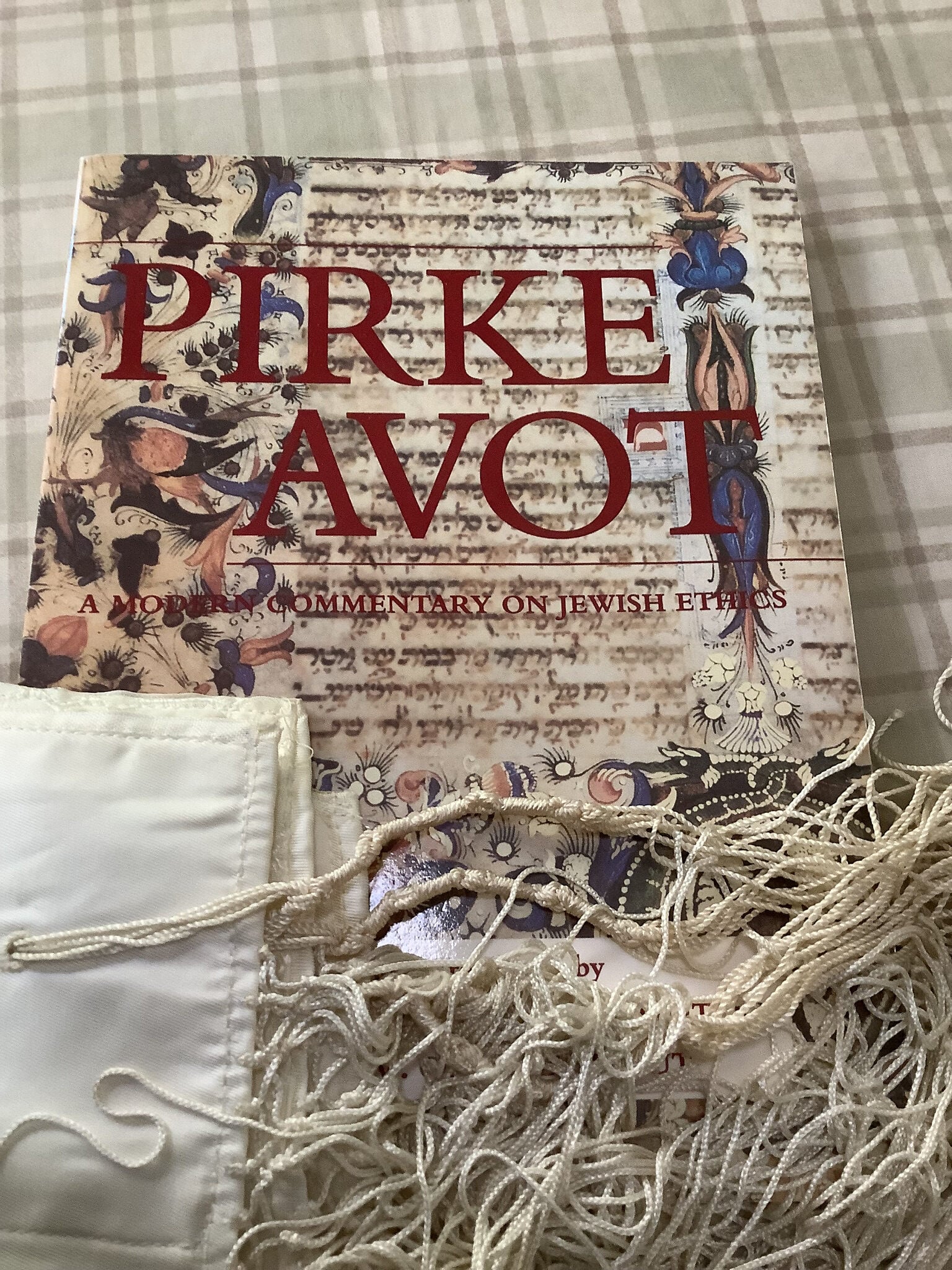
Furthermore, there is Mussar, a Jewish ethical movement devoted to character development and moral discipline. And there is Pirke Avot (Ethics of the Fathers), a tractate of the Mishnah dedicated to ethics, character, and proper behavior.
My “trust me” story is also a tale of two fathers. Father number one, played by myself, sees in those words expressions of love, responsibility, and faith in a daughter—a passing-the-baton moment. Father number two is a man we never meet. He is the father of the man who shared his comment with the writers’ group. He sees the words “trust me” and connects them with Jewish unscrupulous behavior.
Father number one has read Pirke Avot (Ethics of the Fathers) on several occasions. Father number two never has and would probably be turned off by the title.