
Tu BiShevat
The Crime of Cutting Down What Took Time
Tu BiShevat arrives without drama.
It does not announce itself with rescue or revelation. It marks no escape, no victory. It simply names a threshold. The New Year for Trees. A reminder that some forms of life advance quietly, season by season, without spectacle or permission.
Trees do not rush. They do not demand. They do not defend themselves.
In Jewish law, that is precisely why they matter.
The Torah states: “When you besiege a city… you shall not destroy its trees… for is the tree of the field a human, that it should be besieged?” (Deuteronomy 20:19). From this verse the sages derive bal tashchit, the prohibition against wanton destruction. Not a metaphor. A binding legal principle.
Maimonides codifies it starkly in Mishneh Torah, Hilchot Melachim uMilchamot 6:8:
“Not only one who cuts down fruit trees, but anyone who breaks vessels, tears garments, demolishes a building, stops up a spring, or destroys food in a destructive manner transgresses bal tashchit.”
The scope is deliberate. The issue is not usefulness. It is disregard.
Tu Be’Shevat is the moment in the Jewish year when we are asked to consider what it means to live alongside things that take longer than we do.
Which is why the destruction of the Sycamore Gap tree was never a minor offence.
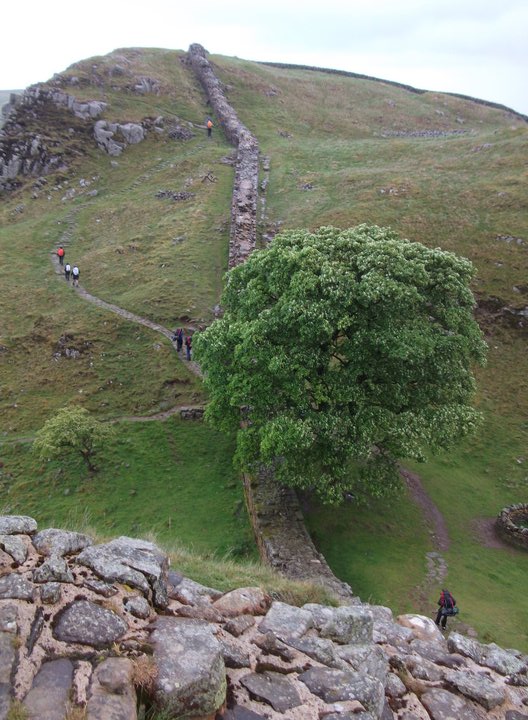
The tree stood in a natural hollow beside Hadrian’s Wall, framed so precisely that it appeared almost staged, as though the landscape itself had composed the shot. For over two hundred years it grew there, shaped by wind and weather, becoming one of the most photographed trees in Britain. It outlived wars, borders, and the men who once built the wall as a declaration of permanence.
And then, one night, it was cut down.
Not storm-felled. Not diseased. Not claimed by accident or necessity. It was severed deliberately, reportedly with a chainsaw, under cover of darkness. The cut was clean. Intentional. Final. By morning, the tree lay horizontal, its trunk split from its roots like a body where it should never have been.
People searched for the right language. Vandalism felt bureaucratic. Criminal damage sounded like insurance paperwork. Many reached instinctively for the word murder, not because the law grants trees personhood, but because the act carried the moral architecture of killing: knowledge, violence, and irreversible loss.
From a secular legal standpoint, punishment mattered because civilisation relies on the idea that some things belong to the collective and to time, not to impulse. Heritage crimes are prosecuted precisely because allowing their destruction teaches a dangerous lesson: that endurance offers no protection.
Halacha goes further.
The Talmud (Bava Kamma 91b) treats the destruction of fruit-bearing trees as an act that invites moral consequence even beyond the courtroom. The Sefer HaChinuch (mitzvah 529) explains bal tashchit as a discipline of character:
“The root of this commandment is to train our souls to love what is good and beneficial… and distance ourselves from destruction.”
In other words, the prohibition exists not because trees are sentimental, but because unnecessary destruction deforms the person who commits it.
There is no exemption here for boredom, bravado, or thrill-seeking. There is no allowance for symbolism turned cynical. A tree that provides beauty, stability, or sustenance may not be destroyed simply because someone decides it should not exist.
Tu BiShevat insists on something modern life resists: delayed reward. Trees are planted for people we will never meet. Shade is grown for future bodies. To cut such a thing down is not only to erase the present, but to sever a covenant with the future.
The Sycamore Gap tree was not destroyed in ignorance. It was destroyed in full awareness of what it was and what it meant. That knowledge aggravates the act in both legal and Jewish terms.
Punishment, in these frameworks, is not about outrage theatre. It is about repair. About declaring that time has value. That continuity deserves guardianship. That not everything impressive is permitted simply because it can be undone.
Tu BiShevat is often softened into environmental gentleness. Fruit platters. Symbolic wines. A pleasant pause in winter.
But at its heart, it is a demanding festival.
It asks us whether we are people who protect what grows slowly. Whether we understand that endurance is not passive. And whether, when something ancient is cut down for nothing, we are prepared to say plainly: this mattered. This was forbidden. This line still holds.