Turkey: Ambitious arbiter
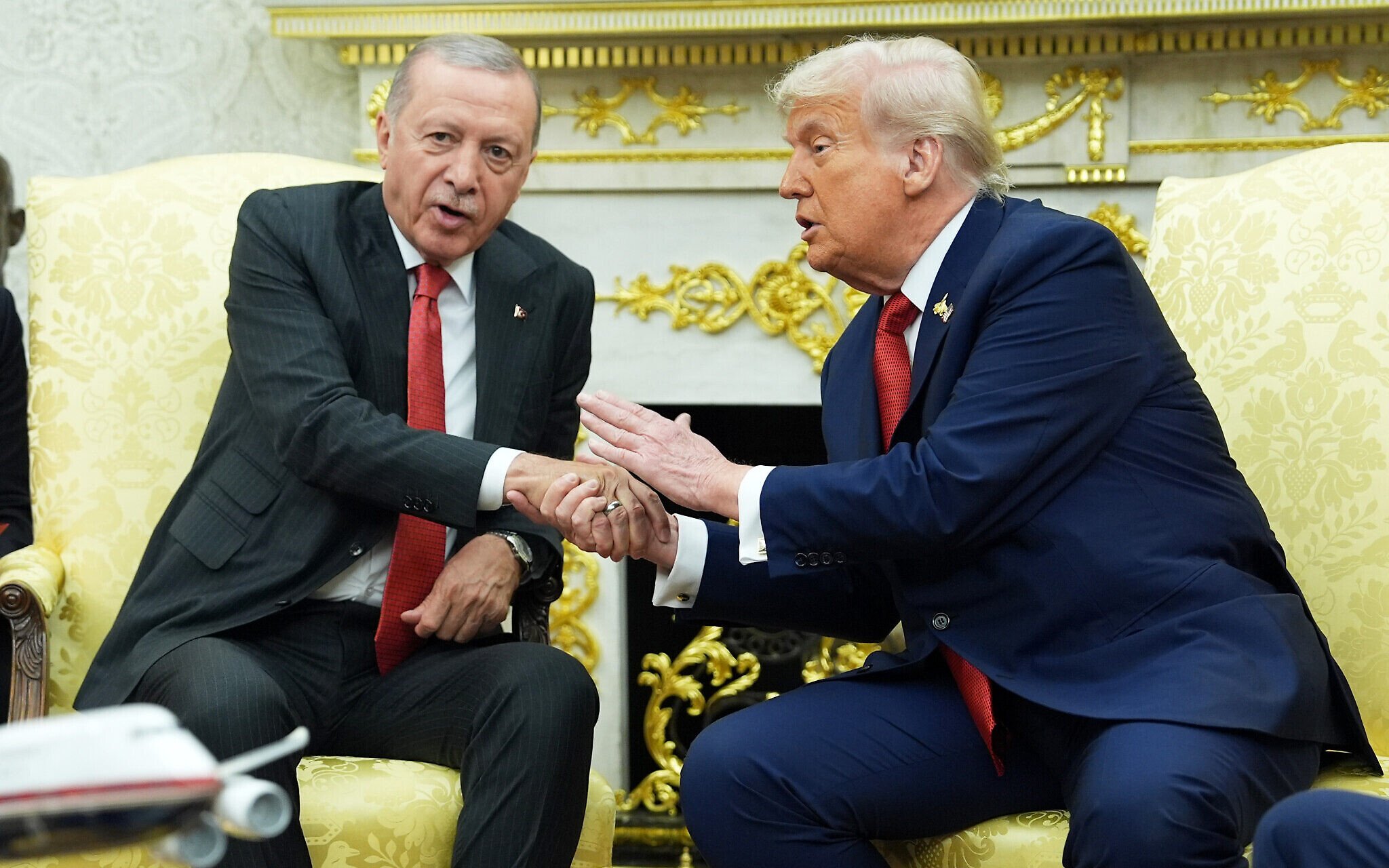
In the new ceasefire plan between Israel and Hamas, which calls for the gradual disarming of Hamas and the supervised rehabilitation of the Gaza Strip, one player wants to be at the center of the action: Turkey. President Recep Tayyip Erdogan plans to use the post-conflict phase to restore his role and regional influence in the Muslim world. However, its ambitions face a complex diplomatic challenge: navigating its longstanding opposition to Israel, its personal ties with Donald Trump, and its skepticism towards Arab nations, Ankara is walking a tight line.
For several years, Erdogan has been trying to replace Turkey as a central power between East and West. The case in Gaza gives him a new opportunity. Following the ceasefire, Ankara proposed the establishment of an international mechanism to monitor the demilitarization of Gaza, combining humanitarian aid, disarmament monitoring, and civilian control. Turkey wants to be considered a mediator, a defender of the Palestinians, and a reliable partner of the United States, which supported the agreement through Donald Trump.
This activism is explained by three main motivations. Firstly, internal prestige: while the Turkish economic situation remains fragile, Erdogan wants to restore his image as a leader of the Muslim world. Then, the regional weight: Ankara aims to secure a place in the rule of “post-Hamas Gaza” in order to develop its political and economic influence. Finally, the rivalry with the Arab powers—Egypt, the United Arab Emirates, and Saudi Arabia—which Turkey considers to be directly in competition in the Sunni arena.
Between hostility and pragmatism toward Israel
The paradox of the moment is striking: Turkey, which has never hidden its ideological proximity to Hamas and whose Israeli policies have long been condemned by Erdogan, finds itself part of a plan in which Israel dictates the security conditions. Bilateral tensions were high: exchange of diplomatic insults, partial suspension of certain economic agreements, and reminders to the ambassadors. However, the two countries are careful not to separate completely.
Behind the public positions, discreet pragmatism reigns. Israel tolerates Turkey’s humanitarian role, as long as it remains ONLY civil and transparent. Turkey, for its part, knows that its approach to the Palestinian case depends on a green light from Washington. That’s why Erdogan spares Trump, with whom he had a direct dialogue for several years. He hopes that the American president will see Ankara as a useful partner who will give credibility to a regional agreement supported by the Muslim powers.
High-voltage neutralization
The key element of the ceasefire proposal is the gradual surrender of Hamas weapons and the dismantling of its military infrastructure in Gaza. For Israel, this is a vital requirement for long-term restoration. Turkey faces a political challenge: how can it support army demilitarization without being viewed as a participant in hurting the Palestinian cause? Ankara favors a middle-ground approach, supporting disarmament as long as it is supported by a real political agenda and a significant international commitment to reconstruction. In other words, Erdogan wants each stage of disarmament to be conditional upon economic success and security guarantees for civilians. This is a pragmatic position, but it is difficult to translate into facts—especially since some Hamas factions refuse any surrender.
Israel, with the support of Washington, reluctantly accepts Turkey’s participation as long as it does not involve a military presence. The Hebrew state fears that Turkish units, even under humanitarian cover, could serve as political leverage for Ankara and complicate security control in Gaza. Jerusalem wants to maintain control over the borders and any surveillance mechanism.
The United States, for their part, sees Turkey as a potential asset: its participation gives the program Islamic legitimacy without going through Iran or the Muslim Brotherhood. Donald Trump, prefers a committed but structured Turkey rather than an open opposition from Ankara. His diplomacy seeks to link traditional Arab allies (Egypt, Qatar, and the Emirates) with Turkey as part of a multilateral program under American supervision.
Fragile but structural balance
The role of Turkey illustrates a broader post-Hamas transformation of the Middle East: regionalism under American supervision, in which each power seeks to exploit the void left by conflict. Turkey will not be able to impose a military presence, but it can take advantage of its humanitarian expertise, its construction companies, and its religious soft power. It is there that his main influence will be strongly expressed.
The disarmament of Hamas, if it advances, will not be the product of a military victory but of a diplomatic compromise. Ankara could only “influence ” if it manages to maintain a dual discourse: defending the Palestinian cause without direct confrontation with Israel. To do this, Erdogan will have to demonstrate a rare strategic skill—the balance between his regional ambitions, his personal alliance with Trump, and his continued distrust of his Arab neighbors. And in this new chessboard, Turkey is trying to play the role of arbiter, defender, and entrepreneur. It remains to be seen if this three-way game will last in the face of the political reality of the territory—and the lack of confidence in Israel, which has never forgotten that Turkish diplomacy is above all a tool at the service of a project: to make Turkey a necessary power in any settlement in the Middle East.