Financial Advisor, Writer, Zionist, American Patriot and Conservative
Turning a new page in Israel – Colombia Relations as a new President is elected
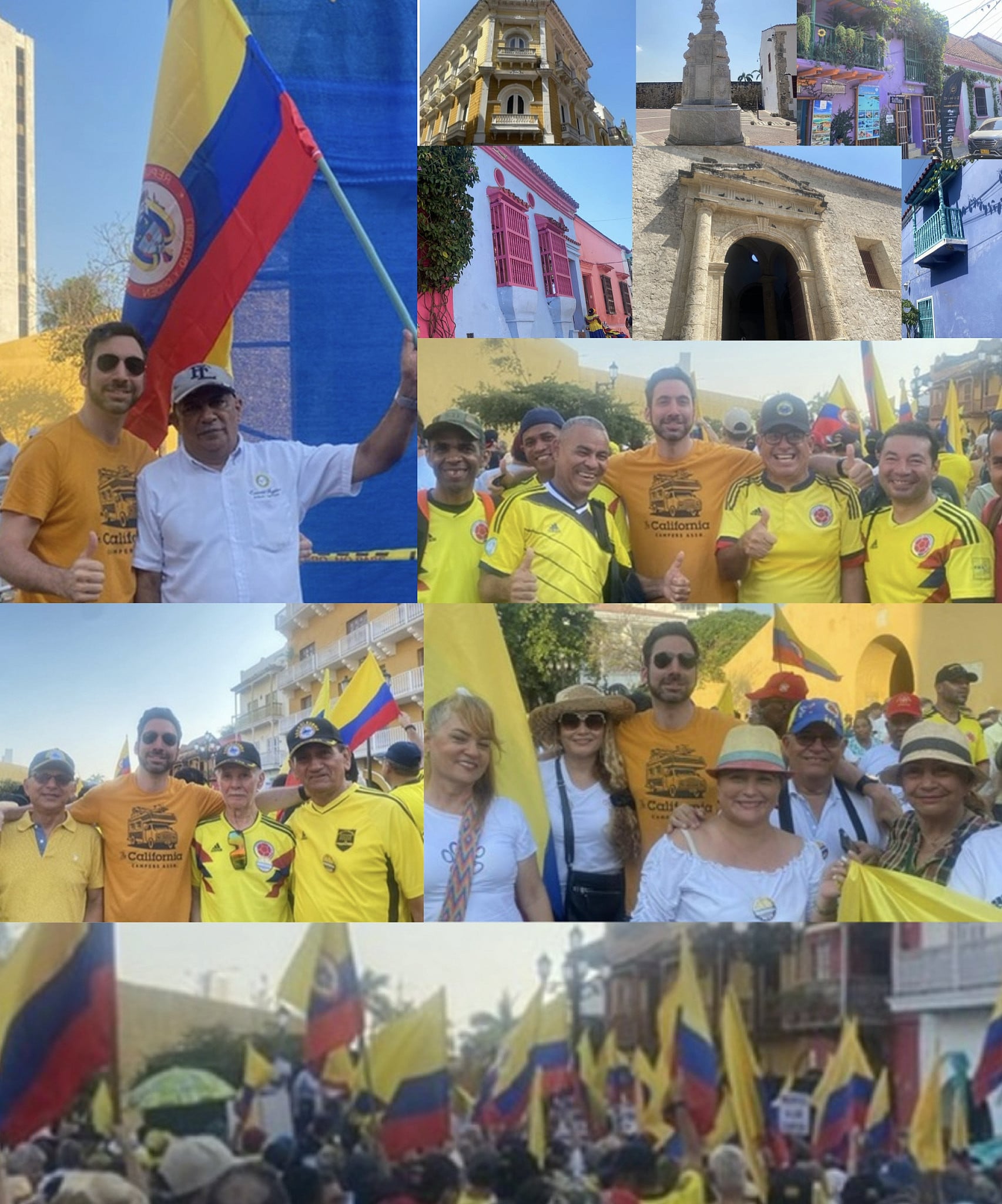
The writer Joseph Scutts standing in solidarity with the citizens of Colombia (photos courtesy of the writer)
Over two years ago in March of 2024, I had the opportunity to visit the historic, majestic and scenic city of Cartagena, Colombia. As you walk through the beautiful and historic walled old city, you feel like you are walking inside of a painting, in which each and every building is painted a different color. As you meet the locals, you find that each and every one of them are eager to tell you about the city’s rich history and the story of their culture. Cartagena’s Jewish history dates back to the Spanish colonial era, beginning in the 17th century with the arrival of conversos (secret Jews) fleeing the Inquisition.
Today, the city is home to a small, resilient Jewish community of about 50 individuals, supported by local institutions and historic heritage sites. In the 1500s and 1600s, many Sephardic Jews escaping the Spanish and Portuguese Expulsions settled in the Americas. Cartagena became a hub for these conversos, who outwardly practiced Catholicism while secretly maintaining Jewish traditions. Established in Cartagena in 1610, the Inquisition held jurisdiction over much of northern South America. The Church actively sought out secret Jews. Many Sephardic merchants and families were arrested, tried, and executed, while their vast wealth was seized.
Following independence, a new wave of Sephardic Jews arrived in the mid-19th century, this time migrating from Curacao and other parts of the Caribbean. These families became prominent merchants, establishing banks, municipal infrastructure, and trade networks. The 20th century saw another wave of immigrants from Syria and Turkey. Today, the wider Colombian Jewish population is primarily centered in Bogotá, but Cartagena maintains a dedicated community that blends traditional Sephardic practices with local Caribbean-Colombian culture. AS I was walking the narrow streets of the old city, I came across a historic landmark called the Palace of the Inquisition (Palacio de la Inquisición). Located in the heart of the Old Town facing Plaza de Bolívar, this historic building was the seat of the Inquisition Tribunal. It features a museum documenting the trials of crypto-Jews who were persecuted for maintaining their faith.
Interestingly enough, as I left the building, I purchased a few paintings from a young man named Manuel who was selling paintings outside the Palace. I noticed he was wearing a star of David and asked him about his connection to Judaism. He conveyed that even though he attended Church and had never been to Israel (which is his lifetime dream), he vividly remembers his grandmother telling him the importance of wearing the Star of David as it was a Tradition that she remembered from her grandmother as well. I was profoundly touched by this and knew at that moment that the people of this special Country share a very strong connection to the Jewish people.
The next day on March 6th, I was awoken early in the morning by the sounds of Protests outside of my Hotel window. After davening Shacharis (the morning prayer), I went outside to see what the commotion was all about. As I came to the city center, I found out that Cartagena was a key focal point for both anti-government protests and pro-government mobilizations surrounding then Colombian President Gustavo Petro. Throughout 2024, particularly during the major national demonstrations on March 6 and April 21, thousands of protesters took to the streets in Cartagena and other major cities (like Bogota and Medellin) to rally against Petro’s social and economic reforms. Demonstrators, healthcare workers, and opposition groups criticized Petro’s proposed changes to the healthcare, pension, and labor systems. Protesters also voiced concerns about the economy and Petro’s proposal to potentially convene a constituent assembly to rewrite the constitution.I knew from listening to the Media in the past that Petro was very anti-Israel and strained the once thriving relationship between Israel and Colombia so I had no problem standing united with the Protesters who chanted “Out with Petro” and who argued that his policies were damaging the country.
During his time as President, President Gustavo Petro was one of the world’s most outspoken and aggressive critics of Israel. After the outbreak of the Israel-Hamas war in October 2023, Petro completely dismantled Colombia’s historically close diplomatic, economic, and military ties with Israel. Petro officially broke diplomatic ties with Israel in May of 2024, closing Colombia’s embassy in Tel Aviv and falsely and maliciously labeled the Israeli government “genocidal”. At the protest, I stood in unity with all of the people of Colombia and asked a couple that I met, Maria and Hector, if they share the same feelings as Petro when it comes to Israel, the greatest outpost of democracy in the Middle East? They made it clear that Petro in no way, shape or form represents the feelings of the mass majority of Colombians who love Israel, call the Jewish people “the chosen Nation”, and who all dream of one day visiting Jerusalem. To hear such beautiful words truly warmed my heart and gave me the utmost conviction that a new day will dawn and the will of the people will be heard.
Earlier this week, the newly elected President of Colombia Abelardo de la Espriella announced that his incoming administration will formally restore and strengthen diplomatic relations with Israel. De la Espriella is reversing the foreign policy of outgoing leftist President Gustavo Petro, who had severed Colombia’s diplomatic ties with Israel. During his campaign, de la Espriella pledged to formally recognize Jerusalem as Israel’s capital and move the Colombian Embassy from Tel Aviv to Jerusalem. Known by his nickname “El Tigre” (The Tiger), the millionaire criminal defense lawyer and political newcomer intends to rebuild strategic intelligence and security cooperation with Israel to combat local narcoterrorism. His victory opens the door to restoring a free trade agreement between the two nations, which had driven over $1 billion in Colombian exports to Israel in 2022 before collapsing under the previous administration.
As the Country turns a new page, I am so proud to have had the honor to visit during both a historic and defining moment and to be united with the great people of Colombia. As Israel and Colombia reestablish ties, we should only move from strength to strength as the Nation of Israel adds more strategic, true and faithful allies across the globe.
Related Topics
Related Posts