


Two Leaders, One Philosophy
PW Botha & Benjamin Netanyahu
PW Botha led apartheid South Africa from 1978 till 1989, firstly as Prime Minister and then executive State President when the office of prime minister was abolished in September 1984. On August 15,1985 he delivered a much anticipated speech, later dubbed the “Rubicon speech”, so named because he ended the speech stating “I believe that we are today crossing the Rubicon. There can be no turning back. We now have a manifesto for the future of our country, and we must embark on a program of positive action in the months and years that lie ahead. The challenges we face call for all concerned to negotiate in a spirit of give and take. With mutual goodwill we shall reach our destination peacefully. We undertake to do all that man can possibly do. In so saying, I pray that Almighty God would grant us the wisdom and the strength to seek to fulfill His Will.”
41 years later, on 24 September, 2026 Netanyahu delivered a 40 minute speech to the UN Annual General Assembly. He ended his speech stating “If we muster our courage, if we steel our resolve, we will continue to win. As the Bible says, netzach Yisrael lo yeshaker, the eternity of Israel will not falter. And the reason is simple. We have no other choice.”
As an amateur student of history, it is interesting to find inflection points in time which have much in common. Both speeches make for an interesting comparison, since each was a much-anticipated address by an embattled leader speaking to placate a domestic audience while facing intense international isolation. While this is not meant to compare Israel to apartheid South Africa, there are some valid comparisons, alongside striking differences. Both addresses represent pivotal moments where a deeply embattled leader stood before the world to double down on an aggressive domestic and regional security framework while facing severe international condemnation.
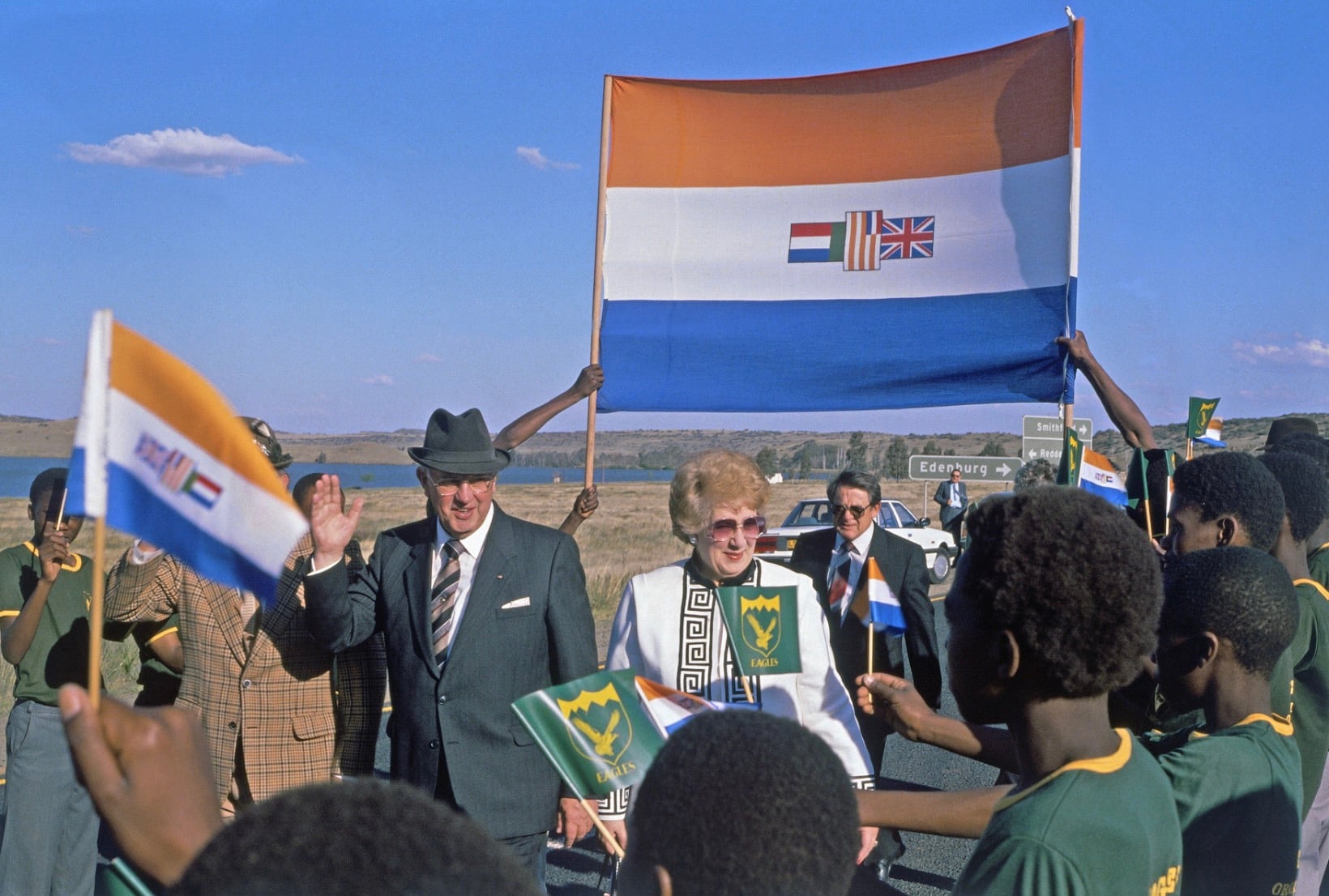
P.W. Botha’s 1985 “Rubicon” speech
Botha, then executive State President of apartheid South Africa, was expected to announce significant reforms to the apartheid system amid mounting international pressure, sanctions threats, and domestic unrest. Instead, he delivered a defiant, combative address rejecting “one man, one vote,” refusing to release Nelson Mandela, and lecturing foreign critics about interfering in South Africa’s affairs. He famously declared he was not prepared to “lead white South Africans and other minority groups on a road to abdication and suicide.” The speech was a strategic disaster: international markets and observers had been primed to expect reform, and its absence triggered a collapse in the South African rand, accelerated capital flight, and hardened international sanctions and disinvestment campaigns. It’s remembered as a moment when defiance toward the world backfired badly and deepened South Africa’s isolation.
Netanyahu’s 2026 UN General Assembly speech
Speaking amid what reporters described as widespread walkouts by as many as 70% of delegates, and a week of speeches accusing Israel of genocide and war crimes in Gaza, Netanyahu defended Israel’s strikes on Iran and its conduct in Gaza, described the years since October 7 as a seven-front war, and rejected accusations of genocide. He described the violence in the West Bank as the work of a few “juvenile delinquents” and called genocide accusations “the greatest lie of the century.” He also sharply criticized New York Mayor Zohran Mamdani, Qatar, and Turkey, while praising Trump and voicing support for Iranian protesters. Delegates from dozens of countries walked out before he spoke, underscoring Israel’s isolation at the UN. Analysts suggested the speech was aimed less at the international audience and more at Israeli voters ahead of the forthcoming elections scheduled five weeks out. One commentator observed that the speech “should be given at an election rally in Israel; this is who he’s communicating to.”
Points of comparison
- Defiance: Both speeches were built around refusing to yield to international pressure: Botha on apartheid reform, Netanyahu on Gaza/Iran policy, international opinion, and genocide allegations. Both leaders framed capitulation to outside pressure as an existential threat rather than a viable option. Both speeches rely on the narrative of an embattled nation fighting for survival against existential enemies. Botha framed South Africa as a bulwark against “communism” and chaos, while Netanyahu framed Israel as a frontline defender of civilization against Iranian-backed terrorism.
- Domestic audience over an international one: Both were, in different ways, more about home politics than diplomacy. Botha was shoring up support among the National Party’s hardline wing (he reportedly hardened his prepared text at the insistence of hardliners like General Magnus Malan rather than a more conciliatory draft). Netanyahu’s speech, according to multiple analysts, was aimed at Israeli voters ahead of elections rather than at persuading the assembled world leaders of Israel’s righteousness.
- International isolation as backdrop and consequence: Botha’s speech intensified South Africa’s isolation (sanctions, disinvestment, currency collapse). Netanyahu’s speech occurred against a backdrop of isolation already visible in the room itself, there were mass walkouts before he even spoke. Unlike Botha in 1985, Netanyahu and Israel retain a powerful ally (the US has continued vetoing UN Security Council resolutions against Israel while providing ongoing military and financial support), which has blunted some of the material consequences of that isolation.
- Rhetorical props and theater: Botha’s speech is remembered for a single line (“the Rubicon”) that became shorthand for a failed opportunity. Netanyahu, by contrast, is known for using visual props and gimmicks in his UN addresses — this year holding up a pager similar to the explosive devices used against Hezbollah in 2024 — a more theatrical, made-for-television style than Botha’s.
- Contempt for Global Opinion: Both leaders fundamentally rejected the legitimacy of international criticism. Botha warned foreign powers not to dictate South Africa’s internal policies. Similarly, Netanyahu castigated Western critics, regional leaders like Turkey’s Erdoğan, and even New York City Mayor Zohran Mamdani, labeling their actions as hypocritical, antisemitic, or cowardly.
Key differences
- Expectations going in: Botha’s speech was disastrous partly because expectations of reform had been deliberately raised beforehand (by South African diplomats and finance minister Barend du Plessis) and then dashed. Netanyahu’s speech carried no such expectation of concession. Netanyahu’s defiance was expected, so there was no comparable “shock” effect on markets or diplomacy.
- Material consequences: Botha’s speech had a direct, measurable economic and diplomatic fallout (currency collapse, accelerated sanctions). Netanyahu’s speech, while drawing diplomatic condemnation and walkouts, has not produced a comparable acute economic shock, partly because of continued US backing. It still remains to be seen if meaningful sanctions against Israel will be implemented.
- Historical function: The Rubicon speech is now studied as a turning point that hastened the end of apartheid by convincing the world (and international capital) that reform wouldn’t come from within. Whether Netanyahu’s 2026 speech will be seen as a similar turning point, deepening Israel’s international isolation in a lasting way, is a contested question, and reasonable analysts differ on it.
In hindsight, PW Botha’s Rubicon speech can be seen as the beginning of the end of apartheid. FW de Klerk replaced Botha in February 1989 and freed Nelson Mandela from prison on February 11, 1990, four and a half years after Botha’s Rubicon speech, setting in motion the negotiations to end apartheid.
It still remains to be seen, especially after the imminent Israeli elections, whether Netanyahu’s 2026 address to the UN will prove to be a similar inflection point in the course of Israel’s history.