


Exiled Iranian Writer & Political Commentator
Two Peoples, One Pain
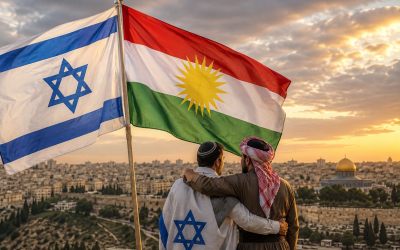 Why I Believe in the Kurdish-Israeli Bond
I am a Kurd. And I have spent years in exile, waiting for the world to remember that I exist.
This is not a new feeling for my people. The Kurds have been here before stateless, scattered, forgotten. We have watched our villages burn, our language banned, our existence denied. From the Anfal genocide carried out by Saddam Hussein, to decades of suppression across the region, the Kurdish people have learned one painful lesson: the world does not protect you simply because you deserve it.
But there is another people who know this lesson better than anyone.
The Jewish people carried the weight of exile for centuries. They were scattered across continents, persecuted, and ultimately faced the darkest chapter in modern history the Holocaust, a systematic attempt to erase them from existence. And yet, they survived. They rebuilt. They created a state from the ashes of unimaginable suffering.
When I look at Israel, I do not see a perfect country. No country is perfect. But I see something that gives me hope proof that a people who were told they had no place in this world can build one anyway.
This is why the bond between Kurds and Israelis makes sense to me. Not as a political alliance built in foreign ministries. But as a human connection between two peoples who understand what it means to be unwanted. To be stateless. To survive when the world looked away.
Israel has expressed support for Kurdish aspirations at critical moments, including the 2017 independence referendum. Many Kurds, in return, have looked toward Israel with a respect rarely seen elsewhere in the region.
We are not the same. Our histories are different, our struggles are different. But the core of our pain is the same and so is our refusal to disappear.
As a Kurd in exile, I do not need a political map to feel this connection. I feel it in the story. In the memory. In the simple, stubborn act of still being here.