Two Reform Rabbis Who View Prophet Muhammad and Islam
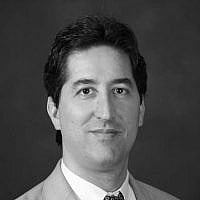
Rabbi Reuven Firestone Phd.the Regenstein Professor of Medieval Judaism and Islam at the Jewish seminary HUC-JIR in Los Angeles, and co-director of the Center for Muslim-Jewish Engagement, a partnership of HUC, and the Omar Ibn Al Kattab Foundation writes, “What does the Qur’an really have to say about Jews? When I set out recently to collect all references to Jews in the Qur’an, I needed twenty-four pages of space.
‘So the Qur’an has a lot to say about Jews, but why that is the case remains unclear. Some argue that Jews were important to the Qur’an because they were the key representatives of monotheism in Arabia in the seventh century when the Qur’an emerged as a written text.
‘It is impossible to know for certain why Jews turn up in the Qur’an so often, and the sheer number of references in quite varied contexts renders it impossible to arrive at any simple conclusion. In some references, Jews are attacked and denigrated. In others, Jews are revered as upholders of God’s will and ancient tradition.”
I would add that dozens of Jewish Prophets are also frequents critics of the rulers of the land. When Prophet Jeremiah began to defend himself, he addressed his words to the royal officials and the people rather than to his accusers, the priests, because Jeremiah himself was a priest.(Jeremiah 26:12). Jeremiah declared that he was innocent of the charges leveled against him, for the Lord had sent him to proclaim His message and to warn the people of the consequences of their disobedience.
The words spoken in that proclamation were not his own, but those he had received from God. In conclusion, Jeremiah stated that putting him to death would result in the shedding of innocent blood.
After Jeremiah presented his defense, the royal officers and the people declared that Prophet Jeremiah was not guilty. He had proclaimed an authentic message and they acquitted him of the charge of being a false prophet. They told the priests: ′This man does not deserve the death penalty, for he has spoken to us in the name of the Lord our God′ (Jeremiah 26:16).
The only time in Jewish history of mass persecution of God’s Prophets occurred was in the lifetime of Prophet Elijah (I Kings 19:14) who told God: “I have been very jealous for the LORD; for [many of] the children of Israel have forsaken your covenant, thrown down your altars, and slain your prophets with the sword; and I, only I am left; and they seek to take my life away.”
Since the Jews were well known to have received at least 55 named prophets (Talmud Megillah 14a) states 48 male and 7 female plus many unnamed prophets Quran 40:78: “We (God) did send Prophets before you (Mohamed) of them there are some whose story We (God) related to you, and some whose story We (God) have not related to you”.) we should not be surprised that the Qur’an states nine times that even the Jews killed 4 prophets.
Rabbi Firestone states that Torah (tawrat) appears by name eighteen times in the Qur’an, and it is referred to by other names such as alkitab (the Book), aldhikr (Remembrance or Reminder), and alfurqan (Redemption or Deliverance). Sometimes, the Qur’an associates tawrat with the first 5 books of the Hebrew Bible (Qur’an 3:93). In other contexts, tawrat in the Qur’an refers to the larger corpus of biblical literatures (Qur’an 5:44).
Other terms referring to a portion of the Hebrew Bible are alzabur, perhaps to Psalms (4:163, 17:55) and referring to sheets or scrolls associated with Moses and/or Abraham (53:36–37, 87:19). Al; Hebrew luach [tablets]) refers to what God gave to Moses (Qur’an 7:145–154). God gave Moses the Book as hudan (a guidance) for the Israelites (17:2) and made with them (the Jews) a covenant (Qur’an 2:83).
The Torah is the record of a true divine revelation, conformed both by Jesus (Qur’an 3:50) and Prophet Muhammad (Qur’an 3:3). “Surely We sent down the Torah, containing guidance and light. By means of it the prophets who had submitted rendered judgment for those who were Jews, and [so did] the rabbis and the teachers, with what they were entrusted of the Book of God, and they were witnesses to it” (5:44)
.
The giving of revelation is associated with the divine covenant God gave to Israel at the (Sinai) mountain: “ And We raised the mountain above them, with their covenant, and We said to them, ‘Enter the gate in prostration.’ And We said to them, ‘Do not transgress the Sabbath.’ And We made a firm covenant with them” (4:154). That mountain is Sinai through association with 23:20, 95:2. God will not break his covenant (2:80).
The Torah contains the judgment of God, guidance, and light (5:43–4). The Jews, however, broke their covenant (4:155; 5:13)—or some Jews broke their covenant (13:25)—and perverted their scripture either by distorting the text or by twisting the meaning of the words (4:46). “For their breaking their covenant, We cursed them and made their hearts hard. They alter words from their positions, and have forgotten part of what they were reminded of. You will continue to see treachery from them, except for a few of them. Yet pardon them and excuse [them]. Surely God loves doers of good” (5:13).
Rabbi Firestone also points out that the Qur’an allows Believers to eat the food and marry the virtuous women of those who have been given the Book (5:5). Likewise, the requirement for fasting is introduced as a requirement upon the Believers just as it was required for those—Jews and Christians—before them (2:183).
Synagogues as well as churches, mosques, and other places “in which the name of God is mentioned often” are to be respected and protected (22:40). Some of the People of the Book are very pious and “recite the verses of God during the hours of the night and prostrate themselves” (3:113).
One reference to the revelation of the Qur’an contains a comparative note, that “those who have been given the Knowledge beforehand, when it is recited to them they fall down on their faces in prostration and say, ‘Glory to our Lord! Surely the promise of our Lord has been fullfiled!’” (17:107–8). Early monotheists who believed in God and scripture are sometimes called Muslims, meaning “those who submit” to the divine will (28:51–55).
Rabbi Firestone points out that the Qur’an allows Believers to eat the food and marry the virtuous women of those who have been given the Book (5:5). Likewise, the requirement for fasting is introduced as a requirement upon the Believers just as it was required for those—presumably Jews—before them (2:183). Synagogues as well as churches, mosques, and other places “in which the name of God is mentioned often” are to be respected and protected (22:40).
Some of the People of the Book are very pious and “recite the verses of God during the hours of the night and prostrate themselves” (3:113). One reference to the revelation of the Qur’an contains a comparative note, that “those who have been given the Knowledge beforehand, when it is recited to them they fall down on their faces in prostration and say, ‘Glory to our Lord! Surely the promise of our Lord has been fulfilled!’” (17:107–8). Early monotheists who believed in God and scripture are sometimes called Muslims, meaning “those who submit” to the (one God’s) divine will (28:51–55).
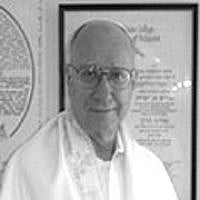
I think that Prophet Muhammad was a messenger for all nations and not just for Arabs or Muslims. I think of myself as a Reform Rabbi who is an Islamic Jew. Actually I am an Islamic Jew i.e. a faithful Jew submitting to the will of God, because I am a Reform Rabbi.
As a Rabbi I am faithful to the covenant that God made with Prophet Abraham the Hebrew, the first Islamic Hebrew (Genesis 14:13), and I submit to the covenant and its commandments that God made at Mount Sinai with Banu Israel, the people of Israel.
As a Reform Rabbi I believe that Jewish spiritual leaders should modify Jewish tradition as social and historical circumstances change and develop. I also believe we should not make religion difficult for people to practice by adding an increasing number of restrictions to the commandments we Jews received at Mount Sinai.
These are lessons that prophet Muhammad taught 12 centuries before the rise of Reform Judaism in the early 19th century Germany. Although most Jews today are no longer Orthodox, if the Jews of Muhammad’s time, had followed these teachings of prophet Muhammad, Reform Judaism would have started 1,400 years ago.
I believe that Muhammad was a prophet of Reform Judaism to the Orthodox Jews of his day; although he was 1,200 years ahead of his time. During the six centuries between the birth of Jesus and the arrival of Muhammad in Yathrib, the city of Jews (Medina), almost all Jews had became Orthodox Jews.