


Tzipora Klausner: A Zionist Heroine We Must Never Take for Granted
On Shabbat morning, I missed prayers and the sermon at our Jerusalem synagogue. Nothing new in that. Fortunately, my wife has a rather better attendance record than I do. She brought home a leaflet that had been handed out to accompany the rabbi’s sermon. It dealt with a piece of our synagogue’s history that neither of us had properly appreciated.
The Klausner Minyan is named for Joseph Klausner (1874–1958), a Lithuanian-born Israeli historian and one of the Hebrew University’s first professors of Hebrew literature. He was editor-in-chief of the Encyclopedia Hebraica and a candidate in Israel’s first presidential election in 1949, losing to Chaim Weizmann.
I knew this. What neither of us knew was that Joseph’s wife, Tzipora, was also an enormously important figure in the development of the Jewish state. She played a leading role in securing equal political rights for women – crucially including the right to vote – in the Jewish community of Palestine in 1926.
The timing of the sermon – exactly a hundred years after that victory, and just three days before a general election – was of course no coincidence. But my interest in Tzipora’s story went beyond timing. Just last week, I published a piece on my Times of Israel blog – Should Family Physicians Encourage Patients to Vote? – suggesting that, based on some research I had been reviewing, it seemed to me that family doctors like me should consider encouraging our patients to vote as a way of helping them develop a greater sense of agency in their own lives.
So I was very sorry I had not gone to shul that day. But I was very happy my wife brought home the leaflet the rabbi had prepared, because it spurred a little burst of research that introduced me to a genuinely remarkable woman whom Americans might reasonably think of as the Susan B. Anthony of early Israel. (For Brits, I’d say she was Israel’s answer to Emmeline Pankhurst – minus the militancy.)
A woman who refused to know her place
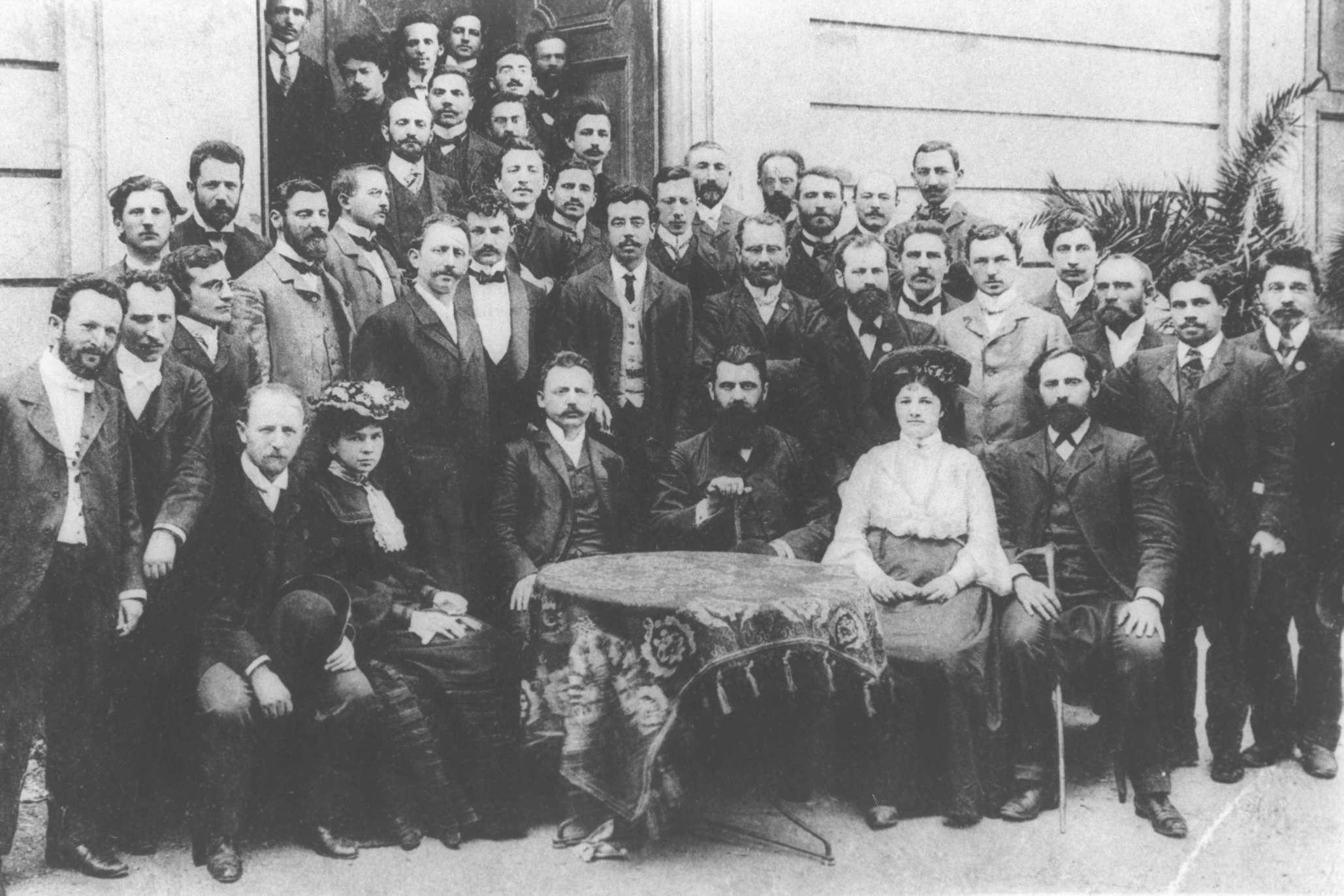
Born Fanny Wernik in 1877, in what is now Ukraine, Tzipora grew up in Odessa, attended a Russian gymnasium, and later studied at Heidelberg University. In 1900, at the age of twenty-three, she attended a regional Zionist conference as its only female delegate. The following year, she was participating in the early Zionist congresses.
The Zionist movement was still finding its feet. Its leaders were trying to persuade Jews scattered across the world that rebuilding a national home of their own was a realistic proposition and were already vigorously arguing about what sort of society it should be.
At a time when women in much of the world could not vote, Tzipora was determined that women should have a full voice in the decisions shaping the emerging Jewish national home, not merely a place in the discussion.
In 1919, Tzipora and Joseph settled in Palestine, then under British military administration. She became one of the founders and active members of the Union of Hebrew Women for Equal Rights in Eretz Israel.
The organization wanted women to be able to vote, stand for election and enjoy the same civil, political, and economic rights as men. These demands do not sound revolutionary today. In the Jewish community of the Yishuv – as Jewish Palestine was referred to a century ago – they provoked years of argument and considerable hostility.
Building a Jewish homeland, but not necessarily an equal one
The early Zionists were attempting something unimaginable to much of world Jewry. After nearly two thousand years without Jewish sovereignty, they were building the institutions of a future Jewish state: creating communities, establishing schools, developing agriculture, reviving Hebrew as a spoken language, and laying the foundations of democratic self-government.
Yet when it came to deciding who should participate in governing this emerging society, a considerable number of men believed that women should remain outside the political process.
Opposition was particularly strong in parts of the religious establishment. Rabbi Abraham Isaac Kook, one of the most influential religious Zionist thinkers of his generation, opposed women’s participation in elections based on his understanding of Jewish law, morality, and the proper relationship between family and public life.
Rabbi Ben-Zion Meir Hai Uziel, later Israel’s Sephardi Chief Rabbi, reached a different conclusion. In his discussion of women’s voting rights, he asked how it could be reasonable to expect women to abide by the decisions of elected representatives while denying them the right to participate in choosing those representatives. He also argued that women could be elected to public office.
Both men were distinguished religious scholars, deeply committed to the same Jewish tradition. Their disagreement is hardly surprising. Reaching profoundly different conclusions about almost every aspect of life has been a feature of rabbinic discourse since the earliest days of Jewish tradition.
Invoking Jewish texts rarely settles an argument. More often, it is the point at which the yelling intensifies.
Tzipora takes to the streets
The Klausner home in Jerusalem’s Talpiot neighborhood became a meeting place for intellectuals and public figures. Tzipora was well placed to bring the campaign for women’s rights into circles of considerable cultural and political influence.
But she was not content merely to argue her case from the comfort of her drawing room.
David Smilansky, a Zionist writer and public figure who knew Tzipora personally, recalled an occasion when she took a large bundle of leaflets advocating women’s suffrage and distributed them herself in Jerusalem’s ultra-Orthodox Beit Yisrael neighborhood, a center of particularly fierce opposition.
She encountered hostility and physical jostling but continued distributing the leaflets undeterred.
A successful fight for suffrage
The Union’s slogan was simple: “One constitution and one law for man and woman.” When the Jewish community held elections for its First Assembly of Representatives in April 1920, the Union did not merely lobby from the sidelines. It fielded its own list of women candidates.
Fourteen women were elected to the 314-member assembly, five of them from the women’s list. This was a considerable achievement, although women’s participation remained fiercely contested. The Union continued organizing, campaigning, and pressing for equality, not only in elections but also in matters of property, family life, and women’s legal standing.
In December 1925, elections were held for the Second Assembly of Representatives. The Union achieved a remarkable result. Of the assembly’s 221 representatives, 25 were women, and 13 of those women had been elected on the Union’s list. On January 15, 1926, the Second Assembly formally proclaimed equality for women in the civil, political, and economic life of the organized Jewish community of Palestine.
The declaration did not create a constitution for Palestine, nor did it mean that women suddenly enjoyed equality in every aspect of their lives. The women’s movement did not represent every woman living in the country. Nevertheless, after years of argument, the representative institutions of the Jewish community had formally accepted that women were entitled to an equal voice in its affairs.
Tzipora Klausner had helped bring that about.
It is worth remembering that in 1926, women in Britain still lacked the vote on equal terms with men. Women in France and Switzerland had no national vote at all. When the State of Israel was established twenty-two years later, women and men enjoyed equal voting rights from the outset.
A century later
This week, Israelis will once again go to the polls. Some of us will vote enthusiastically for parties and personalities whose beliefs and policies we identify with. Others will vote for the party they dislike the least.
But every Israeli woman who enters a polling station on Tuesday, October 27, will be exercising a right that Tzipora Klausner and her colleagues fought to secure a century ago.
We take the right to vote so much for granted that it is easy to forget that it was denied to half the population not so very long ago, and what it took to change that situation.
Our discovery of Tzipora’s story has given both me and my wife a new appreciation of the name above the door of our synagogue. So, before casting your vote, spare a thought for Tzipora Klausner, the other Klausner of Minyan Klausner, and the women and men who fought to establish equal political rights regardless of gender in the Jewish national home. They helped ensure that every one of us could have a voice in the future of the Jewish state.
Historical sources: David Smilansky, “Tzipora Klausner,” Project Ben-Yehuda; National Library of Israel, archival material on the early Zionist congresses and the Union of Hebrew Women for Equal Rights; historical research on women’s political rights in the Yishuv; and materials prepared for the Klausner synagogue congregation, Jerusalem.