
UAE dismantles Iran-linked terror cells
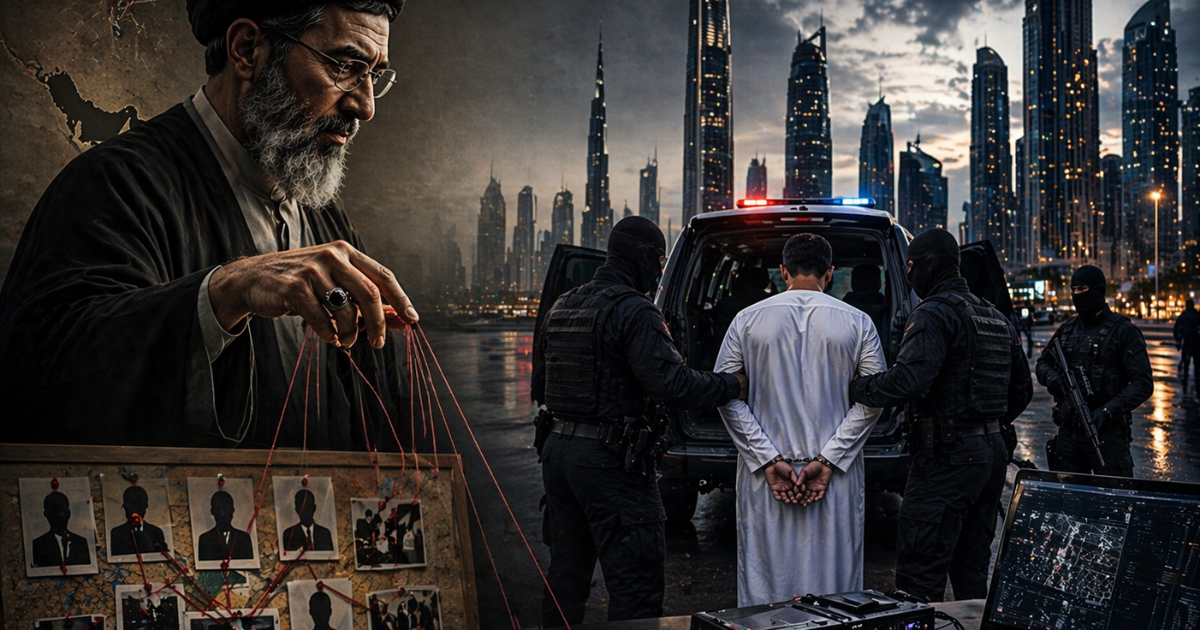
Amid regional tensions and Iranian attacks on Gulf states, information disclosed in the United Arab Emirates shows the activity of dismantled terrorist cells tied to the Iranian regime that conducted terror and espionage acts targeting state security and stability. The official statement said an organization following the Velayat-e Faqih doctrine operated within society, recruited members, coordinated with the enemy, and sought to access critical posts.
The matter here extends beyond a single captured cell; it involves exposing an entire operational method that the Iranian enemy and its supporters use to infiltrate societies from within and build gradual influence that alters loyalties in their favor.
In this context, what was disclosed is an integral part of a recurring model. The data shows a fixed modus operandi: it begins with an initial, organized contact, followed by targeted recruitment, and then broadening the circle to form sleeper cells that operate from within and are activated when needed. They move quietly and seek to redirect loyalty from the national framework to a cross-border religious and ideological bond.
To grasp the scale of this model on the ground, the numbers provide greater precision. There are 27 defendants within a single organization; the state released their photos and names to the public, while investigations cited secret meetings inside and outside the country and direct coordination with external parties.
Based on this account, one can understand how these terrorist networks and cells move on the ground. This starts with selecting individuals susceptible to influence based on psychological, material, or ideological grounds, and then asking them to attract others from their social or professional circles. Over time, small sleeper cells form, where each individual knows only a portion of the network. The process unfolds quietly through a gradual formation of elements planted inside society to conduct surveillance, gather information, and exert influence, awaiting the moment of activation.
Within this framework, the composition of these elements shows a distinct distribution of roles. Some focus on influence and mobilization, constructing narratives and altering the sense of belonging among those around them to serve the Iranian enemy and its supporters. As this activity expands, it spans multiple tracks. These include gathering information about critical facilities and specific figures, spreading rumors and false messages to sow internal confusion, and direct or indirect promotion and propaganda that serve the Iranian enemy and its supporters by influencing the general environment, inciting, and sowing doubt.
When the right moment arrives, or when external actors decide the time has come, a change can occur from influence to sabotage or aiding terrorist operations.
In parallel, the financial dimension emerges as a crucial element in the continuity of these networks. Mentions of informal transfers, external channels, and economic fronts indicate a parallel financing structure capable of sustaining the activity even under pressure. Financing here is more than an auxiliary factor; it ensures the network’s survival, growth, and the continuity of its roles.
When taken together, these elements (recruitment, influence, financing, and external coordination) complete the image. We face a model of infiltration that operates within the internal fabric of the state. What has been disclosed today reveals a model long in motion, recently surfaced after a period of covert activity.
Indeed, what happened in the UAE is rooted in an older context. Since its beginnings, the Iranian regime has sought to attract followers outside its borders and built networks tied to the Velayat-e Faqih ideology based on transferring loyalty from the nation-state to an external authority. When this method is translated into organized activity inside societies, it creates instances of involvement in espionage or sabotage that undermine the security of states from within.
In this regard, the standard is evident: any behavior that serves a hostile agenda at the expense of state security exceeds the limits of difference of opinion and violates the duty of belonging, which must be confronted and addressed through law and justice.
Thus, placing this terrorist model in its broader context is essential, as this method has precedents in the region, even if the slogans and names differ. Building networks, quiet infiltration, and attempting to influence from within are all features that characterized previous criminal acts, including the crimes of the terrorist Muslim Brotherhood organization, which adopted similar tools in organization and in ideological work and finance, despite differing points of reference. Today, this model is being reproduced within an initiative that is more pronounced in linking loyalty to the outside.
The truth is, what happened in the UAE is inseparable from the wider Gulf scene. Several countries have recently announced the dismantling of cells linked to the Iranian Revolutionary Guard and Hezbollah, whose activities ranged from espionage and money laundering to planning terrorist attacks. This convergence, alongside military escalation from the outside, indicates a dual-pressure model, combining direct confrontation tools with attempts at infiltration from within.
In addressing this reality, the role extends beyond security agencies to society as well. The awareness of individuals, of all nationalities, and the reporting of any suspicious activities, whether recruitment attempts, irregular financing, or disinformation campaigns, constitutes a primary line of defense that restricts these networks’ ability to grow.
At this point, the experience demonstrates the effectiveness of security agencies in early detection and preemptive dismantling, supported by intelligence, financial, and technical integration. Accordingly, praise is due to all personnel in this security apparatus and to the leadership that gave them support and direction, enhancing the state’s ability to protect its society and preserve its stability.
When it comes down to it, national security agencies monitor and dismantle, a vigilant society rejects treason and suspicious acts and reports them, and national cohesion forms the first line of defense against any threat.
May God bless our lands and protect our leaders.