UAE’s Tolerance at Home, Genocide in Sudan
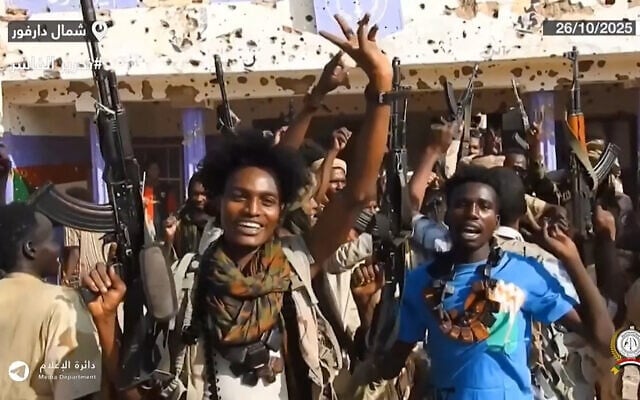
In the heart of Abu Dhabi, the Abrahamic Family House stands as a symbol of interfaith harmony: a mosque, church, and synagogue coexisting under one architectural vision, inaugurated in 2023 amid global applause. Nearby, Dubai’s thriving and growing Jewish community, estimated at 5,000 to 8,000 members in 2025, up from a few hundred before the Abraham Accords—celebrates Hanukkah with public menorah lightings, kosher restaurants, and religious education programs approved by the government. Christians attend Easter services in one of over 50 churches, Hindus worship at new temples, and modest religious symbols like cross necklaces or Stars of David are worn openly without fear. This is the United Arab Emirates as it wants the world to see it: a beacon of religious freedom and progressive coexistence in the Middle East, second only to Israel in the region.
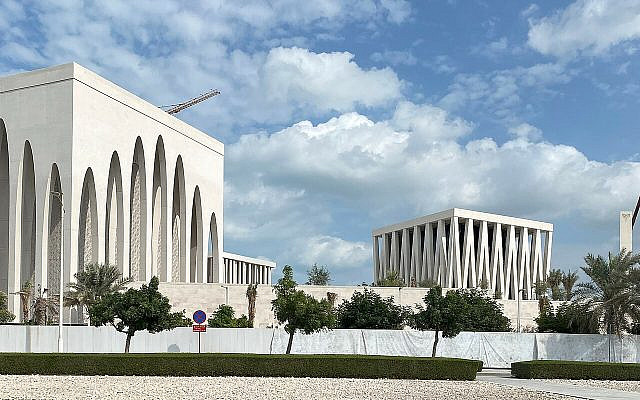
Yet, thousands of miles away in Sudan’s Darfur region, a different story unfolds. Forces backed by the UAE are accused of committing genocide, with mass killings, ethnic cleansing, and sexual violence targeting non-Arab communities like the Masalit. The US State Department formally determined in January 2025 that the Rapid Support Forces (RSF) and allied militias had committed genocide in Darfur, echoing horrors from two decades earlier. This stark contrast reveals the two faces of UAE policy: visionary and tolerant in its core sphere of influence, brutal and interventionist in conflict zones on the periphery. And it makes one wonder: where is that visionary, progressive UAE in Sudan, Libya, and Yemen?
The “Shiny” Face: A Model of Moderation and Coexistence
Domestically and in the Gulf-Levant region, the UAE has pursued policies that genuinely promote religious pluralism and regional peace. The 2020 Abraham Accords normalized relations with Israel, leading to booming trade (over $3 billion annually by 2025), joint tech ventures, and cultural exchanges. School curricula were reformed to teach the Holocaust and remove antisemitic content, fostering positive views toward Jews and Israel.
Religious freedom is enshrined in practice, if not always in law. The constitution designates Islam as the official religion but guarantees worship rights for others, as long as they align with public policy. Non-Muslims can educate their children in faith-based schools and celebrate festivals like Christmas or Pesach (with permits required for public events in some cases). Humanitarian efforts reinforce this image: the UAE has delivered over $2.57 billion in aid to Gaza since 2023, including desalination plants, field hospitals, and 100,000 tonnes of supplies via 712 flights and 221 airdrops. In Sudan, official aid exceeds $600 million since the war began, making the UAE one of the top global donors.
This “core” policy extends to forward-looking regional frameworks like the India-Middle East-Europe Economic Corridor (IMEC), launched at the 2023 G20 summit. As a key partner alongside India, Saudi Arabia, the EU, the US, and Israel, the UAE is investing in infrastructure to boost trade connectivity, countering China’s Belt and Road Initiative while promoting economic harmony. Driven by Crown Prince Mohammed bin Zayed (MBZ), these efforts position the UAE as a beacon of moderation, hosting interfaith summits, investing in Syrian reconstruction with Saudi partners, and opposing radical Islamism through zero-tolerance hate speech laws.
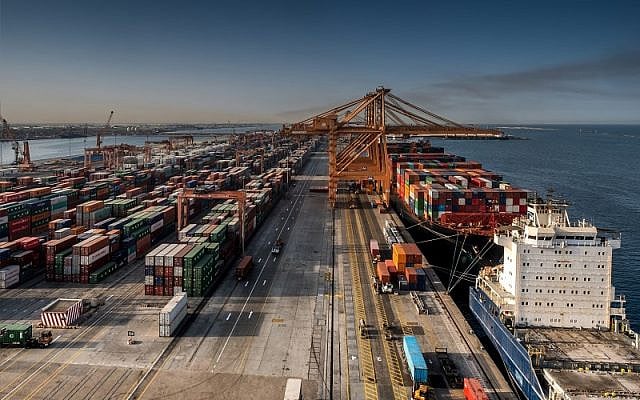
Even on the periphery, the UAE occasionally shines with constructive engagement. In Somaliland—a self-declared republic in the Horn of Africa known for its relative stability, democratic elections, and growing economy—the UAE has invested heavily in development. Through DP World, it manages and upgraded Berbera port with over $442 million in investments since 2016, transforming it into a regional hub with expanded cargo capacity and job creation. The UAE also funded expansions at Hargeisa International Airport, provided humanitarian aid projects, and offered security training to Somaliland forces to counter Al-Shabaab infiltration from Somalia proper. This support has helped Somaliland maintain peace and economic progress in a volatile region, blending self-interest with genuine capacity-building.
The “Hard” Face: Proxy Wars and Atrocities on the Periphery
In failed states like Sudan, Libya, and Yemen, the UAE’s approach shifts to cold realpolitik, backing militias accused of severe human rights abuses while denying involvement. To highlight the shortcomings and duality in UAE foreign policies, this analysis will focus primarily on Sudan as an exemplar, while briefly addressing Libya and Yemen to illustrate the broader pattern.
Let us take a deeper dive into Sudan, where the war pits the Sudanese Armed Forces (SAF), led by General Abdel Fattah al-Burhan, against the Rapid Support Forces (RSF), commanded by Mohamed Hamdan Dagalo (Hemedti). What began in April 2023 as a power struggle between former allies under the deposed Bashir regime has devolved into a brutal civil war, fracturing the country along ethnic, tribal, and regional lines for over two and a half years. The SAF controls much of the Nile Valley and Khartoum’s ruins, while the RSF dominates vast swaths of Darfur, Kordofan, and gold-rich western territories.
The human toll is staggering, a grim tableau of suffering that evokes the darkest chapters of Sudan’s history. Over 20,000 people have been killed in direct combat, with indirect deaths from disease, starvation, and displacement pushing estimates to 150,000 or more, according to the Armed Conflict Location & Event Data Project (ACLED) and the UN. In the scorched lands of West Darfur, RSF militias have razed villages like El Geneina, executing men and boys in mass graves, raping women and girls as a weapon of terror, and driving ethnic Masalit communities into Chad’s refugee camps in waves of ethnic cleansing. Famine stalks the land, with 25 million people—half the population—facing acute hunger, and full-blown famine declared in Darfur camps by the UN in mid-2025. More than 10 million are displaced, the largest such crisis globally, with families huddled in makeshift tents amid cholera outbreaks and relentless aerial bombardments. Children, the war’s most innocent victims, bear scars from sniper fire in Khartoum streets or starvation in remote enclaves, their futures erased in a conflict that has shuttered schools and hospitals nationwide.
The UAE publicly insists it provides only humanitarian aid, with the Ministry of Foreign Affairs (MoFA) rejecting claims of military support as “baseless” and emphasizing its role in ceasefire efforts. Yet, multiple investigations tell a different story. The UN Panel of Experts on Sudan reported in April 2025 that the UAE supplies weapons, drones, and ammunition to the RSF via Chad airbases, often disguised as aid flights. Amnesty International documented Chinese-made drones and missiles in RSF hands traced to UAE supply chains in May 2025. US officials, including Senators Chris Van Hollen and Sara Jacobs, confirmed in January 2025 that the UAE arms the RSF despite assurances otherwise.
Gold ties compound the issue. Officially, Sudan gold accounts for just $1.97 billion of UAE’s $186 billion trade in 2024. But Swissaid’s November 2025 report estimates much higher smuggled volumes, with UAE as the primary hub for RSF-controlled conflict gold fueling the war.
A similar pattern of proxy support amid horror emerges in Yemen, where a decade-long civil war since 2015 has pitted the internationally recognized government against the Iran-backed Houthis, with southern separatists adding a third front. The conflict has killed over 377,000 people (direct and indirect causes), according to UN estimates, displacing 4 million and pushing 21 million into severe hunger amid the world’s worst humanitarian crisis. Cities like Sanaa and Taiz lie in ruins from airstrikes and sieges, with children starving in makeshift camps and cholera epidemics sweeping through contaminated water supplies.
The UAE, part of the Saudi-led coalition until a partial withdrawal in 2020, backs the Southern Transitional Council (STC) separatists, providing arms and training despite accusations of war crimes, including indiscriminate attacks and arbitrary detentions. Human Rights Watch has documented UAE-supported forces torturing detainees in secret prisons and enabling child soldier recruitment. Against this, the UAE’s environmental footprint in Yemen includes enabling operations that devastate coastal ecosystems, while migrant workers face exploitation in UAE-linked detention centers.
In Libya, UAE support for Khalifa Haftar—despite UN arms embargoes—includes drones and helicopters, enabling offensives accused of war crimes like indiscriminate bombings and migrant abuses. Amnesty International has documented potential war crimes by Haftar’s forces in Tripoli battles.
Why the UAE Pursues This Path: Motivations and Calculations
Short-term costs—weapons, diplomatic backlash, and sanctions risks—appear high, but the UAE plays a long game. Benefits are strategic and economic, aimed at generational gains rather than immediate returns. Partial gains are evident: in Yemen, UAE-backed forces have secured key ports like Aden from Houthi control, stabilizing some southern oil exports; in Libya, Haftar’s influence has helped contain Islamist groups in the east.Key goals include:
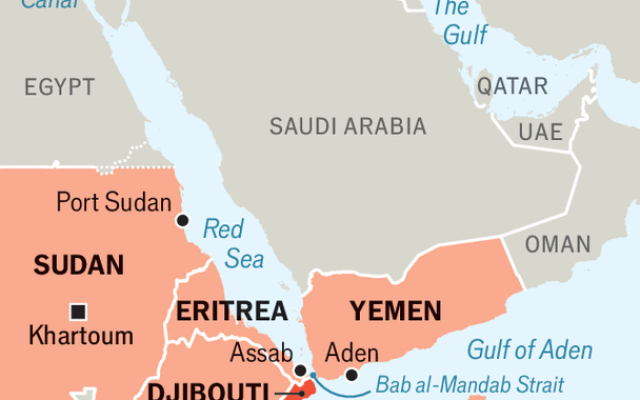
- Red Sea dominance: While the UAE already controls southern chokepoints like Berbera in Somaliland and Assab in Eritrea, Port Sudan is the missing northern piece. Pre-war 2022 deals gave UAE firms $6 billion concessions for Port Sudan and a new Abu Amama port, plus massive agricultural zones. RSF control secures these; a SAF victory would hand them to rivals like Egypt or Turkey. This completes a UAE maritime corridor, vital for 90% of its sea-based imports and insurance against Houthi or Iranian threats.
- Gold monopoly: RSF controls over 80% of mines, feeding Dubai’s global gold hub. Official trade is minimal, but black-market flows yield $10–20 billion annually in refining fees and trade profits.
- Food security: Pre-war leases covered millions of hectares for wheat and sorghum. Sudan as the “Arab breadbasket” addresses UAE’s 90% food import reliance amid climate change.
- Anti-Islamist bulwark: SAF is infested with Muslim Brotherhood elements and Hamas links; RSF leader Hemedti is seen as a pragmatic secular proxy, fitting UAE’s domestic ban on the Brotherhood.
- Regional flex: Counters Egypt (SAF backer), Turkey/Qatar/Iran (SAF leaners), and Russia (former Wagner gold ties), winning influence across the Horn of Africa.
These outweigh costs for a $500 billion+ economy, where weapons and PR defense are disposable. The UAE views it as generational chess: tolerate horrific proxies for strategic lock-in while rivals bleed.
The Broader Sudan Proxy War: Other Players’ Roles
Sudan is a multi-sided proxy conflict, not just UAE vs. everyone. RSF relies almost entirely on UAE arms and gold laundering, with minor Russian/Eritrean logistics. SAF receives Egyptian air support and arms, Iranian drones, Turkish base talks and drones, and Qatari funding via Al Jazeera framing. This balance keeps the stalemate grinding, with RSF consolidating a de facto western state and SAF holding the Nile valley.
UAE’s two faced foreign policies: Pragmatism or Cynicism?
UAE officials describe this duality as necessary realism: tolerance in stable zones, security in chaotic ones. But critics see cynicism, with periphery policies undermining the core brand. Such alternative paths would likely require internal debate in the UAE, yet that is a key problem: despite progressiveness in many areas, free speech and policy critique are not among them. Federal Decree-Law No. 34/2021 criminalizes “spreading rumors” or “harming national unity,” with jail terms for online criticism of government policies. Freedom House ranks the UAE “Not Free” for speech and press (17/100 in 2025), fostering rampant self-censorship and no independent media.
Dissenters like human-rights activist Ahmed Mansoor remain jailed since 2017. These conditions at home, where healthy policy debates are suppressed as criticism of the government carries criminal prosecution risks, result in no evolution of thinking, tunnel vision, and groupthink. Without internal challenges, policies like Sudan go unquestioned, hindering a pivot to paths that better align with UAE’s proclaimed values of tolerance and harmony.
What If the UAE Exported Its Visionary Policies to Conflict Zones?
The Abraham Accords demonstrate the UAE’s capacity for bold, progressive diplomacy in stable environments. But what if Abu Dhabi adapted that idealism—blended with pragmatism—to the periphery, exporting tolerance and economic incentives to conflict zones like Sudan, Libya, and Yemen? Conditions differ vastly: these are not stable democracies like Israel or Morocco, but fractured failed states with armed factions. Still, alternative paths were possible, leveraging UAE’s wealth, anti-Islamist credibility, and deal-making prowess.
In Sudan, instead of arming the RSF, the UAE could have led GCC-mediated talks, offering a $10 billion reconstruction fund tied to demobilization and power-sharing. Drawing on Accords-style incentives, they might have isolated SAF hardliners with debt relief for RSF concessions, creating neutral economic zones for gold and agriculture under international oversight. Pre-war, UAE briefly engaged Sudan’s civilian government on ports and farms; doubling down on IGAD/AU frameworks could have prevented escalation, saving lives and aligning with their anti-MB stance without genocide complicity.
Similar adaptations in Yemen might have seen joint Saudi-UAE-US mediation with revenue-sharing for ports and oil, isolating Houthis through “Dubai-model” investments rather than backing separatists amid atrocities.
In Libya, UAE could have brokered factional deals with UN support, using cash for disarmament instead of drones for Haftar. These paths would require creativity—economic carrots over weapons, multilateral coalitions over unilateral proxies—but the UAE has the tools. Somaliland shows they can do it when risks are low. Choosing otherwise risks the moral incoherence we see today.
Can the Facade hold ?
As the international backlash grows with US sanctions threats, European trade deal scrutiny, the UAE risks its progressive image crumbling as the dirty side of Uae’s foreign policies getting more and more highlighted. The Abraham Accords prove visionary diplomacy is possible; applying it beyond the core could redefine the UAE as a true force for good. For now, the two faces persist, one shining brightly, the other cast in shadow.