
From Kibbutz to the global stage
UAP: Trump, Congress, Pentagon Push NASA and Science Toward AI and Fuzzy Logic
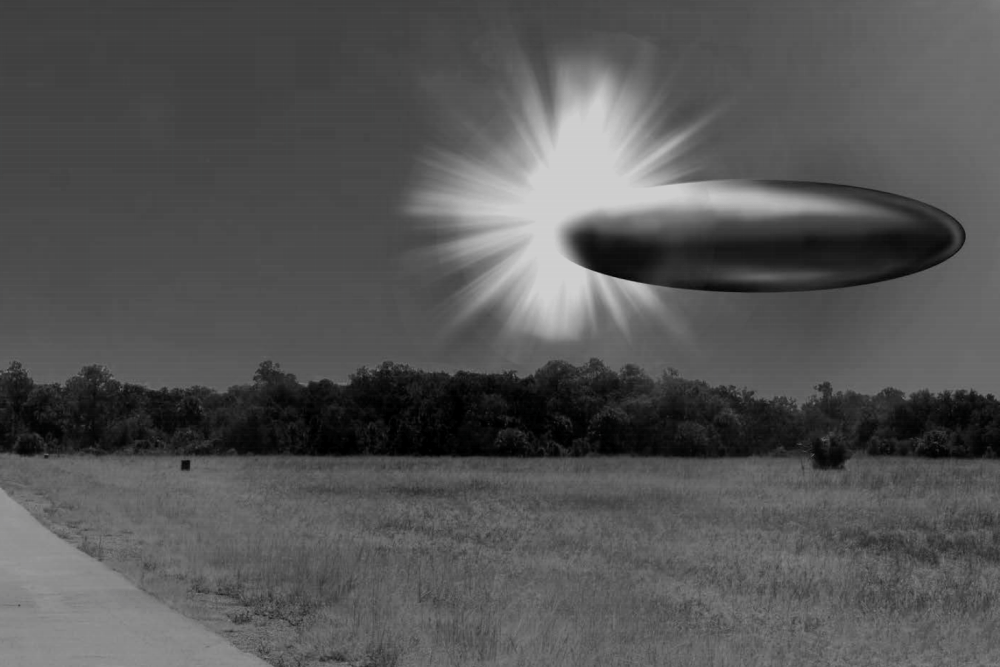
Image: Trump UFO Files Released. Historical FBI composite image of a reported UFO sighting released by the U.S. Department of War.Source: U.S. Government Archives.
Turning Anomalies Into Science
The release of UAP documents by the Pentagon and the White House could transform the discussion around unidentified phenomena from a debate driven by belief and skepticism into a research field based on AI, fuzzy logic, and anomaly analysis.
Credit should be given to the White House, the Pentagon, members of Congress and the Senate, and public organizations that pushed for the release of classified documents related to Unidentified Anomalous Phenomena — phenomena previously referred to as UFOs.
The publication of these documents is significant in itself, even if the disclosure process has only just begun and may continue for many months due to the sensitivity of the material and the need to protect intelligence-gathering technologies and sources.
Reducing secrecy around these findings is an important step on its own. For years, excessive classification has been one of the main obstacles preventing broader scientific analysis, limiting access to data, and restricting research to relatively small circles that do not always include the best or most suitable experts for every field involved.
Today, as both the White House and the Pentagon appear interested in advancing the discussion — and as the scientific world remains hungry for data — both sides are effectively trying to remove the “U” in UAP, transforming the Undefined into the Identified.
To move forward, a scientific and organizational infrastructure is needed to create genuine dialogue between the security establishment, research institutions, and the public. Information should be made as accessible and transparent as possible, while researchers must also have the tools and expertise necessary to ask the right questions and analyze the data professionally.
Precisely because the information is complex, incomplete, and sometimes contradictory, premature conclusions should be avoided in either direction. Within only a few hours of the first document releases, commentators and scientists had already declared that “there is nothing there.” Yet on a Friday afternoon, when universities, research centers, and government institutions are largely closed, it is unrealistic to expect deep scientific analysis of such broad and complicated material.
For years, the public discussion surrounding UAP has suffered from a double problem: on one side, excessive secrecy that limits access to data; on the other, a public discourse that often swings between blind belief and automatic dismissal.
The goal should not be to “prove aliens exist,” but rather to develop a scientific methodology for analyzing anomalous events under conditions of uncertainty.
This is precisely where the combination of Artificial Intelligence and Fuzzy Logic becomes relevant. Fuzzy logic allows researchers to analyze situations that are not simply “black or white,” but exist in gray zones of probability, uncertainty, and conflicting sources of information.
Instead of asking only:
“Is it real or not?”
Researchers can ask:
What is the reliability level of the data?
Are there contradictions between sensors?
Which data points are missing?
Is this known noise, or a genuine anomaly?
This approach already exists in many fields:
aviation warning systems,
intelligence analysis,
anomaly detection in complex systems,
multi-sensor data fusion,
and Explainable AI — systems designed to explain how conclusions were reached.
In practice, military and aviation systems already deal daily with enormous amounts of incomplete, noisy, and contradictory information. The real question is not whether anomalies exist, but how to measure them, rank them, and determine which deserve deeper investigation. This is where AI and fuzzy logic could become meaningful scientific tools.
Quantifying Uncertainty
One of the major advantages of fuzzy logic is its ability to transform partial information into measurable information.
In classical science, incomplete or blurry data is often dismissed. In a fuzzy-logic-based system, however, even non-definitive information can receive a probabilistic weight.
For example:
a weak radar signal,
a blurry video,
contradictions between optical sensors and radar,
or partial eyewitness testimony —
do not necessarily need to be discarded. Instead, they can be assigned levels of confidence, probability, or anomaly ranking.
Instead of saying:
“There is no proof, therefore there is nothing.”
The system can ask:
“What is the probability that this event represents an unexplained anomaly?”
What Questions Should Be Asked?
If the discussion around UAP is to become truly scientific, both academia and the public must focus on measurable and technical questions.
1. Data Integrity
Are conclusions based on raw sensor data?
What is the accumulated measurement error?
Are the observations near the sensitivity limits of the instruments?
2. Sensor Fusion
Was there overlap between radar, optical systems, and other sensors?
If so, what is the probability that the event was merely a technical malfunction?
3. Expertise and Peer Review
Which experts from different fields examined the data?
Were specialists in optics, aviation, physics, or material science involved?
How independent is the research from military institutions or other interested bodies?
4. AI and Inference Analysis
Were anomaly-detection models used?
How does the system explain its conclusions?
Which parameters led to classification as “noise” versus “anomalous event”?
Toward a New Research Field
It may be time to define a new interdisciplinary research field that could be called:
Fuzzy-AI UAP Analytics
Such a field would combine:
artificial intelligence,
fuzzy logic,
anomaly analysis,
and multi-sensor data fusion.
Its purpose would not be to promote conspiracy theories, but to develop scientific tools capable of measuring uncertainty and analyzing complex events.
Such systems could:
Convert textual reports and documents into analyzable physical datasets.
Identify patterns similar to known events — or recognize genuinely new anomalies.
Explain transparently how conclusions were reached.
Allow researchers around the world to work simultaneously on the same datasets.
Science Instead of Belief
The combination of AI and fuzzy logic allows the UAP discussion to move away from emotional arguments between “believers” and “skeptics” toward a scientific framework based on probabilities, confidence levels, and measurable evidence.
Instead of asking:
“Are these aliens?”
We can ask:
“What mathematical model was used to classify this data as noise, a known phenomenon, or a genuine anomaly?”
That is precisely the bridge needed between the security establishment, the scientific community, and the public — a bridge capable of turning documents that currently appear vague or incomplete into the foundation for real scientific research.
Related Topics
Related Posts