
UCT to Israelis: Renounce Your Identity or Stay Away
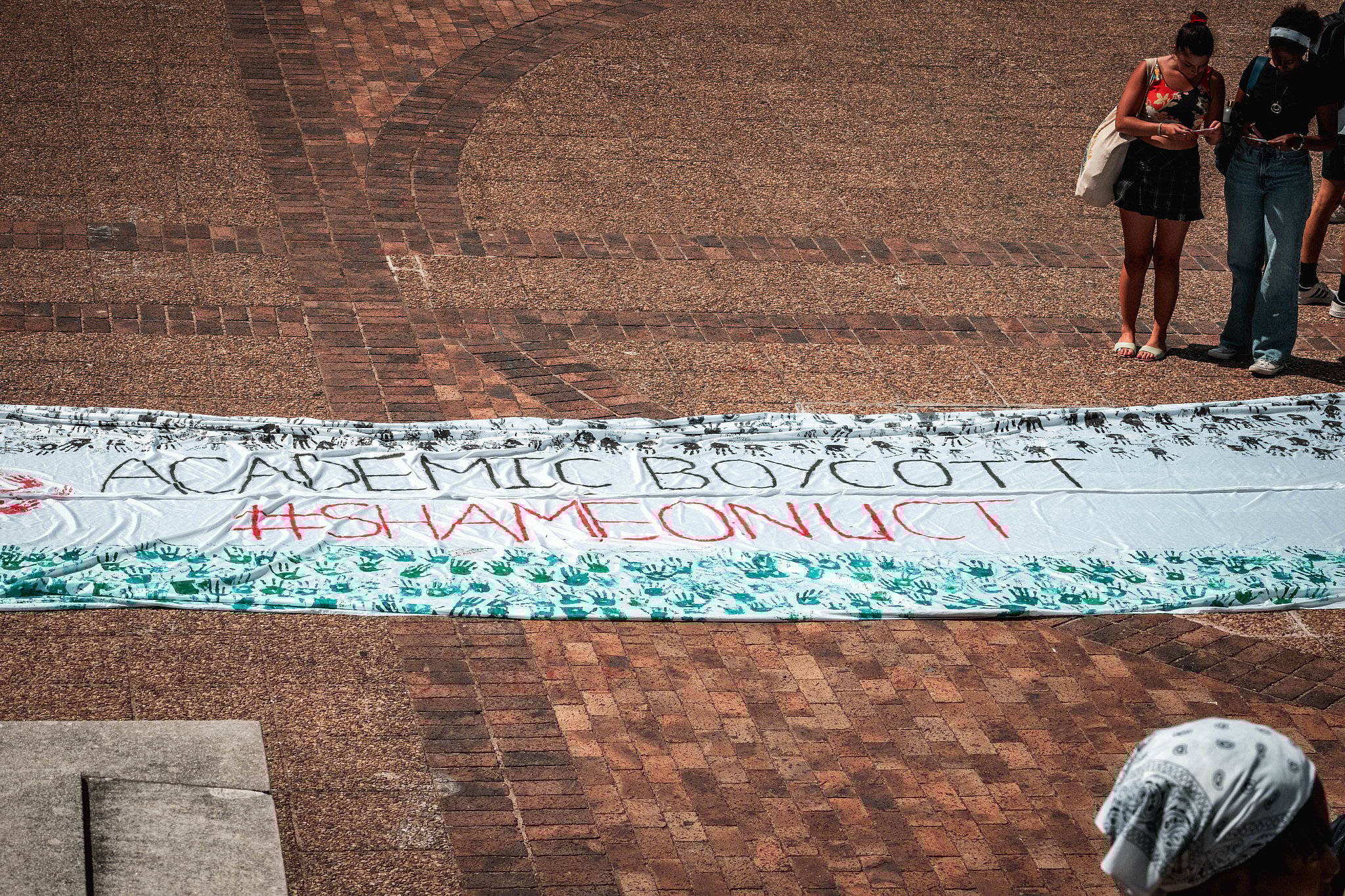
As the IAMHIST 2025 Conference begins today at the University of Cape Town (UCT), what should have been a networking of global academics has instead become a flashpoint of contradiction. The South African Zionist Federation (SAZF) has strongly criticised UCT’s Centre for Film and Media Studies for what it calls a blatant double standard in the application of the university’s own Gaza Resolutions – selectively enforced against Israeli scholars while ignored when politically convenient.
At the heart of the dispute lies the treatment of Israeli academics invited to participate in the IAMHIST conference. These individuals, some of whom have long-standing affiliations with international research networks, were subjected to exceptional scrutiny. The UCT department overseeing the conference demanded sworn affidavits from Israeli participants affirming that they have no direct or indirect ties to the Israel Defence Forces (IDF). No such demands were made of scholars from any other nation.
Yet just two weeks from now, UCT academics from the Centre will themselves travel to Singapore to present at the IAMCR 2025 Conference, where they will be joined by a number of Israeli scholars, including those from institutions with well-documented relationships with the IDF. In that context, there has been no requirement for Israeli attendees to issue declarations, no question of disqualification, and certainly no raised concerns by UCT about breaching their own Gaza Resolutions.
The irony is difficult to overlook: Israeli academics are evidently too controversial to attend a conference hosted by UCT on its own campus, yet not problematic enough to dissuade UCT staff from engaging with them abroad. Academic freedom, it seems, is a principle UCT applies with geographical selectivity.
The SAZF has repeatedly attempted to engage UCT on the matter. As early as October 2024, the Federation sought clarity on how the university intended to interpret and implement the Gaza Resolution, which prohibits research collaboration with groups linked to the IDF or broader Israeli military establishment. Despite multiple follow-ups, UCT offered no response.
The SAZF formally raised concerns over the participation of UCT academics in the IAMCR conference held in New Zealand (an event which featured multiple Israeli scholars affiliated with institutions that provide multifaceted support to the IDF). UCT took no issue with that participation. Nor has it shown any discomfort with attending the upcoming Singapore conference, despite the inclusion of Israeli academics in both the organising leadership and the programme itself.
In stark contrast, when it came to hosting the IAMHIST Conference in Cape Town this week, the Centre for Film and Media Studies not only enforced the Gaza Resolution but did so without a formal policy as yet at UCT. The Centre applied these measures only to Israeli participants, who, notably, are author-affiliated with academic institutions and not with the IDF itself.
This selective application has drawn criticism from within and beyond the university community. An article published by UCT alumni just yesterday described the vetting process as discriminatory and in direct contradiction with IAMHIST’s own diversity statement, which commits to inclusive participation irrespective of nationality or identity. Internal IAMHIST correspondence reportedly confirms discomfort with UCT’s demands but reveals that the association acquiesced under pressure, citing concerns over institutional consequences for UCT organisers.
The SAZF has labelled the actions of UCT’s Centre for Film and Media Studies as ideologically motivated and academically indefensible. The Federation further argues that the department has no legitimate authority to interpret or enforce the Gaza Resolutions, which remain under judicial review. By acting unilaterally, the Centre has created what the SAZF calls an “invented prescriptive reading” of the resolution, one that violates both UCT’s diversity commitments and values.
Adding further weight to the SAZF’s criticism is the fact that no scrutiny has been applied to other politically affiliated speakers. For example, a keynote participant at IAMHIST who is affiliated with the Palestine Film Institute has not been asked to disavow any association with proscribed terror organisations in Gaza, nor faced the kind of ideological vetting reserved exclusively for Israelis.
The Federation argues that such disparity demonstrates the fundamentally disingenuous nature of UCT’s approach. “This is not a principled stand against military-linked research, it is a targeted policy of exclusion based on nationality,” the SAZF stated in correspondence to UCT leadership.
The organisation is now calling on IAMHIST to review its decision to host the conference at UCT, and to reaffirm its commitment to academic freedom and equal treatment. It is also urging UCT’s central administration to publicly clarify whether the Gaza Resolution is to be applied uniformly – or only when politically expedient.
As it stands, the 2025 IAMHIST Conference risks being remembered not for its academic contributions but for the precedent it sets: that ideological litmus tests and political gatekeeping are acceptable practices in South African academia. And while UCT prepares to send its scholars off to engage in a network with Israeli academics abroad, it may find the rest of the world less willing to ignore such contradictions.