


Ukraine Knows Mamdani’s ‘Warmth of Collectivism’
It’s done: Zohran Mamdani has been sworn in as mayor of New York City. And the setting could hardly have been more exemplary—the self-loathing Jew Bernie Sanders, the bartender-turned-congresswoman Alejandra Ocasio-Cortez, and the “communist” whose wife wore $630 worth boots to the inauguration.
If you know even a little bit of history, none of this should come as a surprise. Some of the most enthusiastic supporters of communism in the late nineteenth century were also self-loathing Jewish intellectuals like Karl Marx, the author of “The Capital” and the co-author of “The Communist Manifesto”, alongside with the rich British lords sitting comfortably in their mansions while shedding a tear for the global proletariat.
So when I heard a well-off neatly-dressed gentleman standing at a microphone delivering Lenin-style speeches about “rugged individualism” versus the “warmth of collectivism,” my reaction was simple: this clocks way too well.
To many New Yorkers—especially the largely carefree Gen Alpha and Gen Z kids born into wealth and abundance—these ideas about the “warmth of collectivism” may sound progressive, even TikTok-friendly. But as a Ukrainian, I would like to offer a bit of perspective on what this actually looks like in practice, because Ukraine has already experienced this so-called “warmth of collectivism.”
Before the Bolsheviks took over Ukraine in the 1920s, Ukrainian capitalism was among the strongest in the region. Wealthy Ukrainian peasants owned large tracts of land and enjoyed what was, for the time, an “as good as it gets” quality of life. At first, the Bolsheviks tolerated—and even encouraged—this system as part of the New Economic Policy, essentially a euphemism for real capitalism that the Russian Empire had never fully developed.
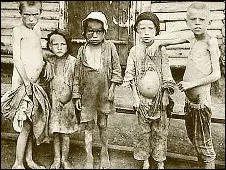
Gradually, however, the rhetoric against “rugged individualism” intensified. The new elite insisted that peasants who worked hard to cultivate and maintain their own land were “ripping them off.” Calls grew louder to confiscate their land and force them to work for the state in order to combat “rugged individualism.” This campaign ended in a tragedy of gargantuan proportions. When these so-called “rugged individualists” resisted, the dictatorial regime responded with extreme measures, including mass grain confiscations. The result was a famine—known as the Holodomor—in which people were deprived of food and forced to eat whatever they could find, including, in some cases, other human beings.
All this was coupled with the dictatorial large-scale repressions, especially during the Stalin era, against Ukrainian Jews, including those who supported Ukrainian nationalism, and clandestine Zionist movements. Because believe it or not, most people do not wish to enter the “warmth of collectivism” by giving away their property or identity.
At this point, I’m sure someone will say, “But surely you don’t expect Mamdani to be this extreme?”
No, I don’t.
Mamdani lacks the tools, the mandate, and likely the appetite to go that far. But I do expect him to introduce elements of the far-left agenda like the normalization of “Jew hunts” disguised as “temporary anti-Zionist measures”, which he did precisely on day one by revoking the IHRA definition of antisemitism and allowing boycotts against Israel.
And yes, I am sure it will get worse not just for Jewish communities, and especially Israeli ones, in New York City, which already face significant risk, sometimes even physical, but the main drivers of democracies: the middle and upper middle class who always take the biggest toll when it comes to “building warm collectivism.”
The reason being is simple: Mamdani clearly sees himself as a visionary. And people like that rarely sit quietly in office enjoying fame and power; they act on their ideological convictions. Hence I expect bizarre economic experiments, big capital fleeing the city, financially unsustainable ideas like “free bus rides” or other types of social welfare programs that will be funded but god knows who.
The fact that all of this is happening in a country that built its wealth on “rugged individualism,” while the “warmth of collectivism” empire of evil collapsed under poverty and shortages, is indeed deeply disturbing.