


Ukraine Strikes Russia as the “Free Palestine” Propaganda Wave Falters
At a time when the world remains consumed by turmoil and political adventurism in the Middle East, fresh data from the online sphere paint a different and deeply thought-provoking picture.
Charts tracking online activity from October 5 to 11 show a striking decline in propaganda posts using phrases such as “Free Palestine” and “genocide” following Ukrainian strikes on Russian data centers. Tehran and Beijing, meanwhile, were hardly sitting on the sidelines: both have also used fake accounts to target American voters ahead of the November 2026 elections.
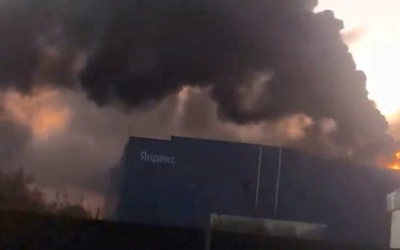
The timing is difficult to dismiss as mere coincidence. At the very least, it raises serious questions about the possible role of this axis in producing, feeding and amplifying false narratives and in conducting coordinated influence and deception campaigns across social media.
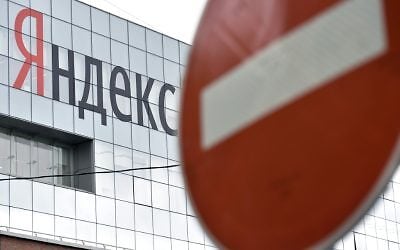
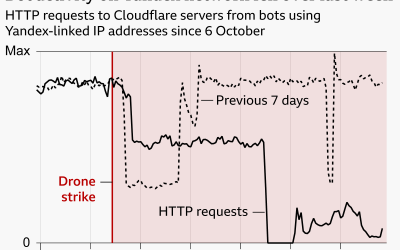
The raw numbers are telling. Roughly 1.5 million posts were recorded during the seven-day period examined. In both charts, activity rose initially before dropping noticeably toward the end of the week. That decline came immediately after Ukraine targeted Russia’s digital infrastructure. Some analysts see the timing as a possible sign that at least part of the online anti-Israel propaganda ecosystem may have relied on Moscow’s propaganda and influence capabilities.
A Russian Strategy of Diversion?
The central hypothesis is straightforward, but significant: Russia may be exploiting public outrage surrounding the Israeli-Palestinian conflict to divert global attention from its own war in Ukraine.
The more public debate is dominated by slogans such as “genocide” and “Free Palestine,” the less space remains for sustained scrutiny of Russia’s own aggression and crimes in Ukraine. For a country with a long record of information warfare, influence operations and manipulation of online discourse, such a strategy would hardly be surprising.
Moscow has spent years using digital platforms to shape public opinion in both the West and the Middle East. The reported fall in certain categories of online content after Russian data centers were damaged raises the possibility that some of that activity was not entirely organic, but was instead being sustained or amplified by organized or semi-organized networks.
When infrastructure is disrupted, output falls. That pattern is consistent with Russia’s past use of information operations in areas ranging from election interference to the deliberate intensification of political and social divisions.
An Unholy Alliance
There is, however, a deeper layer to the story: an unholy alliance that has taken shape in recent years a practical alignment between elements of the global left and radical Islamists united by hostility toward Israel.
At the same time, the broader alignment between Moscow, Beijing and Tehran has increasingly placed Washington and Tel Aviv in its sights. Through the production and amplification of disinformation, these networks help fuel the so-called “resistance” movement against Israel while circulating distorted narratives about American domestic politics.
Part of that effort appears aimed at deepening distrust of Republicans among American voters and widening political divisions at the heart of the Western world.
This alliance, sometimes wrapped in the language of human rights and at other times in revolutionary rhetoric, turns the reality of organized Palestinian terrorism on its head. Groups that openly seek Israel’s destruction and have a record of attacking civilians are recast as “resistance,” while Israel’s defense of its citizens is portrayed as “genocide.”
Who Is Most Vulnerable to These Narratives?
Among those exposed to these narratives, some groups appear particularly vulnerable to their influence: young people, especially young women and LGBT individuals who encounter ostensibly progressive slogans across Western universities and social media.
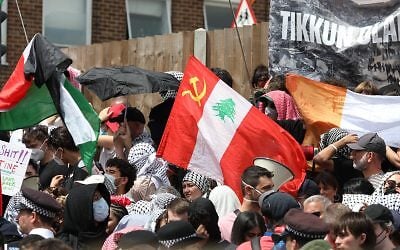
Many of them embrace visible expressions of personal freedom from miniskirts to non-conforming gender identities yet may repeat political narratives without closely examining where those narratives originated or who may be amplifying them.
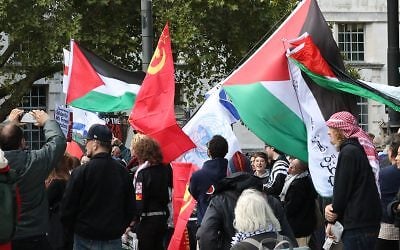
Claims that obscure or invert the realities of terrorism, the use of human shields and attacks on Israeli civilians can spread rapidly through these communities.
The irony is striking: parts of Western society that see themselves as defenders of freedom and diversity may, often unwittingly, end up amplifying narratives associated with movements whose values are fundamentally hostile to those very freedoms.
Some Western politicians and officials within human-rights organizations may also be influenced by misleading reports and, in many cases, become caught in the same narrative traps.
This is precisely where the tactic of diverting attention becomes effective. As long as international focus remains fixed on Israel and on America’s internal divisions, Russia gains greater room to pursue its military objectives in Ukraine.
Radical Islamist movements, meanwhile, benefit from extensive media coverage and symbolic support from sections of the Western left, strengthening their claims to legitimacy.
The result is a self-reinforcing cycle in which realities on the ground become increasingly obscured. Israel faces threats from groups that openly seek its destruction, while a significant section of Western public opinion remains absorbed by slogans that may themselves be fed and amplified through organized propaganda channels.
Turning Reality Against Israel
The seven-day data, the timing of the decline, Russia’s record of information warfare and the existence of a clear strategic motive raise questions that should not simply be dismissed.
If even part of the enormous volume of anti-Israel content was dependent on Russian digital infrastructure, then the sudden drop following Ukrainian strikes may represent more than a statistical coincidence. It could offer a glimpse into the vulnerability of the networks behind that activity.
More broadly, the episode highlights the fragility of today’s information environment. When political narratives can be generated and distributed at extraordinary speed and scale, the line between a genuine grassroots movement and a coordinated influence campaign becomes increasingly difficult to identify.
Israel, in this context, is confronting not only a military threat but also a battle over perception one in which complicated security and historical realities can be overwhelmed by simple, emotionally charged slogans.
What is already clear is that the decline in certain categories of online content following damage to Russian data centers provides an opportunity to examine more closely the sources feeding and amplifying some of today’s dominant narratives.
How Influence Operations Exploit Credulity
A recent move by the social-media platform X has exposed another layer of what appears to be coordinated influence activity: more than 13,000 accounts linked to suspicious activity associated with Iran, Russia and China were suspended.
The accounts were engaged in coordinated efforts to produce and amplify fabricated or misleading material about American politics. Their apparent objective was to spread both disinformation and misinformation distorted or false narratives intended to influence public opinion, target political figures and steer voters ahead of elections.
Despite clear behavioral patterns and technical evidence, officials and state-linked media in these countries continue to deny involvement, dismissing such allegations as conspiracies or baseless accusations.
That systematic denial is itself part of the strategy. It allows influence operations to continue in the shadows while giving those behind them plausible distance from responsibility.
The lesson is simple: where facts retreat, propaganda advances. Better reporting on Islamist terrorism and the abuses of the Tehran and Moscow regimes would leave far less room for their disinformation networks to manipulate Western public opinion.