

Mathematics Teaching Professor, Author
United Hebrew Congregation, St. Louis’s first Jewish congregation
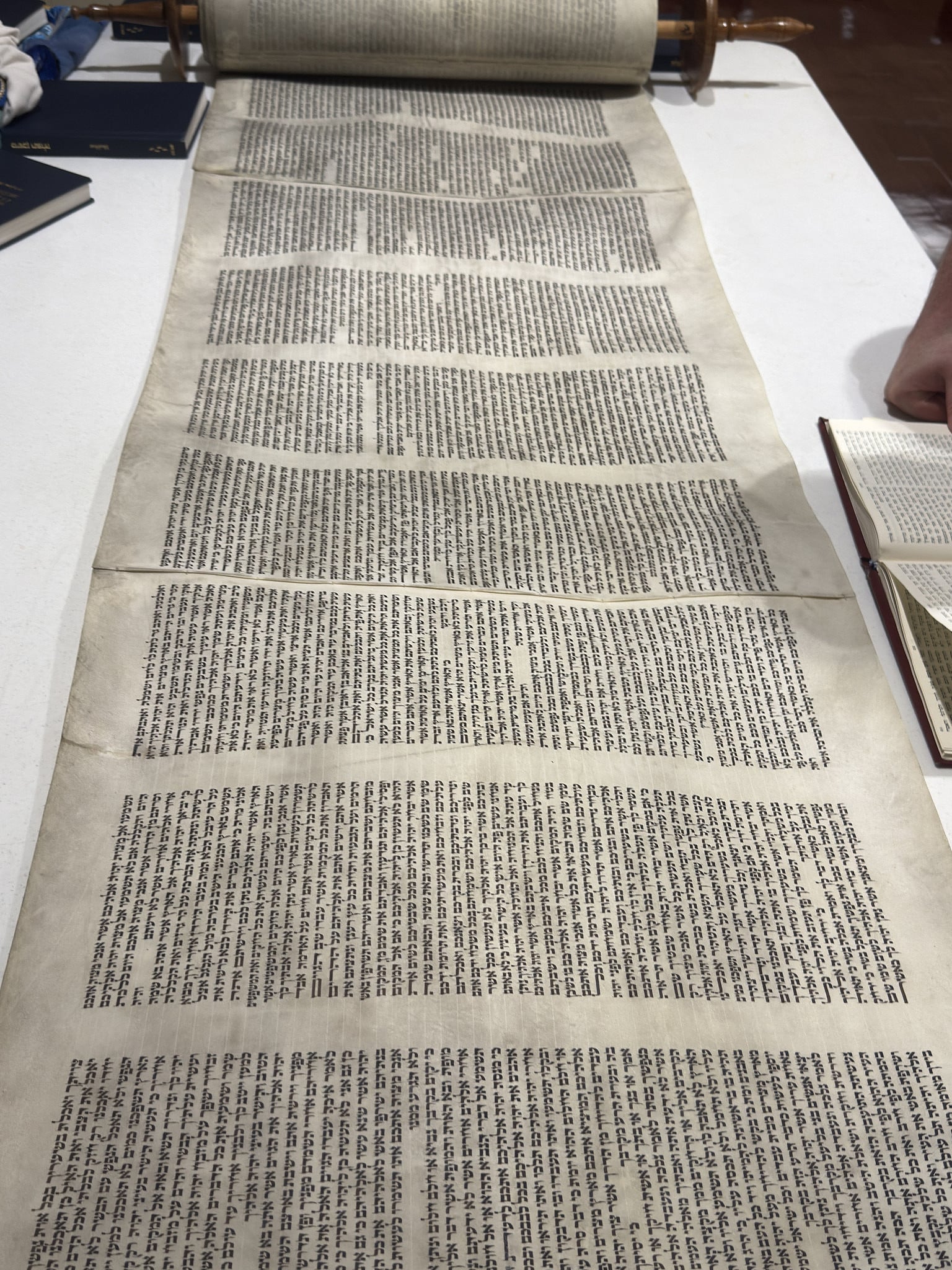
Czech Torah Scroll United Hebrew Synagogue. (Source: United Hebrew Congregation St Louis Missouri)
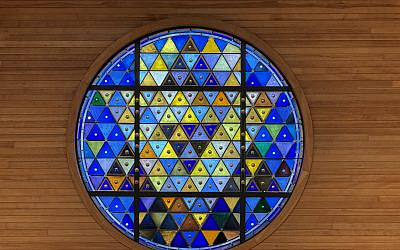
About 30 minutes west of downtown St. Louis, in the suburb of Chesterfield, resides the United Hebrew Congregation, St. Louis’s first Jewish congregation and the oldest congregation in the United States west of the Mississippi. The United Hebrew Congregation is a historic and vibrant Reform community in Greater St. Louis and is defined by its warmth, deep tradition, and progressive inclusion.
I would like to thank Rabbi Brigitte Rosenberg and Communication Manager Jenifer Newmark for their support of this article.
Synagogue
Memorial Scrolls Trust Holocaust Torah
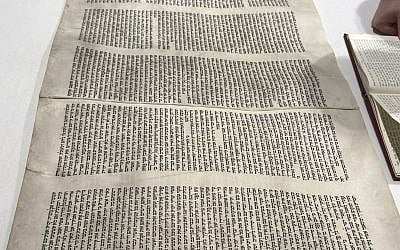
Among the many treasured Torah scrolls housed at United Hebrew Congregation, none carries a more profound story than our Czech Torah, a sacred survivor of the Holocaust and a powerful symbol of Jewish resilience.
Our Torah is one of 1,564 scrolls rescued from the Jewish communities of Bohemia and Moravia in former Czechoslovakia. It is known as an “orphan scroll” because, when it was brought to Prague in 1942, the identity of the congregation from which it originated was never recorded.
The scroll’s journey is extraordinary. During World War II, the Nazis confiscated thousands of Jewish ritual objects, including Torah scrolls, as part of their plan to create a museum documenting what they believed would be the “extinct race” of the Jewish people. Following the war, these sacred scrolls were preserved in Prague before being transferred to Westminster Synagogue in London, where they were restored and delivered to Jewish communities throughout the world.
In 1978, Rabbi Grollman, together with a United Hebrew member family, petitioned Westminster Synagogue to receive one of these Memorial Scrolls and the request was granted. Today, this remarkable Torah serves as a living testament to the the strength of the Jewish people in the aftermath of the Holocaust and occupies a place of honor in the Holy Ark.
Cemetery
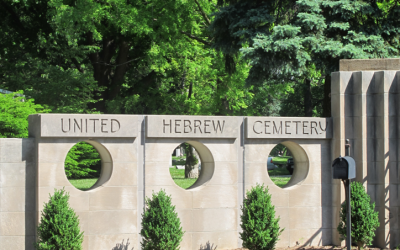
United Hebrew’s commitment to Jewish burial traditions dates to 1840, when the congregation established its first cemetery. In 1866, the congregation purchased land at the corner of North & South Road and Canton Avenue, creating what became known as Mount Olive Cemetery. In 1960, the cemetery was renamed United Hebrew Cemetery.
For more than 180 years, United Hebrew Cemetery has provided a place of dignity, remembrance, and peace for generations of Jewish families in the St. Louis community. Located in University City, the cemetery reflects a longstanding Jewish commitment to honoring loved ones with respectful burial and preserving their memory for future generations.
Culture and Religious Life
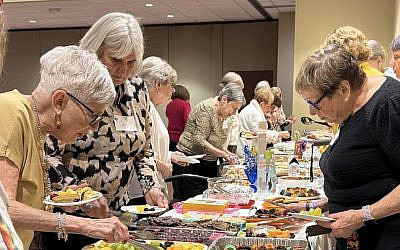
For generations, United Hebrew Congregation has been a vibrant center for Reform Jewish life, fostering meaningful connections to Jewish tradition and community. Members of all ages are welcomed into a warm and inclusive community where everyone can feel a sense of belonging.
United Hebrew offers a variety of Shabbat experiences designed to engage congregants at every stage of life. These include Tot Shabbat, a joyful and interactive half-hour service created especially for children ages 0–6 and their families, as well as Family Shabbat services that encourage worship, learning, and connection across generations.
Music is an integral part of the United Hebrew experience. In addition to the ensembles that regularly participate in worship services and programs, Rick Recht who was the artist in residence for 25 years, and along with our Cantor Emeritus Ron Eichaker, created a music foundation at United Hebrew. The congregation welcomes acclaimed Jewish musicians from around the world. These performances enrich congregational life and create memorable opportunities for celebration, learning, and inspiration.
This summer, United Hebrew welcomes incoming Director of Congregational Music and Cantorial Soloist, Greta Rosenstock Kramer, a highly skilled cantorial soloist, and the esteemed Hannah Dubman, the congregation’s incoming Religious School Music Specialist.
Jewish ritual helps us navigate life’s most significant milestones, honoring both beginnings and endings with meaning and purpose. At United Hebrew, members find a caring and supportive extended family with whom to celebrate and commemorate these important occasions. From the birth of a child, the start of Torah study, and bar or bat mitzvah ceremonies to marriage, conversion, times of illness, and remembrance of loved ones, the congregation provides spiritual guidance and communal support.
Historical Background
In 1796, the United States was a rapidly expanding 16 state republic. A pivotal year for the young nation, it was defined by George Washington’s voluntary and subsequent landmark farewell address, the emergence of the first organized political parties, and continued westward expansion following the resolution of conflicts with Great Britain.
In was in this year that the first Jewish settler arrived in Missouri. His name was Ezekiel Block, a German Jewish immigrant, arrived in what was then Spanish territory in the town of New Madrid. Soon after the Louisiana Purchase, Joseph Philipson arrived in St. Louis in 1807, becoming its first known Jewish resident and opening the city’s first permanent American general store. Within a few years, his brothers Jacob and Simon joined him, and they expanded into the fur trade, lead trading, and brewing. What followed was a wave of Jewish immigrants from Germany and Central Europe in the 1830s and 1840s.
By 1837, the population grew enough to form communities, leading to the creation of the United Hebrew Congregation, St. Louis’s Jewish congregation, making the congregation the oldest west of the Mississippi River.
It was in this year, on the eve of Rosh Hashanah in 1837, the first Jewish minyan in St. Louis gathered in a rented room above Max’s Grocery and Restaurant at the corner of Second and Spruce Streets. Organized by Abraham Weigel and Nathan Abeles, this historic gathering marked the beginning of organized Jewish communal life in the city. Four years later, on October 3, 1841, these same pioneers helped formally establish United Hebrew Congregation, with Weigel serving as its first president and Abeles as its first secretary.
As the congregation grew, it became a leading force in Jewish life throughout the region. In 1854, United Hebrew called Rev. Dr. Bernard Illowy, one of the most respected Orthodox rabbis in America, to become the first rabbi to serve a congregation in St. Louis.
The congregation dedicated its first permanent synagogue in 1859. Designed specifically as a house of worship, the building featured a striking central skylight adorned with a Star of David, symbolizing both the congregation’s faith and its growing presence in the city.
Between 1880 and 1920, St. Louis experienced a dramatic influx of Jewish immigrants fleeing persecution and hardship in Eastern Europe. Thousands settled in the city. In the 1920s, after making several moves over the decades, United Hebrew purchased land for a new building on Skinker Boulevard across from Forest Park.
The synagogue featured a magnificent Byzantine-style structure. Its signature feature is a copper-clad central lantern skylight that caps a unique structure of curves and angles. The inside featured a cherrywood Ark raised above the bimah, and three magnificent stained glass windows—two side windows shaped like a menorah and a circular window above the Ark forming the Star of David.
The congregation gained national prominence on January 20, 1949 when President Harry Truman invited Rabbi Samuel Thurman to become only the second rabbi to say a blessing at a presidential inauguration, the first since George Washington’s time. The two were longtime friends from St. Louis,
In 1989, the congregation relocated. The Skinker Boulevard building was purchased by the Missouri Historical Society.
The current synagogue is in Chesterfield, 30 minutes from downtown St Louis. The United Hebrew congregation reads from the world’s first Torah scroll written by a woman scribe.
Today, United Hebrew Congregation, the first Jewish congregation established west of the Mississippi River, continues to flourish as one of the largest and most vibrant Jewish communities in the region. Building upon nearly two centuries of history and tradition, the congregation offers innovative and meaningful opportunities to engage in Jewish life through inspiring worship, enriching educational experiences, dynamic music programs, cultural events, and youth programming. United Hebrew remains committed to fostering connection, lifelong learning, spiritual growth, and a strong sense of belonging for individuals and families of all ages.
Contact Information:
13788 Conway Road, St Louis, MO 63141
Phone: 314-469-0700
Email: temple@unitedhebrew.org
Website: www.unitedhebrew.org